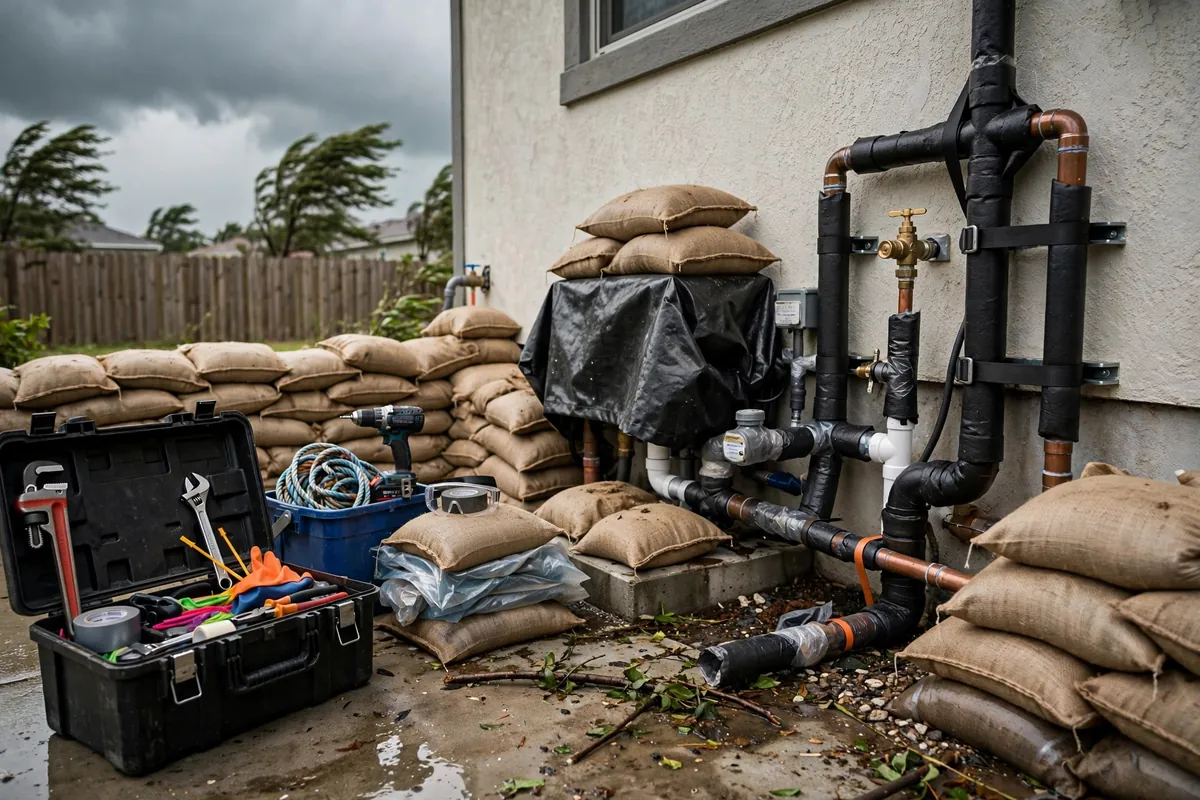
A Florida cold snap means a night or two when overnight temperatures dip near or below freezing, followed by a warm afternoon. It does not mean a frozen-pipe market like the Midwest: pipes inside your walls and under your slab are at very little risk. The vulnerable spots are the few sections of pipe that sit outside the insulated envelope — outdoor hose bibs, pool equipment plumbing, exposed service-line sections, and especially irrigation backflow preventers, which crack easily when water inside them freezes.
Protecting them takes about fifteen minutes: insulate or cover exposed pipes, disconnect garden hoses, wrap the backflow device, and know where your main shutoff valve is. If a pipe does burst, shutting the water off quickly is what turns a repair into a nuisance instead of a disaster. Below is the full checklist, the warning signs to watch for at the thaw, and what to do if something fails.
Florida cold snaps are brief — usually one to three nights with lows near freezing — so full winterization is unnecessary. Cover exposed outdoor pipes and your irrigation backflow preventer, disconnect hoses, and let vulnerable faucets drip during a hard freeze warning. Know your main shutoff location, and check the water meter the morning after a freeze for signs of a cracked pipe.
In This Article
Why This Season Causes The Problem In Leesburg
Central Florida is a humid subtropical climate with hot, humid summers — July highs average around 92°F — and mild winters, with January lows averaging about 46°F. Most of the area's 48 to 51 inches of annual rain falls in summer, and the region sees roughly 234 sunny days a year. Freeze risk is low but real: brief overnight cold snaps happen most winters.
Because freezes are so short, Florida homes are built with most plumbing inside the insulated envelope or buried below the frost line — there is effectively no frost line here. That is good news: the odds of a supply line inside your walls freezing are extremely small. The honest risk concentrates in a handful of exposed spots: outdoor hose bibs, above-ground pool equipment plumbing, any exposed pipe runs on exterior walls, and the irrigation backflow preventer, which typically sits above ground and holds a small volume of water that freezes fast.
Lake County's sandy soil adds a sneaky twist. Sandy soil drains quickly, so an underground leak from a cracked exterior pipe can drain away without ever surfacing as a puddle. Homeowners sometimes discover a cold-snap crack weeks later, when the water bill arrives much higher than expected. That is why the morning-after meter check at the end of this article matters as much as the preparation.
Leesburg is not a frozen-pipe market. Deep, sustained freezes that burst pipes inside walls are essentially unheard of here. The risk is real but narrow: exposed outdoor plumbing and irrigation equipment during a brief overnight dip near freezing. Prepare for that, and skip the rest.
Prevention Checklist
Work through these steps in the evening before an expected cold night. None of them require tools beyond basic foam covers and insulation you can pick up at any hardware store.
- Disconnect all garden hoses from outdoor spigots and drain the hoses — trapped water in a connected hose is one of the most common freeze failure points.
- Install foam faucet covers on every outdoor hose bib; they slip on in seconds and are the single easiest protection step.
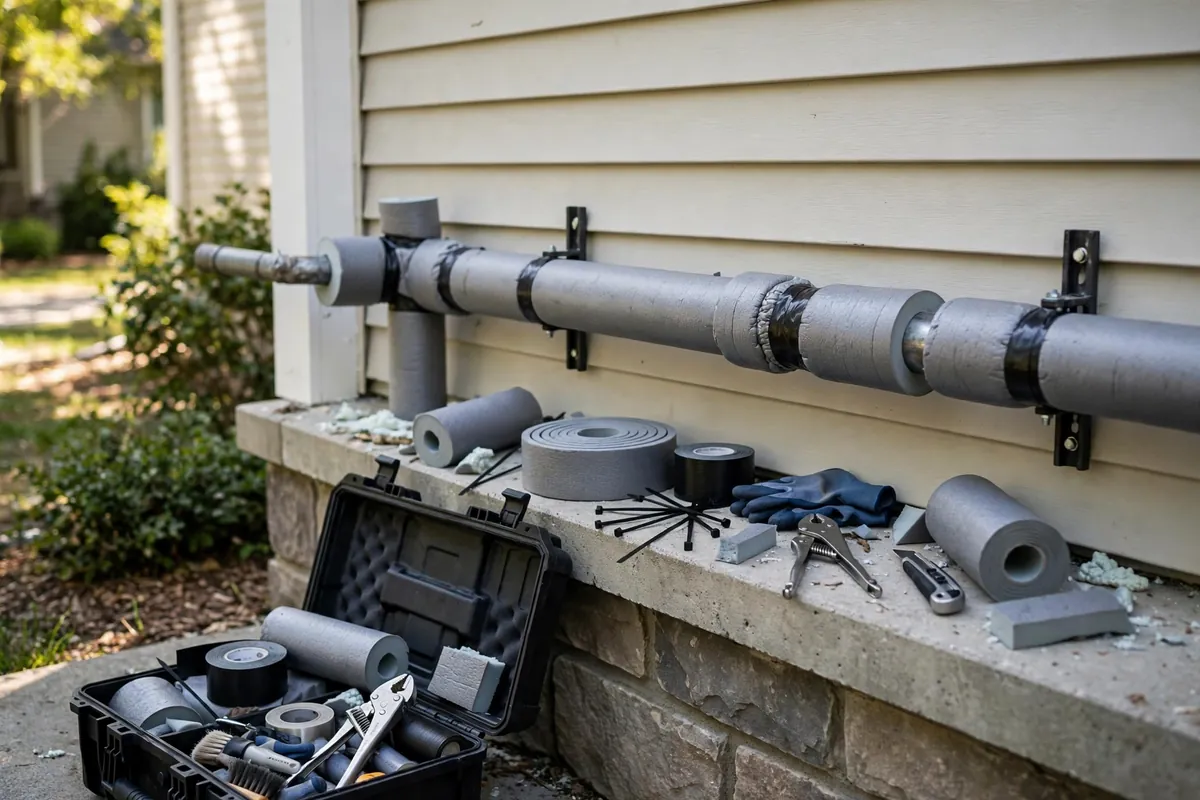
- Wrap any exposed pipe on exterior walls, in the garage, or at the pool equipment pad with foam pipe insulation sleeves.
- Wrap the irrigation backflow preventer with an insulated pouch or towels secured with tape — it holds a small volume of water above ground and cracks easily in a freeze.
- Turn the irrigation controller off or to rain-delay mode so it does not run during the cold snap.
- Open cabinet doors under sinks on exterior walls so warm room air can reach the pipes behind them.
- During a hard freeze warning, let one faucet on an exterior-wall line drip slowly overnight to relieve pressure buildup from ice formation.
- Close the garage door overnight if any plumbing runs through the garage.
- If your pool pump has a freeze-protection mode, confirm it is enabled; circulating water resists freezing far better than standing water.
- Locate your main water shutoff valve and test that it turns — do this before you ever need it in an emergency.
- Write down or save the number (352) 703-8206 so a burst pipe at 3 a.m. does not become a search-the-internet emergency.
After the checklist, one habit is worth building: test your main shutoff valve once, before you ever need it. Valves that sit untouched for years can seize; a valve that turns smoothly tonight is the difference between a small repair and a flooded room during a burst pipe.
Warning Signs
Damage from a cold snap usually shows up at the thaw, when ice melts and water pressure returns to the cracked section. Watch for these signs the morning after a freeze:
- No water or weak flow at one faucet while others work normally — the line feeding that faucet may be blocked by ice or cracked.
- Hissing or whistling sounds inside walls or near exterior hose bibs, which suggest water escaping under pressure.
- Wet spots, dripping, or puddles near outdoor spigots, the pool equipment pad, or around the irrigation backflow preventer.
- An unusually high water bill in the billing period after a cold snap — sandy soil can hide a cracked underground pipe for weeks, so the bill sometimes tells the story first.
- Low pressure throughout the house combined with a water meter that moves when everything is off, which points to a leak somewhere on your side of the meter.
A cracked backflow preventer often announces itself when the irrigation system next runs: a geyser of water from the device or a zone that floods instead of watering. If you notice that at the first spring watering, the crack probably happened during the winter cold snap and sat unnoticed for months.
What To Do If It Happens
If you wake up to no water, a hissing wall, or a flooded yard after a cold night, shut off your main valve and call us — we answer around the clock and typically arrive within 30 to 45 minutes.
If a pipe has burst, speed matters more than skill. Follow these safe first steps:
- Shut off the main water valve. This is the single most important action — it stops the flow immediately and limits damage to whatever already escaped.
- Open the lowest faucet in the house to drain remaining pressure from the lines, and open a faucet on the burst section if you know where it is.
- Turn off the water heater if the burst is on the hot side, or if the heater could run dry — a water heater firing with no water inside can be damaged.
- Do not use a torch or open flame to thaw a frozen section. Thaw gently with warm towels or a hair dryer on low, keeping the faucet open so melting water has somewhere to go. Never leave a heat source unattended.
- Move valuables and start drying. Towels, a wet vacuum, and fans on the wet area limit secondary damage while you wait for help.
Once the water is off and the area is drying, the next question is where exactly the pipe failed. Burst pipes sometimes split at an obvious joint, but cracks can hide inside walls or under soil. Professional water leak detection pinpoints the break without exploratory demolition, which keeps the repair small and the drywall intact.
Open flames near walls, insulation, and wooden framing are a serious fire risk. A hair dryer or warm towels, used patiently with the faucet open, thaw a frozen section safely. If you cannot reach the frozen section safely, leave it to a professional.
How The Service Helps
When a cold snap leaves you with a suspected burst pipe or a mysteriously high bill, the professionals we connect you with locate the failure and get water safely back on. We use acoustic listening equipment to hear pressurized leaks through walls and soil, and pressure testing to confirm which section of the system is losing water — so the repair targets the actual break instead of guessing.
Because we have served Leesburg for 19 years, we know which exterior plumbing layouts are common in local homes and where the vulnerable spots usually are. Our water leak detection service handles the diagnosis, and our 24/7 emergency line at (352) 703-8206 covers burst pipes any time of day or night, with arrival typically within 30 to 45 minutes. If the cold snap cracked an irrigation component instead, our irrigation leak detection covers that too.