Yes — in most cases a wall leak can be located without removing drywall. Moisture meters map the wet area through the surface, thermal imaging reveals the cool signature of hidden water, acoustic sensors hear pressurized leaks through the wall, and pressure testing confirms which line is losing water. Together these tools narrow the search to a small spot instead of a demolished wall.The old approach was to cut drywall until the leak showed itself, which meant repairing the wall and the pipe. The modern approach finds the leak first and opens the wall only where the repair happens. This article explains each method, what it can and cannot tell you, and why combining them gives a reliable answer.
In This Article
Inside A Typical Wall: What Could Be Leaking
To understand how detection works, it helps to know what is actually inside the wall. A typical interior wall in a Leesburg home carries water supply lines (usually copper or PEX) running to fixtures, and drain lines (usually PVC) carrying wastewater away. Where pipes change direction or connect to fixtures, there are fittings — elbows, tees, and valves — and fittings are where most leaks begin.
Supply lines stay pressurized around the clock, so a supply leak flows continuously, even at 3 a.m. when every faucet is off. Drain lines only carry water when a fixture is used, so a drain leak appears in bursts — after showers, laundry, or dishwashing — and goes quiet between. This difference matters because it determines which detection method works best, as you will see below.
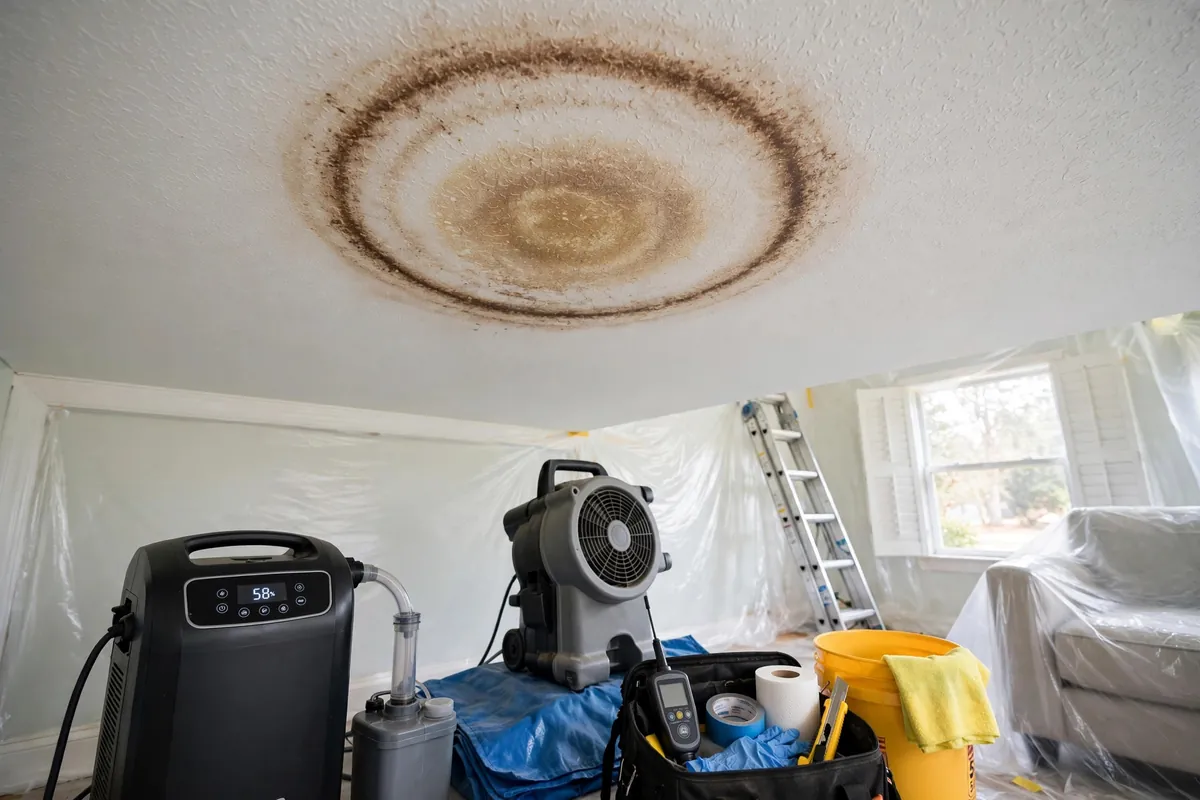
Drywall hides all of this. By the time water shows itself as a stain, a soft spot, or a musty smell, it has often traveled along the inside of the wall before breaking through the paint. That is why guessing at the location and cutting rarely lands on the right spot — and why instruments come first.
Pin And Pinless Moisture Meters
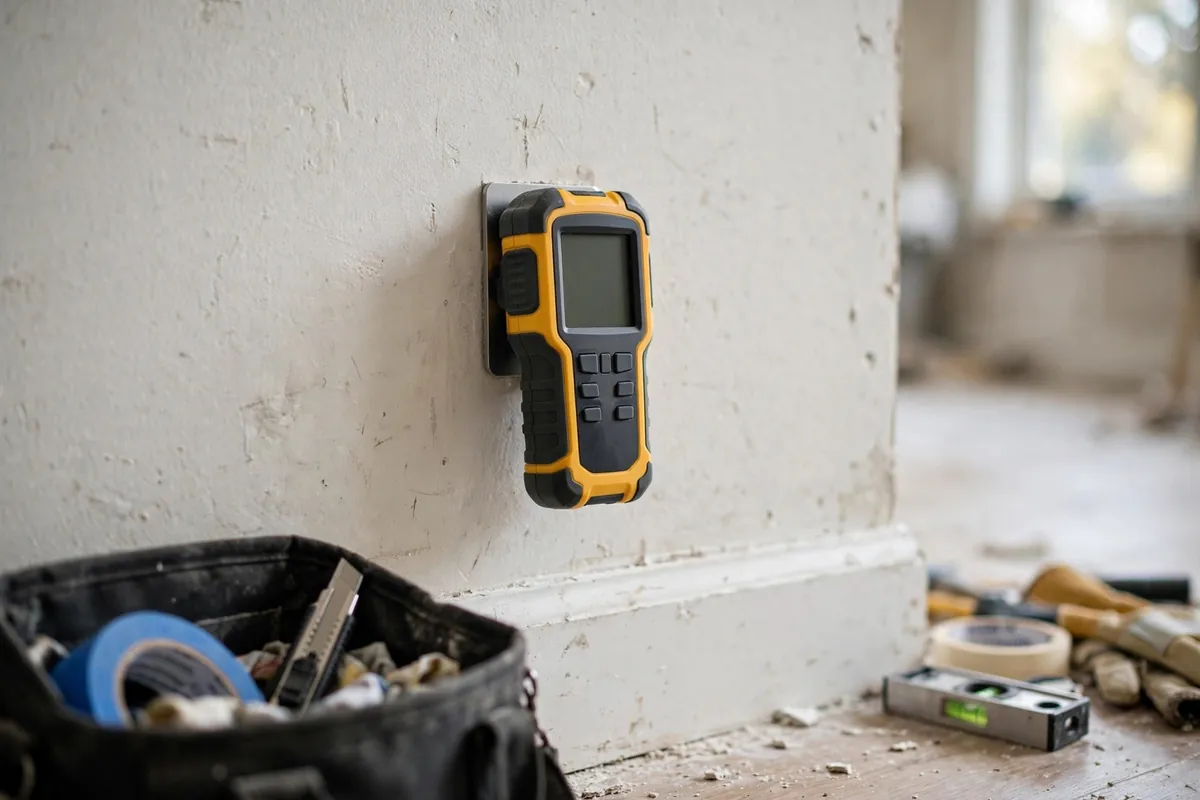
The moisture meter is usually the first tool out of the bag, and it does something simple but powerful: it tells the technician exactly where the wall is wet and where it is dry.
Pin-type meters use two small probes that press into the drywall surface and measure electrical resistance between them — wet material conducts differently than dry material. Pinless meters work without contact, sending a signal into the wall and reading how it responds. Both types give readings across the wall surface, and the technician takes dozens of readings to build a map of the wet zone.
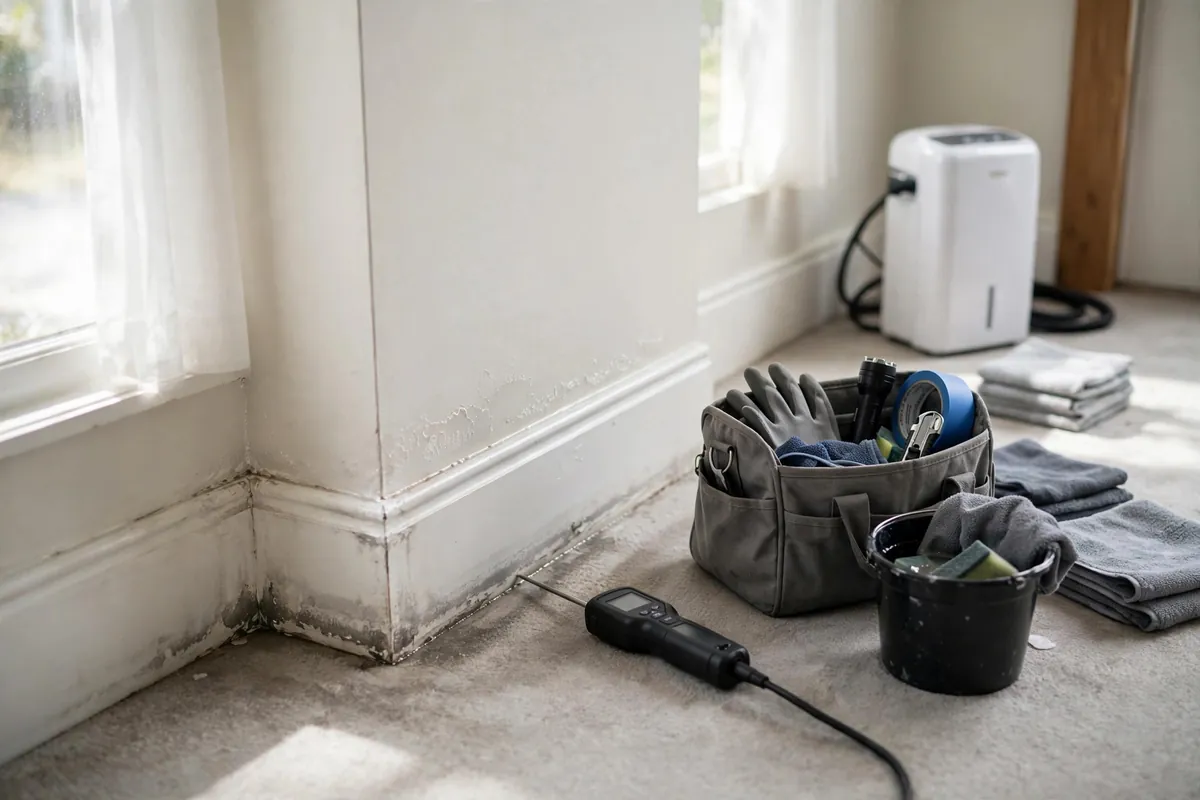
That map is the real value. A wet area shaped like a vertical streak suggests water running down from above; a round, centered patch suggests a source right behind that spot; a wide, low band suggests water pooling at the base of the wall. The gradient — wettest in the middle, drier at the edges — points back toward the source the way a trail points back to its start. Moisture meters cannot see the pipe itself, but they turn a vague stain into a defined search area.
Technicians also use meters to check whether the wall is still actively wet or merely stained from an old event. That distinction decides whether detection continues or the job becomes a dry-out-and-repair question.
Thermal Imaging Through Drywall
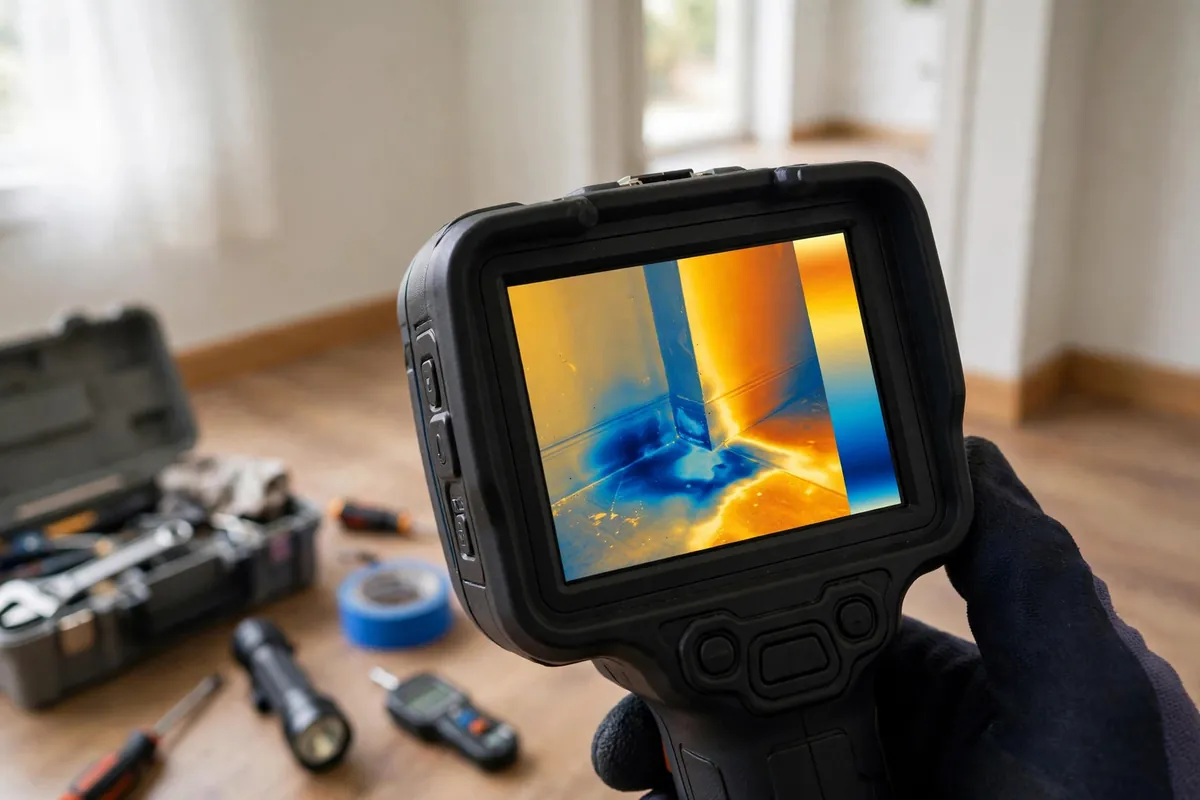
An infrared camera does not see water — it sees temperature. That turns out to be nearly as good, because wet drywall and insulation behave differently from dry material.
When water sits inside a wall cavity, evaporation cools the surrounding area slightly. The thermal camera renders that cooler patch in contrasting colors against the warmer dry wall around it. A supply line leak can also show as a warm streak if hot water is escaping. Either way, the camera displays a pattern the eye cannot see, and the technician reads that pattern the way a map reader reads contour lines.
Thermal imaging covers large wall areas quickly — an entire bathroom wall can be scanned in minutes — which makes it ideal for finding the general location before slower, more precise tools take over. It works best when there is a temperature difference to detect, so technicians may run hot water through a suspect line or let a wet area begin evaporating to sharpen the contrast.
Our full guide to how thermal imaging finds hidden leaks explains what warm and cool patches mean in detail, including what the camera cannot see — because infrared has real limits, and an honest technician tells you what they are.
Acoustic Listening Equipment
Pressurized water escaping through a pinhole or cracked fitting makes noise — a hiss or whoosh that is too quiet for human ears through drywall but clear to a sensitive ground microphone or listening sensor.
The technician places the sensor against the wall at several points and listens. The leak sound grows louder as the sensor approaches the source, so moving the sensor along the wall and comparing volume levels triangulates the leak's position. On a quiet house with the fixtures off, even a small supply leak produces a detectable signature.
Acoustic listening shines where moisture mapping is ambiguous — for example, when the wet area is large and the source could be anywhere inside it. It also confirms whether a supply line is the culprit at all: no leak sound on a pressurized line means the water is probably coming from a drain, a fixture seal, or above. Our article on how acoustic leak detection works walks through what the technician is actually hearing.
The method has one main requirement: quiet. That is one reason our wall leak detection service in Leesburg often starts with the house stilled — fixtures off, appliances quiet — so the leak is the loudest thing in the wall.
Pressure Testing And Zone Isolation
When the first three methods narrow the search but the answer is still not certain, pressure testing delivers it. The principle is straightforward: a sealed plumbing system should hold pressure, and a system that does not is losing water somewhere.
The technician isolates sections of the supply system — for example, the hot water lines serving one bathroom — and pressurizes them with a gauge attached. If the pressure holds steady, that section is sound and attention moves elsewhere. If it drops, the leak is inside that section, and the search area shrinks dramatically. This process of elimination can separate a supply leak from a drain leak definitively, because drain lines are not pressurized and will not affect the gauge.
Isolation testing pairs naturally with the other tools: the moisture map says where the water is, thermal imaging shows its extent, acoustic listening points at the loudest spot, and the pressure test confirms which line is responsible. No single method carries the whole diagnosis. Professional detection is the combination — each tool checking the others — which is why the result is reliable enough to cut into.
For a deeper look at what pressure readings reveal, see our guide to pressure testing your plumbing.
From A Pinpoint To A Small Repair Opening
Here is where the no-demolition approach pays off. Once the tools agree on a location — the wettest meter reading, the coolest thermal patch, the loudest acoustic point, and a failed pressure zone all converging — the technician marks a spot on the wall, often no bigger than a dinner plate.
Only then does anyone cut drywall, and only at that marked spot. Behind it, the leaking fitting or pipe section is exposed, repaired, and the opening patched. Compare that with the old method of cutting exploratory holes across the wall hoping to find the leak: the repair area is a fraction of the size, the patching is simpler, and repainting is limited to one area.
Sometimes the tools reveal that the source is not in the wall at all — a shower pan above, a supply line in the ceiling, or a fixture seal on the other side. That is still a win, because it redirects the repair to the right place before any wall is opened. Accurate detection does not just minimize damage; it aims the repair correctly in the first place.
If you are dealing with a suspected wall leak now, our wall leak detection service uses exactly this instrument-first approach, and our emergency wall leak page covers situations where water is spreading fast. For stains appearing on ceilings instead of walls, start with our guide to ceiling stains: leak or condensation.