In most cases, a brown stain on your ceiling is a leak from plumbing, a fixture, or a water heater located above it. Condensation can leave similar marks in Florida homes, but it usually appears as light, diffuse discoloration rather than a defined ring that keeps growing. The simplest rule: if the stain is damp, darkening, or expanding, treat it as an active leak.Knowing which one you are dealing with matters, because a leak needs detection and repair while condensation usually calls for ventilation or insulation changes. Below are the signs that separate the two, the safe checks you can do yourself, and how professional ceiling leak detection in Leesburg pinpoints the source without tearing your home apart.
A spreading, darkening, or damp ceiling stain almost always points to a leak from plumbing or a fixture above. Lighter, diffuse marks that appear in humid weather without any dripping can be condensation. When in doubt, document the stain with a photo, shut off nearby fixture valves if you can, and have it checked — a ceiling leak confirmed early is far simpler to fix than one found after drywall fails.
In This Article
What To Do Right Now
A ceiling stain rewards quick, calm action. Work through these steps in order before you decide anything else:
- Look, do not poke. Note the stain's size, color, and whether the surface feels damp. Take a dated photo so you can tell later whether it is spreading.
- Think about what sits above it. An upstairs bathroom, kitchen, laundry room, or water heater is the most likely source of a true leak.
- Catch active drips. If water is dripping, set out a bucket and move furniture, electronics, and rugs out of the way.
- Shut off the suspected fixture. If you know which bathroom or appliance sits above the stain, turn its supply valves off. Every sink and toilet has them.
- Do not touch anything near a light fixture or fan. If the stain surrounds an electrical fixture, switch the breaker off and keep your hands away.
- Call for help if the stain is growing, the drywall feels soft or saggy, or water is dripping steadily. Those signs point to an active leak that needs locating fast.
If your ceiling is sagging, actively dripping, or the stain is spreading quickly, call (352) 703-8206 now — we answer 24/7 and arrive in 30–45 minutes.
Signs To Look For
Leak stains and condensation marks share a color family, but they behave differently once you know what to watch for.
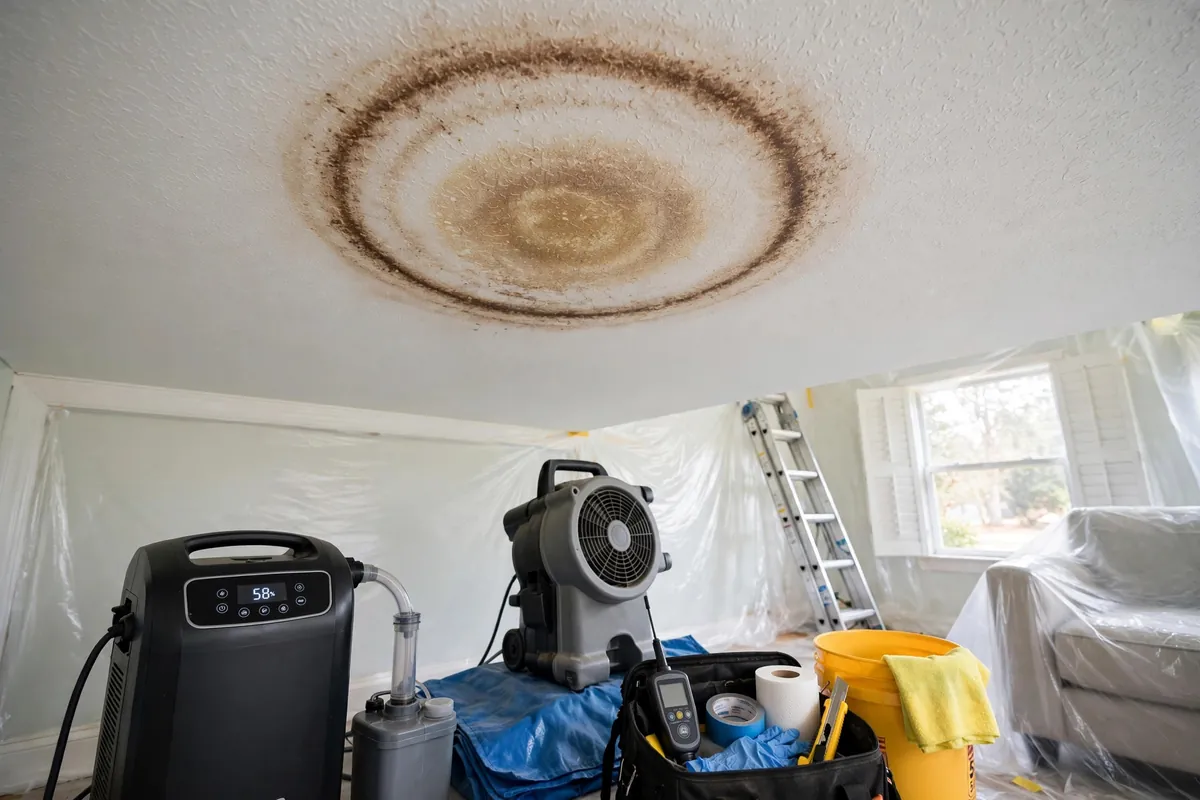
A leak stain usually has a defined edge — often a yellowish-brown ring with a darker border. You may see concentric rings, which form when the spot gets wet, dries, and gets wet again. The stain often sits directly below a bathroom, kitchen, or laundry area, and the drywall may feel cool or slightly damp to the touch. Peeling paint, bubbling, or a faint musty odor around the stain all lean toward a leak. If the mark appeared suddenly after someone used the shower or flushed the toilet upstairs, that timing is a strong clue.
Condensation marks tend to be lighter, more diffuse, and less defined. They often show up in corners, along exterior walls, or near air conditioning vents where cool air meets warm, humid room air. In Florida's climate they may appear during especially humid stretches and fade when the air dries out. There is usually no drip, no ring pattern, and no damp feeling — just a pale discoloration.
Lightly trace around the stain with a pencil and note the date. Check it again in a few days. A line that the stain has crossed means water is still arriving — that is a leak, not old damage.
One more distinction: a stain from above that keeps returning in exactly the same spot after you paint over it is almost never condensation. Condensation is a surface condition; a repeating stain means water is traveling through the ceiling from somewhere above.
Common Causes
When the culprit is a true leak, these are the usual suspects in Leesburg homes:
- Supply line leaks. A pinhole in a copper line or a failing fitting above the ceiling drips steadily, even when no fixture is running.
- Drain and waste line leaks. A cracked drain pipe or loose joint only leaks when water flows through it — which is why the stain may grow after showers or laundry day and seem quiet otherwise.
- Toilet wax ring failure. A worn seal at the base of an upstairs toilet lets water seep with every flush, often staining the ceiling below the bathroom.
- Shower and tub seepage. Failed grout, a worn caulk line, or a damaged shower pan lets water escape into the floor cavity and appear as a stain below.
- Water heater leaks. In homes where the water heater sits in an upstairs closet or the attic, a failing tank or connection drips straight down onto the ceiling.
- Air conditioning condensate. A clogged condensate drain line or a cracked drain pan can send water into ceilings near the air handler — common in Florida, where systems run hard most of the year.
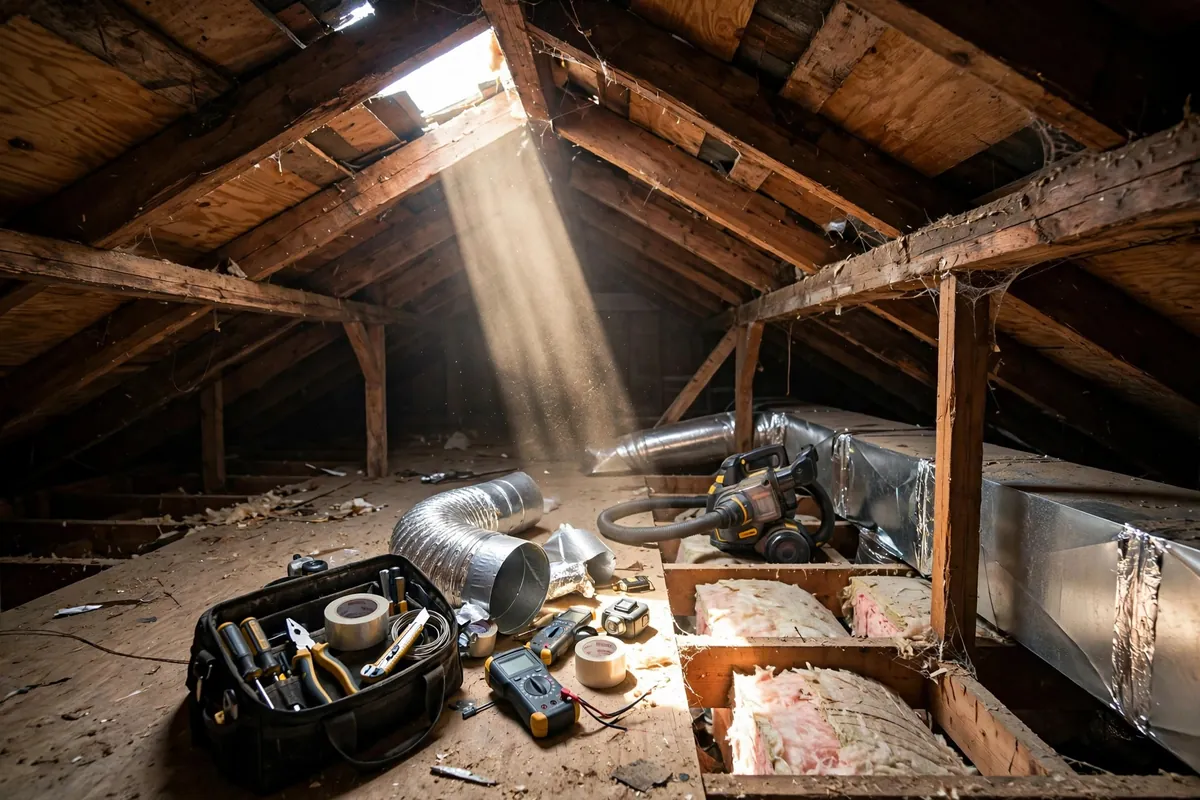
Condensation, on the other hand, comes from humid indoor air meeting a cooler surface — often where insulation is thin or missing above the ceiling. It can also collect around ductwork that sweats in a hot attic. Our attic leak detection service often finds that what looked like a roof problem was actually condensation forming on cold ducts.
Water can also travel sideways along framing before it shows itself, so the stain is not always directly under the source. That is one reason professional leak detection for Leesburg homes uses instruments instead of guesswork.
What Happens If You Wait
A small stain feels easy to ignore, especially when it is dry to the touch. But ceiling water problems rarely stay small on their own.
Drywall that gets wet repeatedly loses strength. It softens, sags, and eventually the tape seams fail or a section gives way — and that failure tends to happen suddenly rather than gradually. Paint bubbles and peels, and the damp cavity behind the drywall becomes a place where musty odors develop. Insulation above the stain absorbs water and stops insulating, while wooden framing stays damp far longer than it looks.
Meanwhile the leak itself does not pause. A pinhole grows, a fitting loosens further, a wax ring keeps seeping with every flush. What would have been a small, pinpointed repair becomes a larger area of damaged drywall, soaked insulation, and possibly affected framing. Finding the source early keeps the repair small; waiting lets the water decide how big the repair becomes.
There is also a quieter cost: uncertainty. Homeowners tell us the stain becomes the thing they glance at every time they walk through the room. Getting an answer — leak or condensation, and exactly where — ends that worry one way or the other.
Safe DIY Checks Vs When To Call A Professional
You can safely gather useful information, but some situations belong to a professional from the start. Use this guide:
| Situation | What You Can Safely Do | When To Call A Professional |
|---|---|---|
| Stain is dry, small, and not changing | Outline it with a pencil, take dated photos, and watch it for a few days | If it grows, darkens, or feels damp again |
| Stain is damp or spreading | Photograph it and shut off valves to fixtures above if you know which ones | Have the source pinpointed with detection equipment |
| Ceiling is sagging or actively dripping | Place a bucket, move belongings, and keep clear of the area | Call immediately — this needs same-day attention |
| Stain surrounds a light fixture or fan | Switch the breaker off and do not touch the fixture | Call immediately — water and electricity are dangerous |
| You suspect condensation only | Improve ventilation, run the AC fan, and observe | If the mark keeps returning, have it verified |
A few notes on the checks above. Running an upstairs shower while someone watches the stain below is a genuinely useful test — it connects the stain to a drain-side leak in minutes. But keep it brief, and stop if water starts dripping faster. And if the stain is near any electrical fixture, skip every hands-on check: switch the breaker off and read our guide on what to do when water drips through a light fixture instead.
If your checks point to condensation rather than a leak, improving air circulation and checking that your attic insulation covers the area evenly are reasonable next steps. If the mark keeps returning, though, have it verified — condensation that never fully dries can still feed mold growth in the drywall.
How The Service Fixes It
When you call us about a ceiling stain, the goal is simple: find exactly where the water is coming from while opening as little of your ceiling as possible.
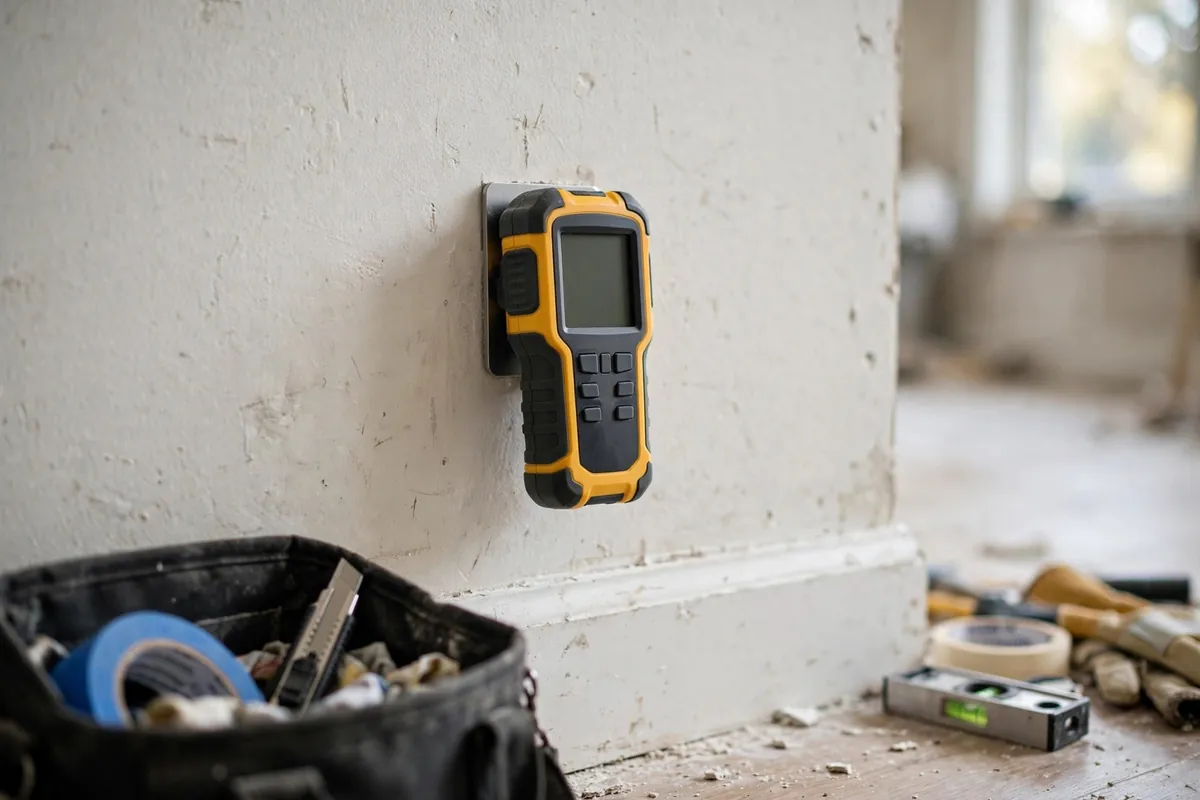
We start with moisture meters that map how far the wet area extends behind the paint — the wettest point usually sits closest to the source. Thermal imaging then shows temperature differences across the ceiling, since wet drywall and insulation read cooler than dry areas. If the evidence points to a pressurized supply line, acoustic listening equipment can hear water moving through the pipe and confirm it. For drain-side leaks, we correlate the stain with fixture use to identify which drain run is responsible. Our article on how thermal imaging finds hidden leaks explains what the camera actually sees.
Once the source is pinpointed, the repair happens at that spot — typically a small, clean access opening rather than a torn-apart ceiling. Supply fittings get repaired, drain joints get resealed, wax rings get replaced, and condensate lines get cleared, depending on what we find.
If the stain is spreading, the ceiling is sagging, or water is dripping right now, visit our emergency ceiling leak page or call (352) 703-8206. We answer around the clock and arrive in 30–45 minutes, and our standard ceiling leak detection service covers the full diagnosis for less urgent cases.