Attics are where Florida leaks go to hide. Roof penetrations, plumbing vent stacks, water heaters, and air conditioning equipment all share that hot, rarely visited space — and any of them can leak for months before a stain appears on the ceiling below. The good news is that attics also preserve evidence: staining on roof decking, damp insulation, and rust patterns all point back toward the source. This guide covers what causes attic leaks in Leesburg homes, the clues they leave, and how professional attic leak detection works overhead.
In This Article
How Water Gets Into A Florida Attic
A Florida attic is a harsh environment: extreme summer heat, high humidity, and in many Leesburg homes, a surprising amount of plumbing. Understanding what lives up there is the first step to understanding what can leak.
Many Florida homes place the water heater in the attic to save living space — which puts a pressurized tank and its connections directly above the ceilings. Air handlers and their condensate drain lines often run through attics too, carrying the water your AC pulls from humid air. Plumbing vent stacks pass through on their way to the roof, and in some homes, supply lines cross the attic to reach distant bathrooms. Add roof penetrations for every vent, flue, and exhaust fan, and the attic becomes the one place where roofing, plumbing, and HVAC water sources all overlap.
What makes attics uniquely troublesome is how rarely anyone goes up there. A leak under a sink gets noticed in days. A leak in an attic can run for an entire cooling season before insulation saturates enough to show a stain below. Time is the attic leak's greatest ally — and early detection takes it away.
Roof-Related Sources
Not every attic leak is a plumbing problem, and the roof deserves its share of suspicion — especially after storms.
Every penetration through the roof is a potential entry point: plumbing vent stacks, exhaust fan vents, flues, and even the fasteners holding everything down. Flashing — the metal that seals where the roof meets a vertical surface — can lift, crack, or corrode. Around vent stacks, the rubber boot that seals the pipe to the roof dries and splits in Florida's heat and UV exposure, letting rain run straight down the pipe into the attic.
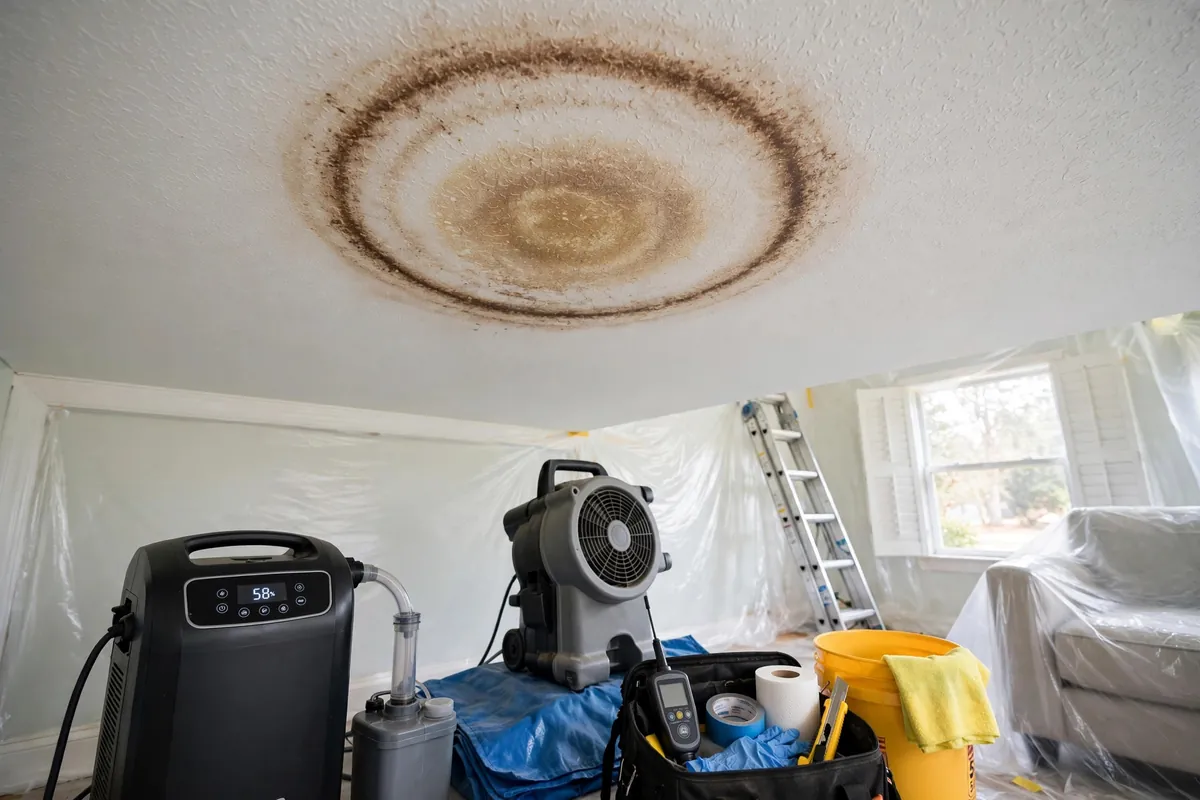
Roof-sourced water leaves characteristic evidence: staining on the underside of the roof decking that starts at a penetration and trails downward, damp insulation directly below a vent, or rust streaks on nails near the leak path. The key timing clue is weather — if the wetness appears or worsens after rain and dries between storms, the roof is the likely source. Our guide to ceiling stains explains how to read what the stain is telling you from below.
One honest note: we are leak detection specialists, not roofers. When our instruments point to a roofing source rather than plumbing, we tell you plainly and document what we found so a roofing contractor can act on it.
Plumbing Sources Hiding In The Attic
When the wetness does not follow the weather, plumbing becomes the prime suspect. These are the attic plumbing sources we encounter most:
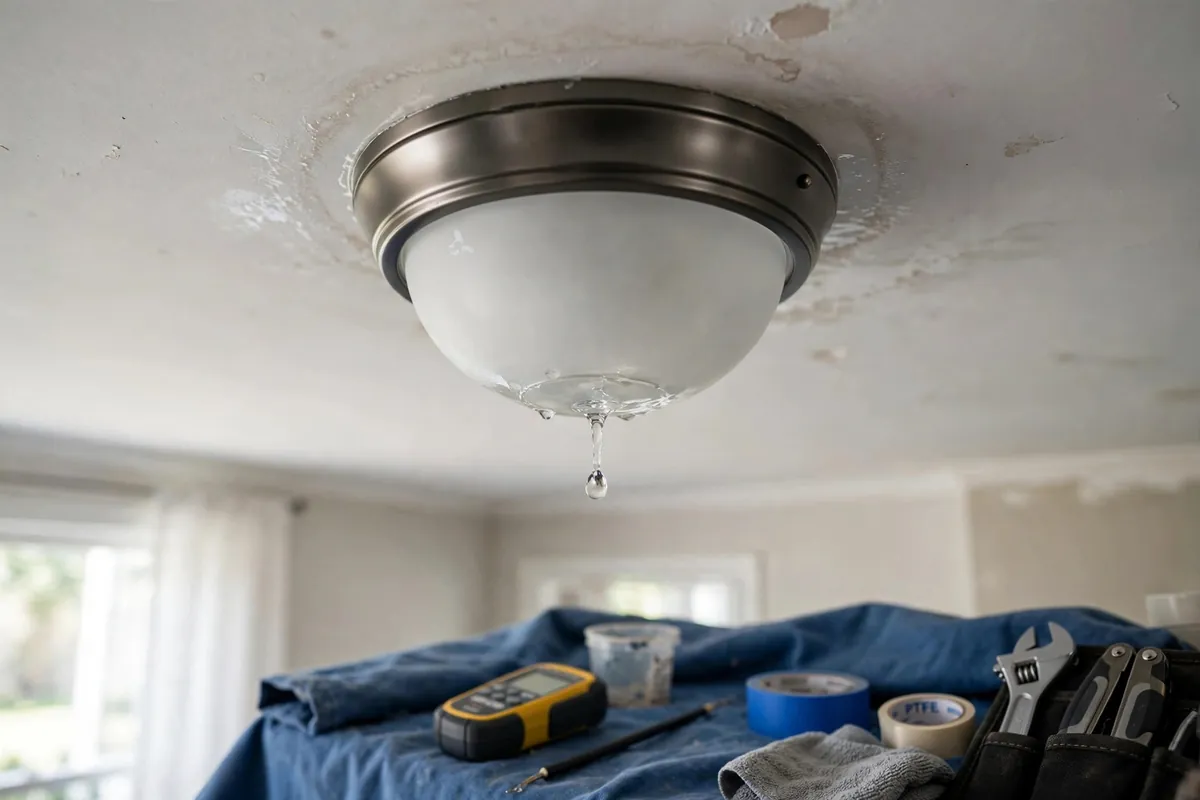
- Water heater leaks. An attic water heater with a failing tank, loose connection, or worn temperature-and-pressure relief valve drips directly onto the attic floor — and eventually through the ceiling below, where it appears as a ceiling leak. The drain pan, if one exists, only helps if its own drain line is clear.
- Supply line fittings. Elbows and couplings in attic supply runs can develop slow seeps at joints. Because the lines are pressurized, these leak continuously regardless of weather.
- Vent stack joints. Plumbing vent pipes carry air, not water — but a separated joint in a vent stack lets rainwater in from above and condensation form inside, both of which drip into the attic.
- Condensate drain lines. The line carrying water away from your air handler's drain pan runs through or from the attic. When it clogs with algae — common in Florida — the pan overflows into the attic instead.
- Sweating pipes and ducts. Cold water lines and AC ducts in a hot, humid attic develop condensation on their surfaces. It is not a leak, but the resulting drips cause real water damage and need addressing through insulation.
The timing clue here is the mirror image of roofing: wetness that appears in dry weather, or that worsens when fixtures run or the AC cycles, points to plumbing. A water heater that only seeps when it reheats, for instance, leaves an intermittent pattern no roofer would recognize.
Reading The Clues: Stains, Smells, And Daylight
Attics preserve evidence the way a crime scene does — you just have to know how to read it. Here is what to look for on a careful attic visit:
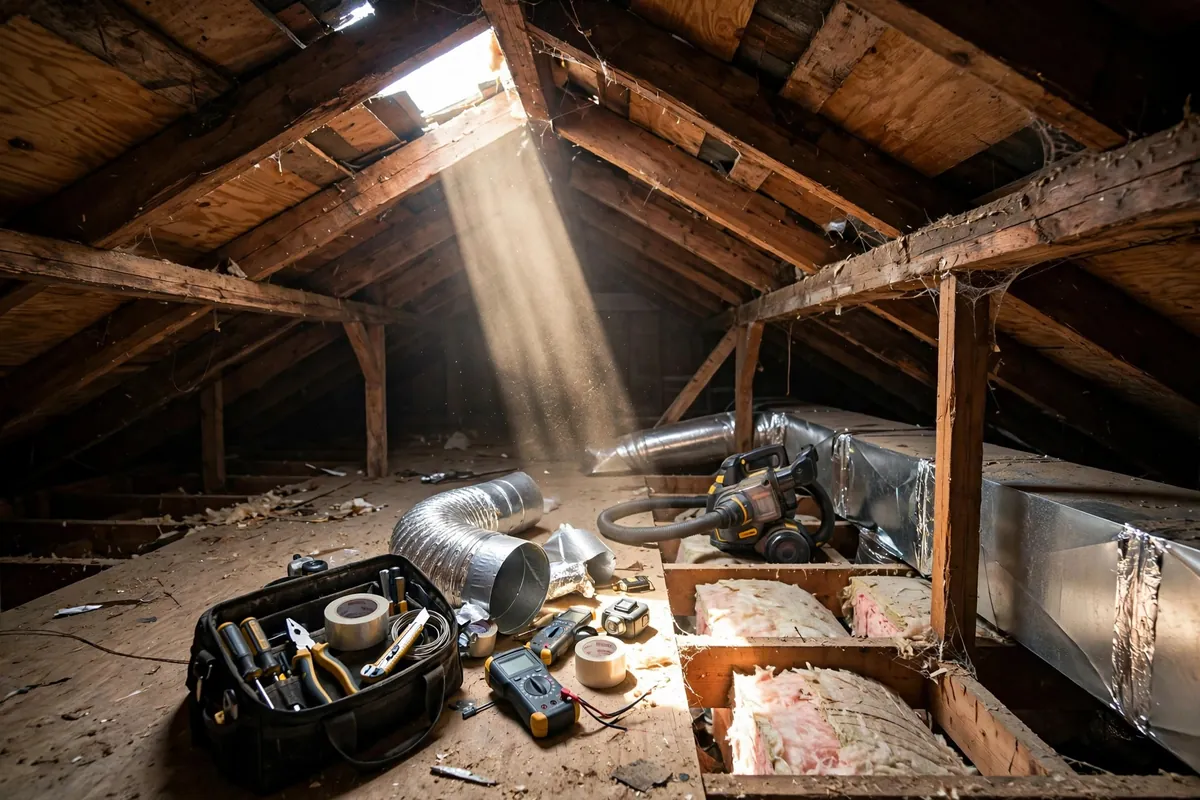
Staining on roof decking or framing. Water leaves brownish trails on wood. Follow any stain upward and backward — the trail narrows toward its source, whether that is a roof penetration, a pipe joint, or a pan edge.
Insulation condition. Dry insulation is fluffy and even. Wet insulation compresses, mats down, and may be discolored. A compressed patch in otherwise fluffy insulation marks where water has been landing.
Rust and corrosion. Rust on nail heads, pipe straps, or the water heater's fittings shows chronic moisture. Rust streaks running down a vent stack suggest water entering from above.
Daylight. With the attic lights off, look for daylight seeping around vents, flues, or the eaves. Anywhere light gets through, rain can too.
Smell. A musty odor at the attic hatch, or noticeably stronger in one area of the attic, marks where moisture has been sitting.
Florida attics can exceed 130 degrees on summer afternoons, and stepping between joists can put a foot through the ceiling. Visit in the morning, step only on joists or flooring, and bring a bright flashlight. If you are unsure, stay at the hatch — a professional inspection is safer.
Why Attic Leaks Stay Hidden So Long
Three features of attics conspire to hide leaks, and understanding them explains why attic water damage is often extensive by the time it is found.
First, insulation is an excellent silent sponge. Fiberglass and blown insulation absorb significant water before any of it reaches the ceiling drywall below. The leak can run for weeks or months with zero visible evidence downstairs while the insulation quietly saturates.
Second, attics are visited rarely. Most homeowners open the hatch a few times a year at most. There is no daily foot traffic, no one glancing at the space the way they would a bathroom floor. A slow drip can establish itself as background long before anyone looks.
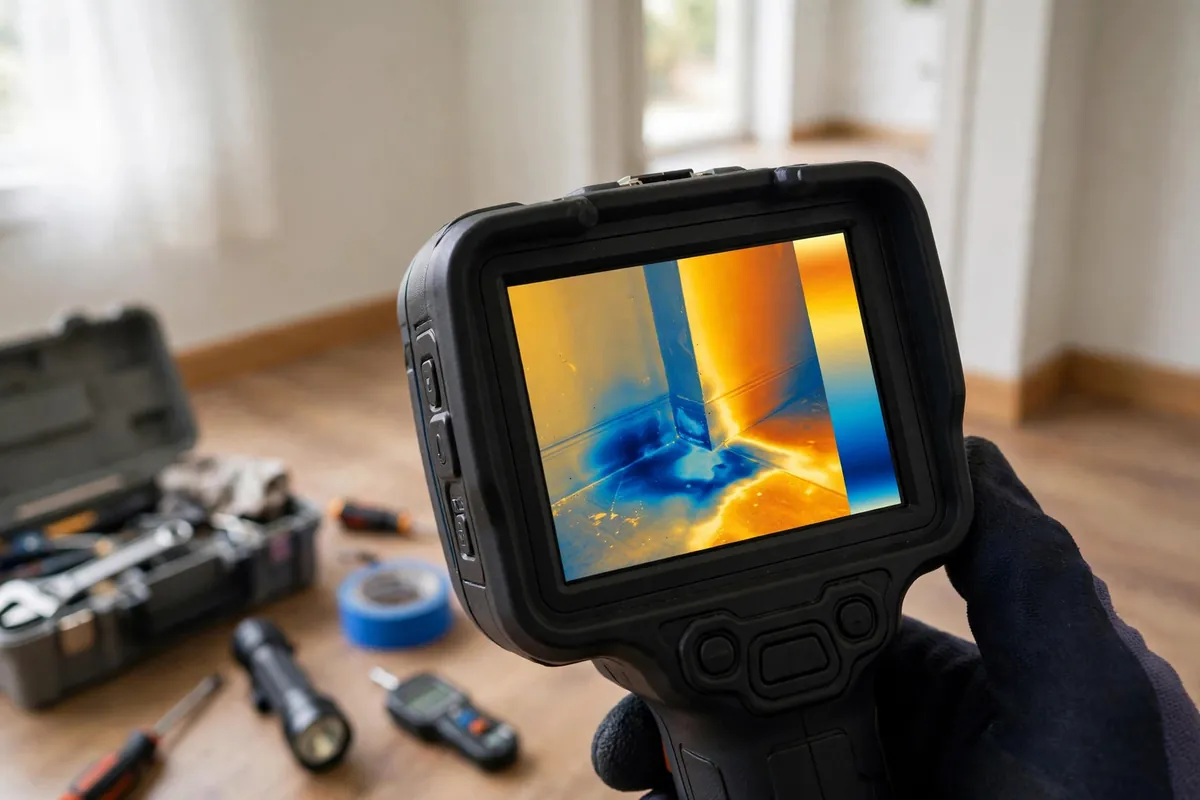
Third, water in attics travels. It runs along the top of ceiling drywall, follows framing members, and drips far from its source. The stain that finally appears on a bedroom ceiling may sit ten feet from the actual leak — which is why thermal imaging is so valuable overhead: it sees the full wet area, not just the stain's edge.
The takeaway is not fear but timing: an attic checked once or twice a year, plus prompt attention to any musty smell or ceiling stain, catches these leaks while they are still small.
What Professional Attic Leak Detection Involves
Attic detection combines the standard leak-finding toolkit with the realities of working overhead in a hot, cramped space.
We start from below and above simultaneously: moisture meters map the wet area in the ceiling from the living space, while thermal imaging scans the attic floor and walls for the cool signature of hidden water. The two maps together show the full extent of the problem — often larger than the visible stain suggested. Acoustic listening can then check pressurized lines running through the attic, and a careful visual inspection traces staining back to its highest point, whether that is a pipe joint, a pan edge, or a roof penetration.
For water heaters and condensate systems, we test the equipment itself: checking the relief valve, the pan and its drain line, and the fittings while the system runs. For suspected roof sources, we document the penetration and the water path so you have clear evidence of what needs roofing attention versus plumbing repair.
The result is a located source and a defined wet area — which means the repair opens the smallest possible section of ceiling, if any ceiling needs opening at all. If you are seeing stains, smelling mustiness, or just want the attic checked, our attic leak detection service covers the full survey, and our emergency attic leak page is there when water is actively coming through. Our line is open around the clock at (352) 703-8206, and we typically reach Leesburg homes within 30–45 minutes.