A thermal imaging camera finds hidden leaks without touching your walls. It reads surface temperatures and turns them into a color image — and because wet materials usually run cooler than dry ones, hidden moisture shows up as a distinct patch the eye cannot see. It does not see through walls like an X-ray; it sees the thermal signature that water leaves behind. This guide explains how infrared leak detection works, what warm and cool patterns mean, where the method shines, and — just as important — what it cannot tell you.
In This Article
What An Infrared Camera Actually Detects
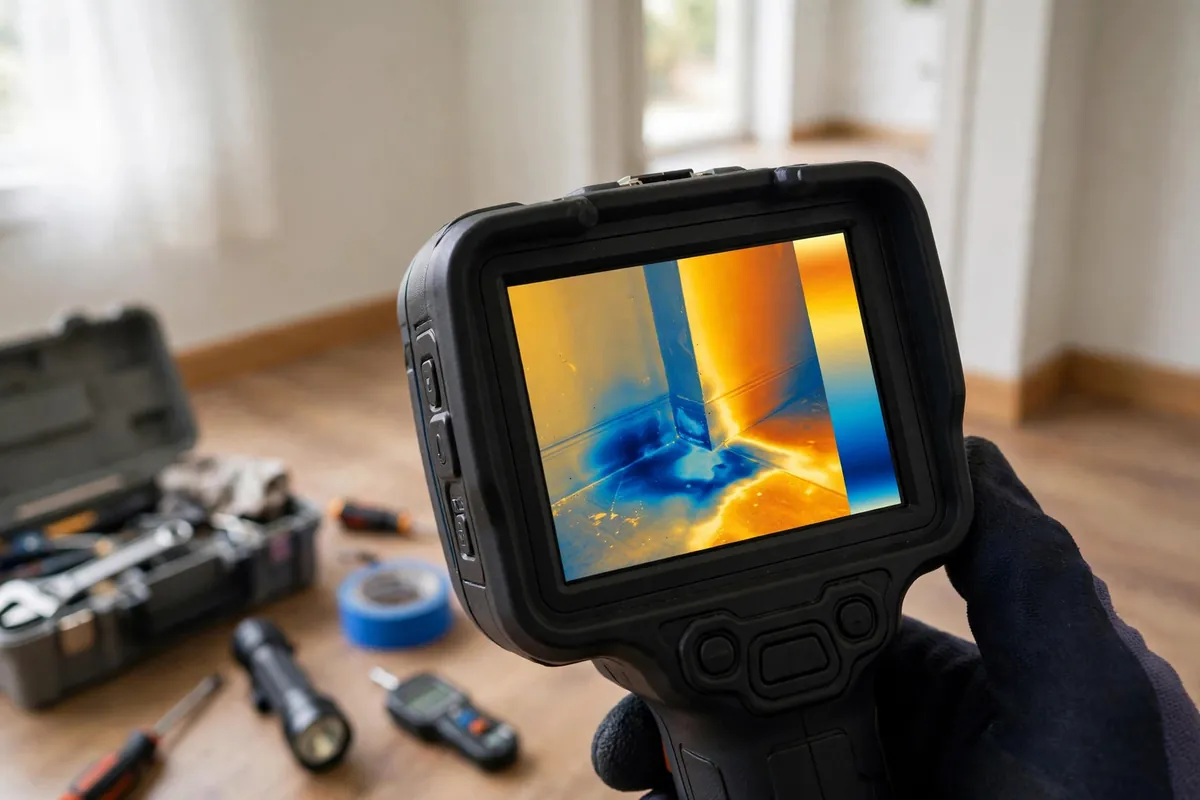
Every object gives off infrared radiation — heat — in proportion to its temperature. An infrared camera senses that radiation and translates it into a visible image, assigning colors to temperature ranges. What you see on the screen is a heat map of the surface in front of the lens.
For leak detection, the physics that matters is evaporative cooling. When water sits inside drywall, insulation, or flooring, it slowly evaporates — and evaporation carries heat away from the surface. That makes the wet area slightly cooler than the dry material around it, often by just a few degrees. The camera renders that small difference as a clearly visible patch of contrasting color.
This is why the method is non-invasive: the camera never touches the wall and nothing gets opened. It reads what the surface is already broadcasting. A technician can scan an entire room in minutes, watching for the cool signatures that mark where water is hiding — then investigate those specific spots with confirming tools rather than tearing into walls at random.
Reading Warm And Cool Patches
Not every thermal pattern means the same thing. Here is how a technician reads the image:
Cool, irregular patches are the classic moisture signature. They have soft, uneven edges — water spreads and wicks through material in organic shapes, not straight lines. A cool patch with feathered edges on a wall or ceiling is the camera saying moisture is present in that area.
Warm streaks or patches tell a different story: escaping hot water. A hot water supply line leaking inside a wall heats the surrounding material, and the camera shows it as a warm trail — sometimes tracing the pipe's actual path. This is genuinely useful diagnostically, because it immediately separates hot-side leaks from cold-side ones and tells the technician which pipe to suspect.
Sharp, geometric patterns are usually not leaks at all. The straight lines of wall studs, the rectangular outline of missing insulation, or the even band of an air leak at a window all read as thermal patterns — but their geometry gives them away. Water does not form perfect rectangles. Part of a technician's skill is recognizing these false friends and not chasing them.
Changing patterns add confirmation. A patch that grows cooler and larger while a suspect fixture runs, then stabilizes when it stops, is behaving exactly like an active leak. Technicians sometimes run hot water or a shower briefly during the survey to watch the image respond in real time.
Camera color palettes are adjustable — the same leak can look blue-on-red or purple-on-yellow depending on settings. What matters is the temperature difference and the shape of the pattern, not which colors appear. Be wary of anyone who diagnoses from colors alone.
Where Thermal Imaging Works Best In A Home
Infrared earns its keep in the places where leaks hide longest:
- Walls. Scanning a full wall takes minutes and reveals wet areas far beyond the visible stain, showing the true extent of the problem before any repair is planned.
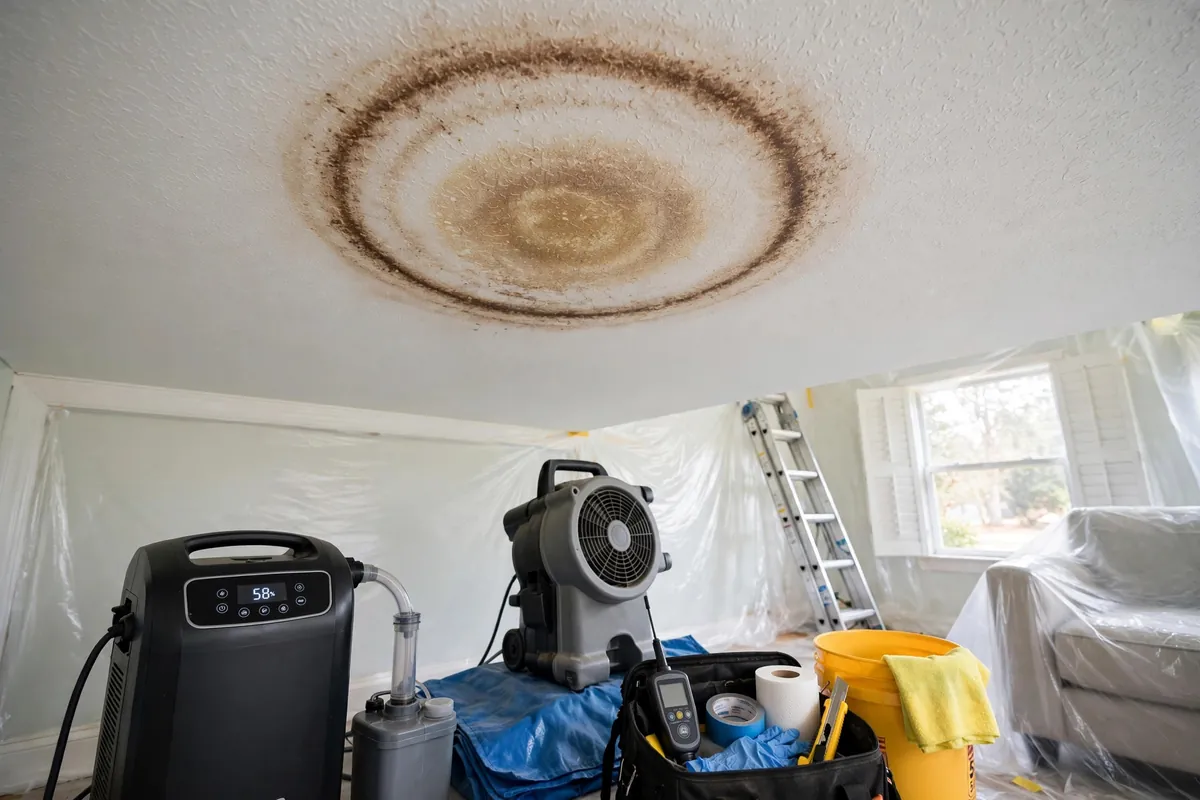
- Ceilings. From below, the camera maps moisture spreading across ceiling drywall — often showing that the wet area extends well past the stain's edge, which matters for planning the repair.
- Floors over slabs. A cool patch on a tile or concrete floor can mark a slab leak below, especially when paired with a warm patch from a hot water line.
- Around fixtures. The camera quickly checks the walls and floors surrounding toilets, tubs, showers, and water heaters — the highest-probability zones — in a single pass.
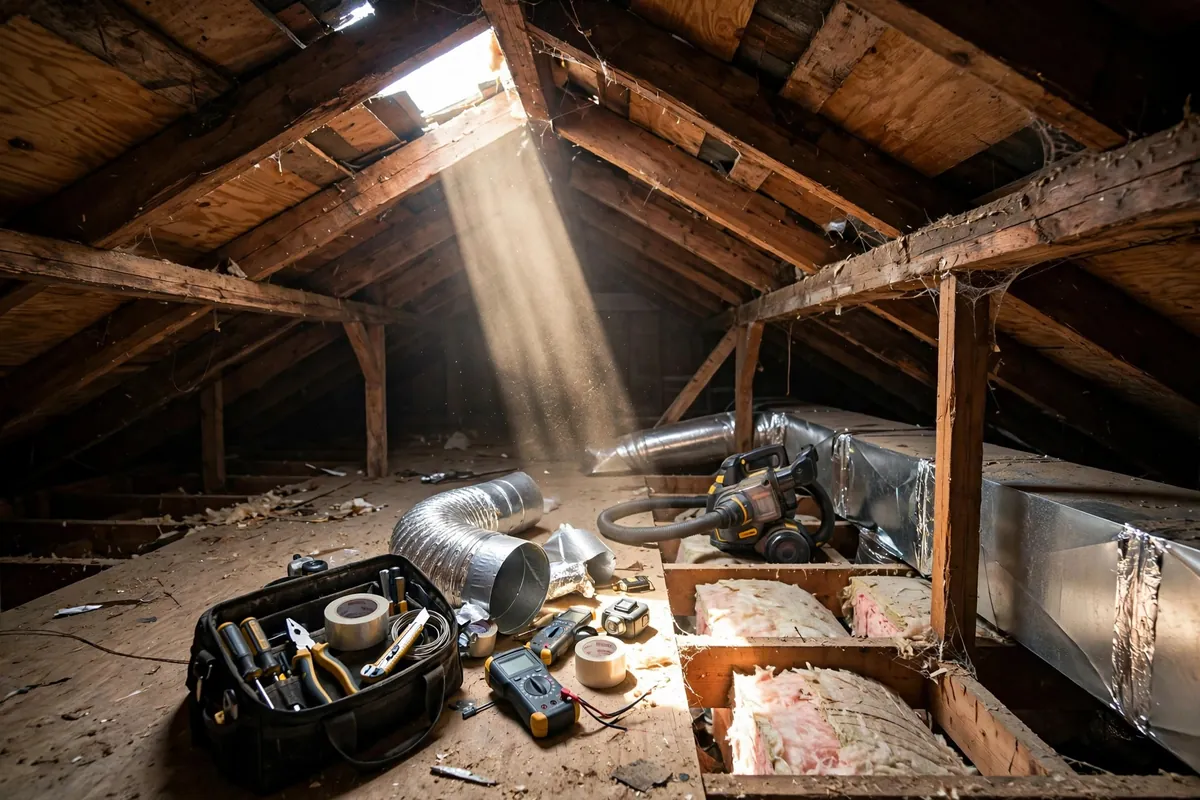
- Attics. Scanning the attic floor from above reveals wet insulation and decking as cool zones, complementing the visual clues described in our attic leak guide.
The method is most powerful as a survey tool: it covers large areas fast and tells the technician where to focus the slower, more precise instruments. Think of it as the wide-angle lens — it finds the neighborhood, and then moisture meters and acoustic sensors find the address.
What Thermal Imaging Cannot See
An honest guide includes the limits, because infrared has real ones — and knowing them is what separates professional use from gimmickry.
It cannot see through walls. The camera reads surface temperatures only. It shows the thermal effect of moisture on the surface, not the pipe, the fitting, or the water itself. Anyone claiming X-ray vision is overselling the tool.
It cannot identify the cause. A cool patch says moisture is present; it does not say whether the source is a supply line, a drain, condensation, or a roof leak. Determining the cause takes correlation — with moisture readings, with fixture testing, with the home's plumbing layout.
It needs temperature contrast. In a space where everything sits at nearly the same temperature, there is little difference for the camera to display. Air-conditioned Florida homes usually provide good contrast, but unconditioned garages or outdoor areas in summer heat are harder to read.
It can be fooled. Missing insulation, air infiltration, thermal bridging at framing members, and even a recently used hot shower can all paint patterns that resemble moisture. The camera reports temperatures faithfully; interpreting them correctly is the human's job.
These limits are exactly why our water leak detection service in Leesburg never relies on infrared alone. The camera proposes; the moisture meter, the acoustic sensor, and the pressure gauge dispose.
Pairing Infrared With Other Detection Tools
Professional leak detection is a sequence, and thermal imaging usually plays the opening role. Here is how the tools combine:
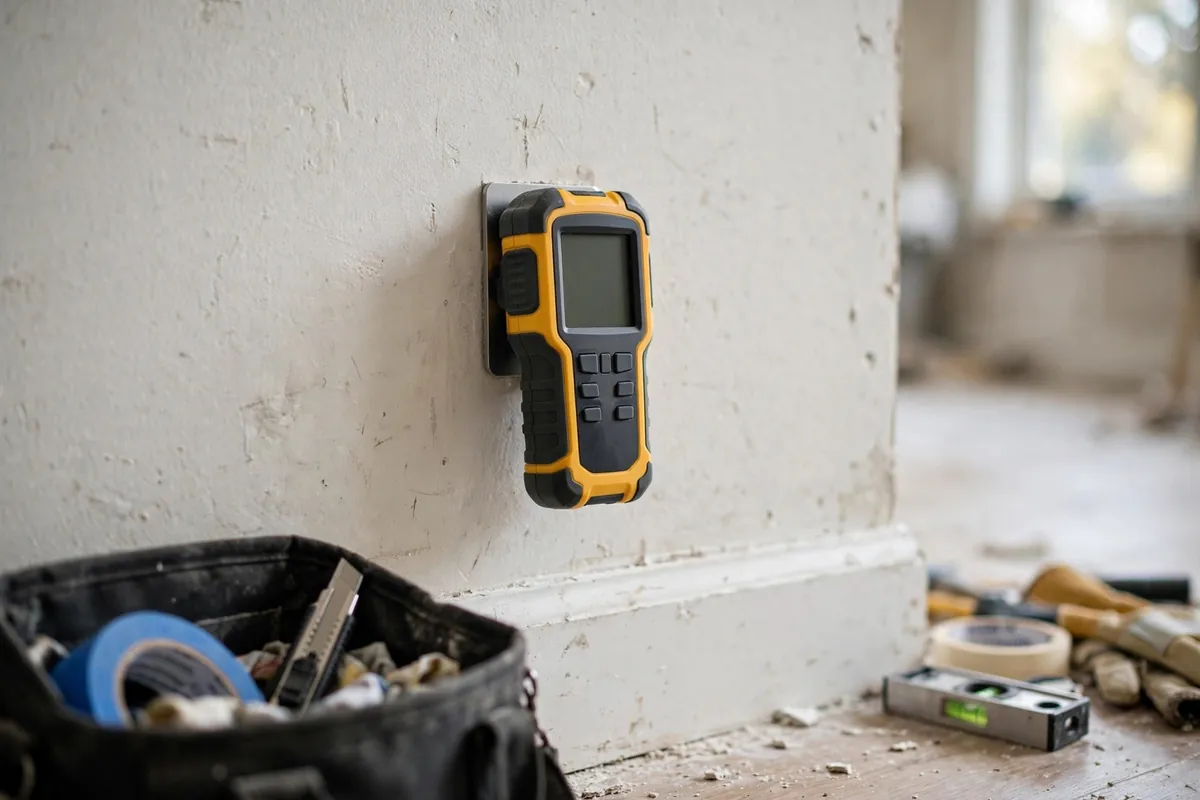
First, the infrared survey maps the suspect areas — walls, ceilings, floors — and marks every thermal anomaly. This takes minutes and ensures nothing gets missed. Second, a moisture meter checks each marked spot, confirming which anomalies are actually wet and measuring how the dampness is distributed. The meter's gradient — wettest at the center, drier at the edges — points back toward the source.
Third, if a pressurized supply line is suspect, acoustic listening equipment checks for the hiss of escaping water at the marked location. Our article on acoustic leak detection explains what the technician is hearing. Fourth, pressure testing can isolate and confirm the responsible line definitively — see our guide to what pressure testing reveals.
Each step narrows the answer and checks the previous one. When the camera, the meter, the microphone, and the gauge all point at the same spot, the technician can mark a small repair opening with confidence. That convergence — not any single image — is what makes modern detection reliable.
What To Expect During A Thermal Leak Survey
If you have never watched a thermal survey, here is what the visit looks like from the homeowner's side.
The technician arrives with a handheld infrared camera — roughly the size of a camcorder — and walks the areas you have flagged plus the high-probability zones nearby. There is no setup, no contact with your walls, and no noise. You can watch the screen over their shoulder as they work; most technicians narrate what they are seeing, pointing out normal patterns (studs, insulation gaps) versus anomalies worth checking.
When the camera flags a cool patch, the technician follows up on the spot with a moisture meter pressed to the surface — a quick confirmation that takes seconds. The whole survey of a typical problem area usually takes well under an hour, and you will know before they leave where the moisture is and what the next step should be.
Thermal imaging is included in our standard leak detection visits, and it is available around the clock through our emergency leak detection page when the situation cannot wait. Call (352) 703-8206 any time — our phones are answered 24/7 and most Leesburg arrivals take 30–45 minutes.