Atlantic hurricane season runs June 1 through November 30 every year, with peak tropical activity from August through October. June is typically the wettest month, and heavy tropical rainfall — whether or not a named storm makes landfall — stresses yard drains and sewer systems across Central Florida. For plumbing, hurricane season is really about water volume: your drains and sewer lines must move far more water, far faster, than on an ordinary rainy day.
The most common storm-related plumbing failures are not dramatic. They are clogged yard drains that leave standing water against the foundation, damaged or missing sewer cleanout caps that let rainwater and debris pour directly into sanitary lines, and sewer systems overwhelmed by inflow. All three are preventable with a checklist done once before the season starts. Below is that checklist, the warning signs to watch during and after heavy rain, safe first steps when something goes wrong, and how professional help fits in.
Before June, clear yard drains and gutters, confirm every sewer cleanout cap is present and seated, and make sure downspouts discharge away from the house. During heavy rain, watch for slow drains, gurgling fixtures, and standing water that does not drain within a day. If sewage backs up into the home, stop using water and call for emergency help rather than trying to clear it yourself.
In This Article
Why This Season Causes The Problem In Leesburg
Central Florida's humid subtropical climate delivers 48 to 51 inches of rain per year, concentrated in summer, with frequent afternoon thunderstorms. Hurricane season layers tropical systems on top of that baseline: sustained heavy rainfall that arrives over hours or days instead of in a single afternoon burst. Yard drains, French drains, and sewer lines that handle normal storms comfortably can be overwhelmed when the ground saturates and every system is at capacity at once.
Two verified local factors make this worse. First, damaged or missing sewer cleanout caps let rainwater and debris flow directly into sanitary sewer lines, adding storm water to a system designed only for household wastewater — and the debris can lodge and cause blockages. Second, Lake County sits on karst topography, where limestone dissolved by groundwater creates shifting and subsiding soils that stress buried water and sewer lines; heavy rain changes soil loading and can aggravate existing weak points in buried pipe.
The sandy soil that covers much of the area drains fast, which helps — but it also means surface grading and drain placement matter enormously, because water moves quickly across the surface toward low spots. A yard drain clogged with a season of leaf litter and grass clippings becomes a dam exactly when you need a channel. That is why the preseason checklist below starts with the drains.
Don't wait for the first tropical storm warning to do this checklist. June typically brings the heaviest rainfall of the year, so completing the checklist in late spring means your drains are ready for the whole season, peak months included.
Prevention Checklist
Do these once, before the season starts — ideally in May, ahead of the June 1 start of hurricane season. Every item is a safe homeowner task.
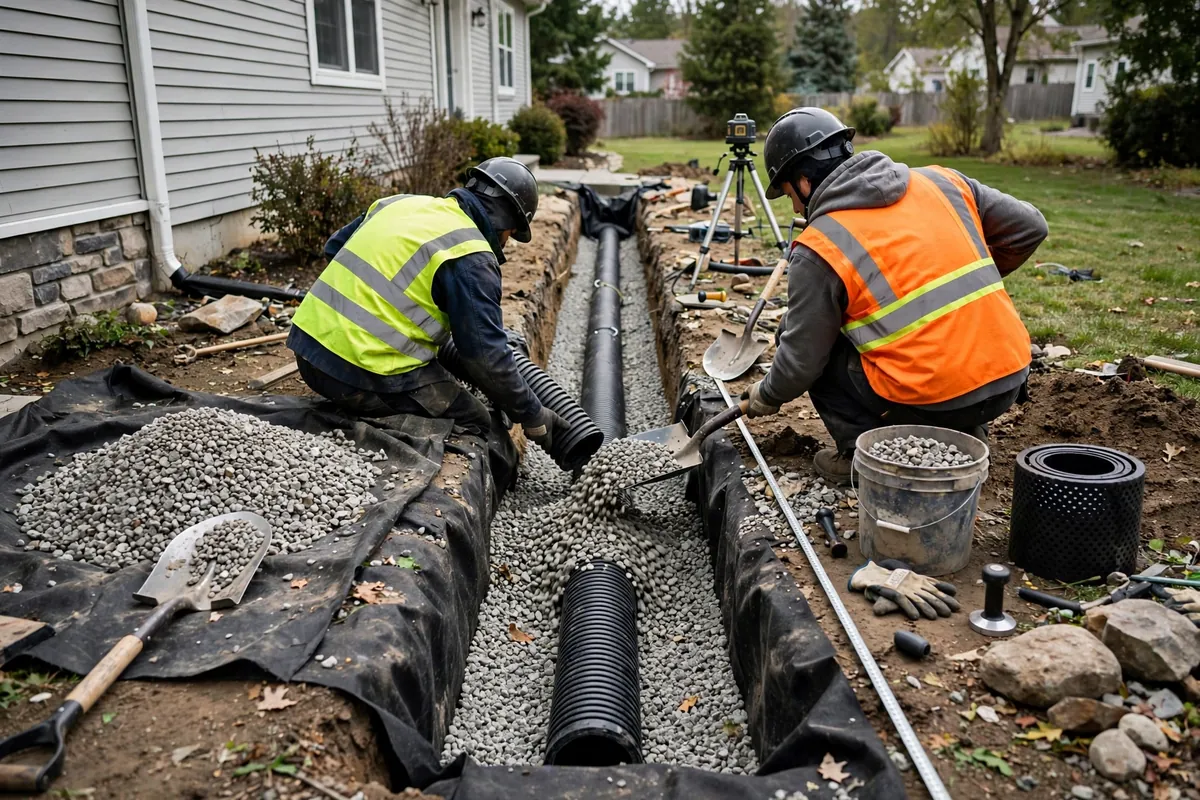
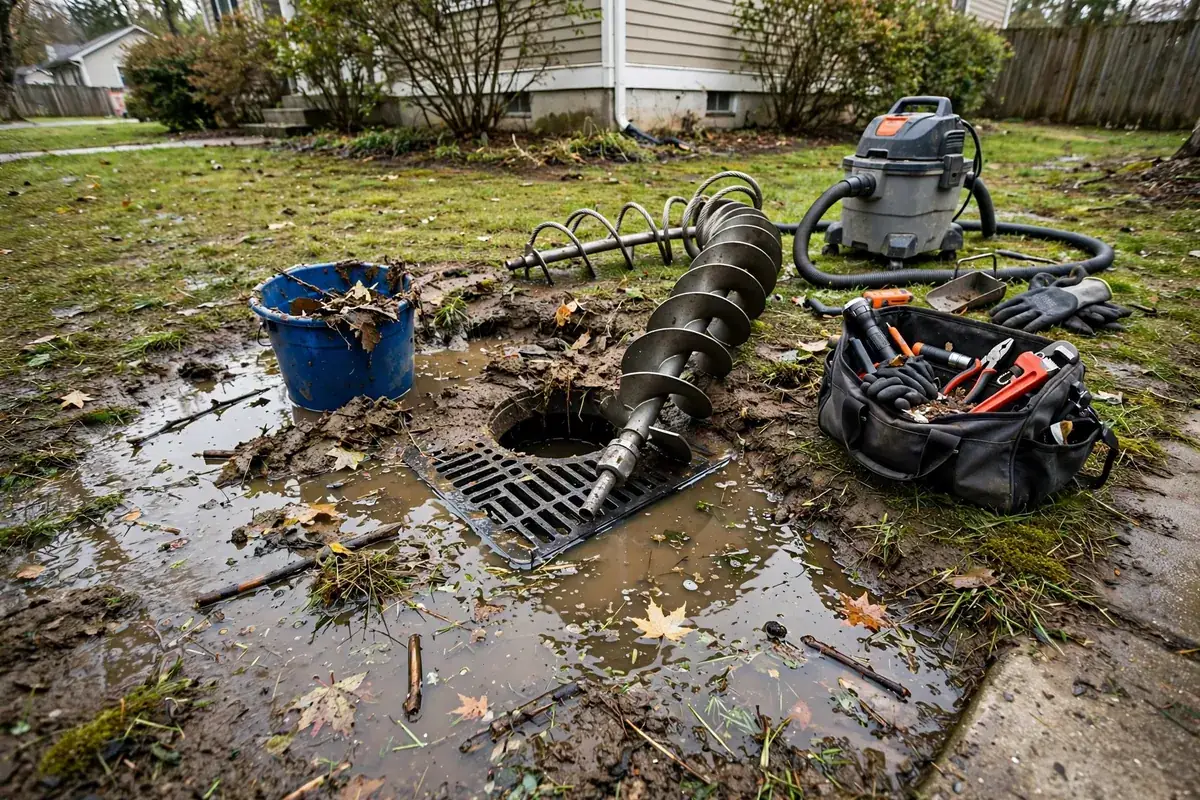
- Clear every yard drain grate, channel drain, and French drain outlet of leaves, grass clippings, mulch, and sediment — most storm flooding starts as a blocked grate.
- Walk the property and confirm every sewer cleanout cap is present, undamaged, and seated firmly; replace any that are cracked or missing.
- Clean gutters and downspouts, and confirm downspouts discharge at least several feet from the foundation, not into a clogged bed.
- Check that the soil grades away from the house on all sides — regrade low spots where water pools against the foundation.
- If the home has a sump pump, pour a bucket of water into the pit to confirm the pump activates and discharges properly.
- Trim shrubs and grass away from drain grates, cleanouts, and downspout outlets so vegetation does not trap debris.
- Clear pool deck drains and confirm the pool's water level plan for heavy rain (many owners lower the level slightly before a big storm).
- Locate the main water shutoff valve and every sewer cleanout, and make sure every adult in the home knows where they are.
- Save (352) 703-8206 in your phone now — during a storm is the worst time to search for an emergency plumber.
- After the first major storm of the season, walk the yard once and note anywhere water stood for more than a day; that is your drainage to-do list for next spring.
One item deserves emphasis: the cleanout caps. A missing cap is a two-dollar problem that can cause a thousands-of-dollars problem, because every inch of rain that falls near an open cleanout flows straight into your sewer line. Walk the yard once and look for the round caps — usually white or black PVC — near the house and at the property line.
Warning Signs
During and after heavy tropical rainfall, watch for these signs that storm water is overwhelming your plumbing or drainage:
- Standing water that lingers around the foundation, in low spots, or over yard drain grates for more than a day after rain stops — normal sheet flow drains; lingering pools point to clogged or undersized drainage.
- Slow or gurgling drains and toilets during heavy rain, which suggest the sewer system is surcharged or a blockage is restricting flow.
- Water backing up into tubs, showers, or floor drains — the clearest sign of a sewer problem, and the one that requires immediate action.
- New wet spots or sinkholes near the sewer line path, which can indicate a broken buried line made worse by saturated, shifting karst soil.
- A sewage smell from drains or the yard after storms, which can mean a cleanout cap is missing or a line is compromised.
Gurgling that appears only during heavy rain and clears afterward often means the municipal system or your line is temporarily surcharged — worth noting and mentioning to a professional, but not automatically an emergency. Backups into the home are the line where "watch and wait" ends.
What To Do If It Happens
Sewage backing up during or after a storm is not a wait-and-see situation — stop using water in the home and call us at (352) 703-8206; our emergency line is staffed around the clock through storm season.
Storm-related plumbing problems range from annoying to hazardous. These safe first steps cover the common cases:
- If sewage is backing up into the home: stop using all water immediately. No flushing, no laundry, no showers — every gallon you add goes toward the backup. Call for emergency service.
- For standing water over yard drains: clear the grate of leaves and debris by hand once it is safe to go outside. Most yard-drain "failures" during storms are simply blocked grates.
- Do not open sewer cleanouts yourself during a backup. Removing a cap under pressure can release sewage into the yard or the house. Leave cleanout work to a professional with the right equipment.
- Document damage with photos for insurance purposes before cleanup begins, including water lines on walls and affected belongings.
- Keep children and pets away from standing water that may contain sewage or debris, especially near backed-up floor drains.
After the immediate situation is stable, a professional can determine whether the problem was a one-time overload or a blockage that will repeat with the next storm. A sewer camera inspection shows exactly what is happening inside the line — roots, bellies, breaks, or debris — so the fix addresses the cause rather than the symptom.
Standing water and electricity are a dangerous combination. If water has reached outlets, the breaker panel area, or any appliance, stay out and let professionals handle it. Turn off power to affected areas at the main breaker only if you can do so from a dry location.
How The Service Helps
Storm season is one of the busiest times for the professionals in our network, and it is exactly what our 24/7 emergency service is built for. When heavy rain leaves you with backups, standing water, or a suspected broken line, we arrive typically within 30 to 45 minutes — day, night, or during a storm's aftermath — and diagnose with equipment, not guesswork.
Our yard drain cleaning service clears the clogs that turn storms into flooding, and emergency yard drain service handles the urgent cases. If the problem is in the sewer line itself, main line clearing and emergency main line service restore flow, and camera inspection pinpoints breaks or bellies aggravated by saturated soil. With 19 years serving Leesburg, we have seen what every kind of storm does to local drainage — call (352) 703-8206 and we will take it from there.