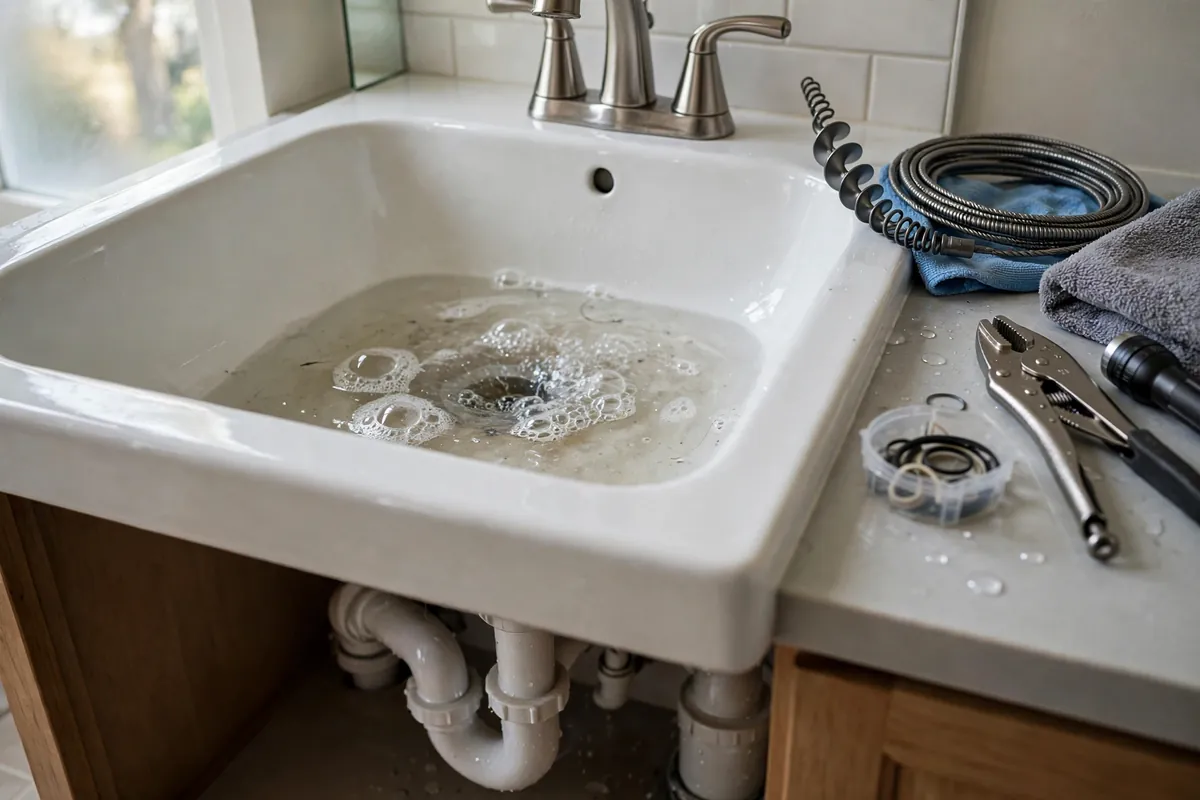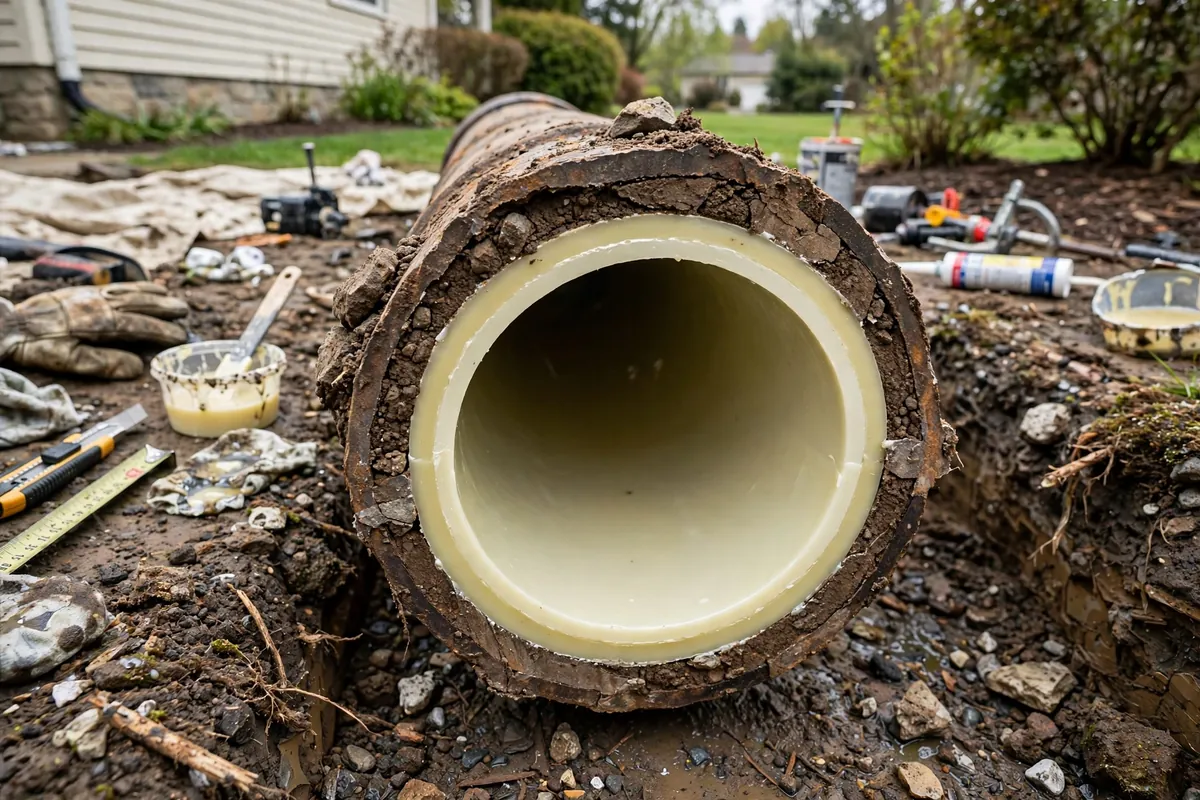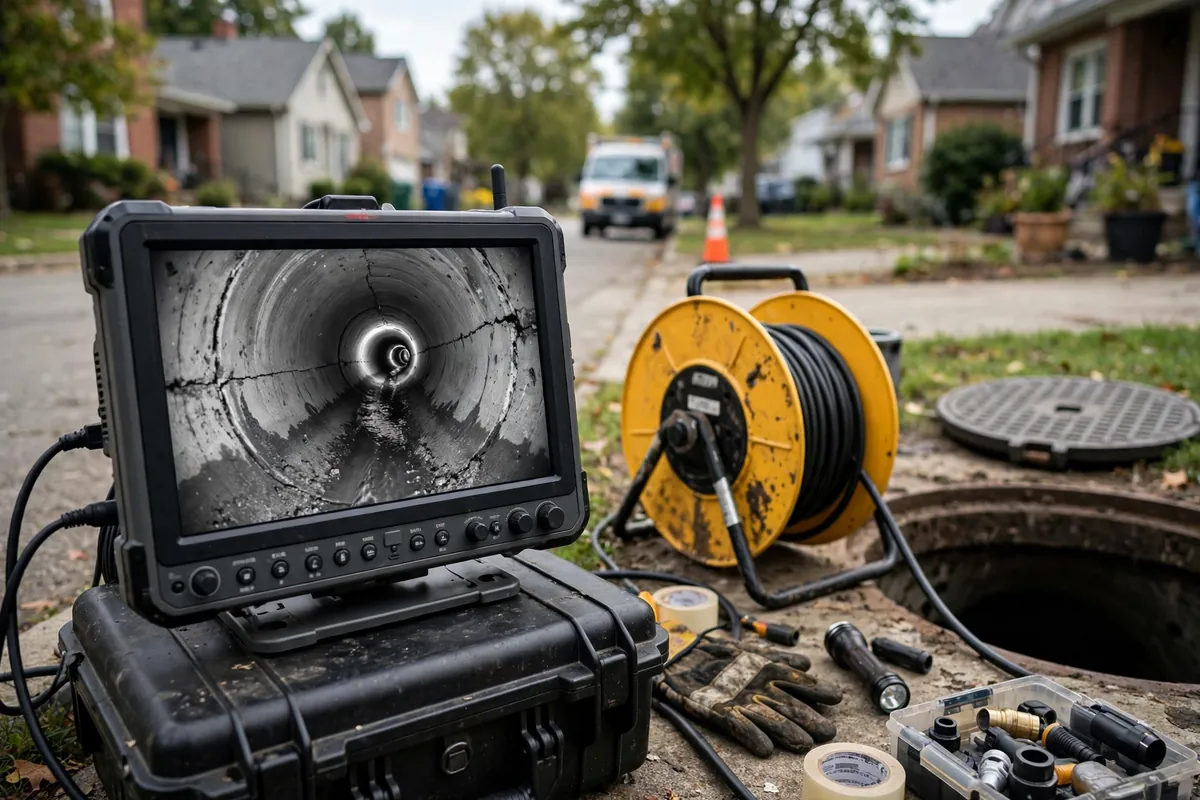
A sewer camera inspection sends a small waterproof camera through your sewer line on a flexible cable while the technician watches live video on a monitor. The camera reveals blockages, tree roots, cracks, bellies, and breaks in real time, and a built-in locator signal shows exactly where each problem sits underground. The process usually takes well under an hour, requires no digging, and ends the guessing about what is wrong inside your pipes.
It is the standard first step before any major sewer decision — clearing a stubborn clog, lining a damaged pipe, or buying a home with an older sewer line — because every repair option depends on knowing what the camera sees.
In This Article
What A Sewer Camera Inspection Is
A sewer camera is a small, waterproof, self-leveling camera mounted on the end of a flexible push cable that can run a hundred feet or more. The technician feeds the cable into the sewer line through a cleanout — or through a pulled toilet if no cleanout is accessible — while live video appears on a monitor above ground. LED lights around the lens illuminate the pipe interior, so the picture stays clear even in total darkness.
The camera head also carries a tiny radio transmitter called a sonde. As the camera travels, the technician can sweep a handheld locator over the yard and pinpoint the camera's position and depth from above. That pairing — video plus location — is what turns a vague symptom like multiple drains backing up into a precise diagnosis with a marked spot on the ground.
Nothing about the process disturbs your property. There is no digging, no removed flooring, and no guesswork about where the problem might be. The whole point of the inspection is to replace assumptions with evidence before anyone recommends a repair.
What The Camera Actually Shows
Tree roots are the most common finding in Leesburg. On camera they look like pale, hairlike masses pushing through pipe joints, growing denser the further the camera advances. The footage shows exactly which joints are breached and how much of the pipe is obstructed — information that determines whether clearing is enough or the joint needs repair.
A belly is a sagging section of pipe where water pools instead of flowing through. On screen it is unmistakable: the camera passes through standing water even though the rest of the line is dry, and sediment collects in the low spot. Bellies cause recurring clogs because solids settle where the water slows, and the footage shows how long the sag runs and how deep it sits.
An offset is a joint where two pipe sections no longer line up. The camera shows a visible step or lip at the joint — a perfect snag point for wipes and paper. Small offsets can sometimes be lived with after clearing; larger ones catch debris constantly and usually need repair.
Cracks and breaks appear as dark lines, holes, or collapsed sections in the pipe wall. The camera shows their size, shape, and location, which is exactly what a repair plan needs. Scale and grease buildup look different — a rough, narrowing coating on the pipe walls rather than a structural failure — and they point to cleaning rather than repair.
The camera also documents the ordinary: pipe material and diameter, where materials change, where branch lines join, and the overall condition of the run. That baseline matters. Our guide to tree roots and underground pipes explains why roots target certain joints, and a camera inspection shows whether your line is one of them.
The inspection is recorded as it happens. Ask the technician for a copy of the video — it is valuable documentation for repair quotes, real estate transactions, and your own records.
How The Inspection Is Done, Step By Step
The visit starts with access. The technician locates your sewer cleanout — usually a capped pipe near the foundation or property line — and removes the cap. If no cleanout exists, the nearest toilet is pulled and the camera enters through the flange. Either opening gives full access to the main line.
Next the camera goes in. The technician feeds the push cable slowly by hand, watching the monitor for the first signs of trouble. Distance counters on the equipment track exactly how many feet of cable are in the ground, so every finding gets a footage reading from the entry point.
As the camera travels, the technician narrates what appears: root masses at joints, standing water in a belly, a cracked section, grease coating the walls. Anything significant gets noted with its distance reading. If a repair will be needed, the technician sweeps the locator over the ground at that footage mark and paints or flags the spot, along with the depth.
The run usually continues all the way to the city sewer connection or septic tie-in, giving a complete picture of the entire line rather than just the problem area. Then the cable is reeled back in, the cleanout is recapped or the toilet reset, and the technician reviews the footage with you on the monitor — pointing out each finding and explaining what it means before recommending anything.
How To Prepare For Your Inspection
Preparation is simple, but a little of it makes the visit smoother. The main thing the technician needs is clear access to the cleanout — move planters, hoses, or stored items away from it before the appointment. If you are not sure where your cleanout is, look for a capped pipe near the house foundation or along the property line; the technician can help locate it on arrival.
Write down your symptoms before the visit: which fixtures are affected, when the trouble started, and whether it is getting worse. That history helps the technician know what to look for. Also note any past plumbing work — previous clogs, repairs, or root clearing — since it provides context for what the camera finds.
Plan to be home. The most valuable part of the visit is the few minutes the technician spends reviewing the footage with you, pointing out each finding on the monitor. Seeing the inside of your own pipe makes every recommendation that follows easy to understand.
- Clear a path to your sewer cleanout so the technician can reach it easily
- Note which fixtures are acting up and when the symptoms started
- Write down any recent plumbing work, including past clogs or repairs
- Keep pets away from the work area during the visit
- Make sure an adult is home to review the footage with the technician
- If you do not know where your cleanout is, check near the house foundation or property line — the technician can help locate it
Reading The Results: What Comes Next
The footage sorts findings into three buckets. The first is maintenance issues: roots, grease, or debris blocking an otherwise sound pipe. These call for professional main line clearing — an auger for roots and solids, or hydro jetting for grease and scale — and the line is back in service.
The second bucket is repairable damage: cracks, root-breached joints, corrosion, or small offsets in a pipe that is otherwise intact. This is where epoxy pipe lining often fits, creating a smooth new pipe inside the old one without digging. The camera footage is what qualifies a pipe for lining — or rules it out.
The third bucket is structural failure: collapsed sections, severe bellies, or major misalignment that lining cannot fix. These need a section repair or replacement, and the locator marks from the inspection show the repair crew exactly where to dig — one precise spot instead of an exploratory trench.
Sometimes the best result is a clean bill of health. If the camera shows a sound pipe and the symptoms point elsewhere — a venting issue, for example — you have saved yourself from an unnecessary repair. Either way, the footage gives you evidence to base the decision on, which is the entire value of the inspection.
When A Camera Inspection Is Worth It
Any recurring sewer symptom justifies an inspection. If you have had the line cleared before and the problem came back, the camera shows why it returned — and what will stop the cycle. Slow drains across several fixtures, sewage odors with no visible source, and soggy strips in the yard are all classic reasons to look inside.
It is also the right move before committing to a major repair. Lining, spot repairs, and full replacements all depend on knowing the pipe's true condition, and the footage protects you from paying for the wrong fix. Homebuyers use inspections the same way — a camera run before closing on an older Leesburg home reveals the sewer line's condition while there is still time to negotiate.
After any significant clearing work, a follow-up camera pass confirms the pipe itself is sound and not just temporarily open. Roots grow back through the same breached joints, so verifying the pipe's condition after clearing tells you whether to expect a repeat visit.
If you are dealing with an active problem right now, our main line clog service includes the camera inspection as part of the diagnosis — find it, see it, then fix it. For suspected underground pipe damage beyond the sewer line, the same camera approach applies to buried drain pipes.