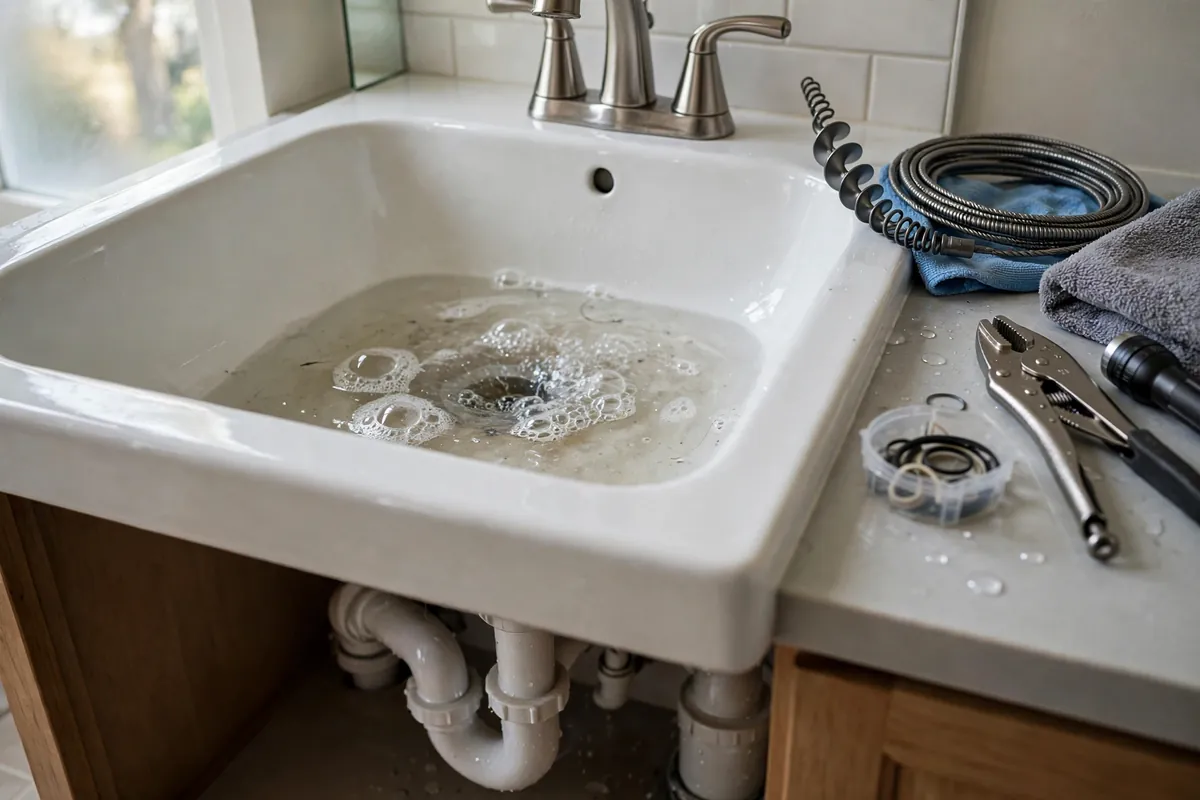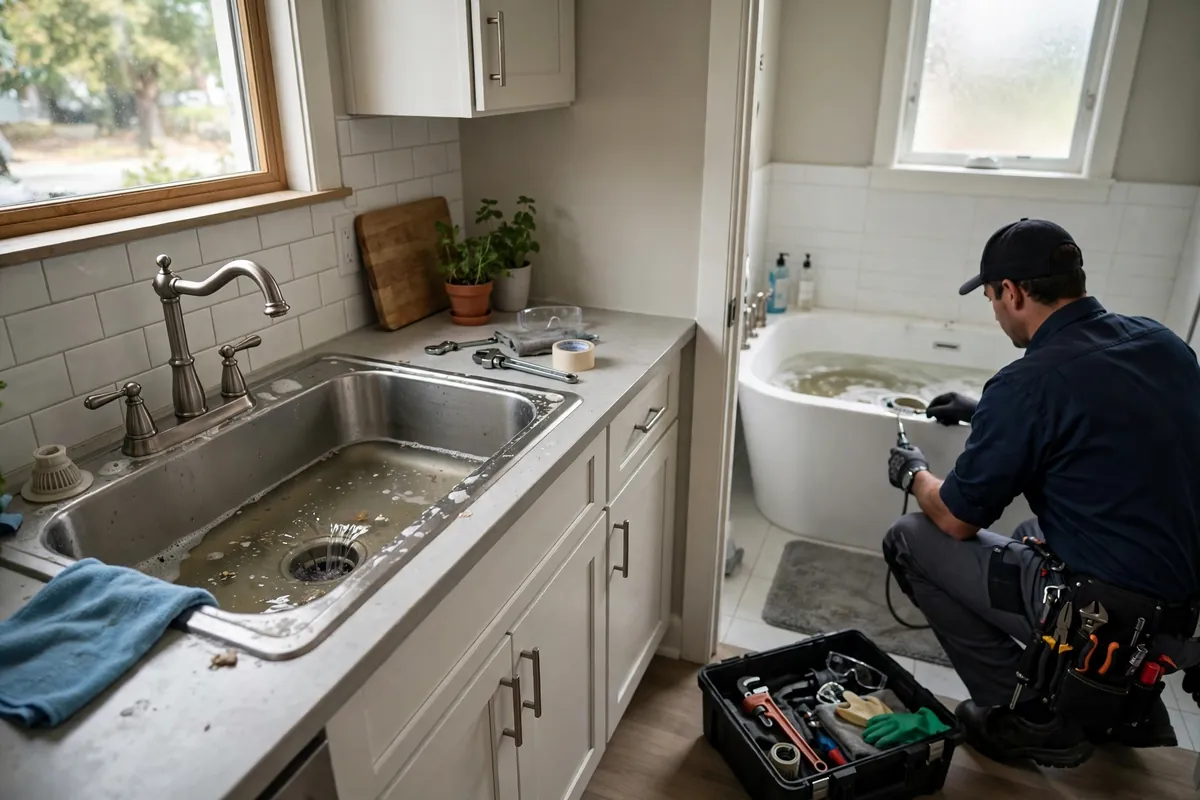
When more than one drain in your home is slow, gurgling, or backing up at the same time, the blockage is almost always in your main drain line — the single pipe every fixture drains into. A lone slow sink is a local problem; a toilet that bubbles when the washing machine drains is a main line problem. The pattern of symptoms tells you where the trouble sits and how urgently to act.
If wastewater is already coming back up through any fixture, stop using water and call a professional. Sewage should never be handled without professional equipment.
The pattern tells the story: one slow fixture means a local clog, while several slow or backing-up fixtures mean the main line is blocked. Water appearing in the lowest fixture — usually a tub, shower, or floor drain — is the classic sign. Stop running water, avoid contact with any wastewater, and call a professional; the blockage only gets worse with time.
In This Article
What To Do Right Now
Stop all water use first. Do not run the washing machine or dishwasher, do not shower, and avoid flushing unless necessary. With a blocked main line, every gallon you add raises the level of standing wastewater and brings a backup closer — a washing machine cycle alone can be the surge that turns slow drains into sewage in the tub.
Check your lowest fixtures: the ground-floor tub, shower, or floor drain. If water is rising there, keep everyone away from it and do not try to clean it up yourself. Wastewater carries bacteria and contaminants, and safe cleanup needs professional equipment.
Do not use chemical drain cleaners. They cannot reach or dissolve a main line blockage, and if water backs up, the chemicals come back with it. Do not keep plunging multiple fixtures either — plunging pressurizes the system and can push wastewater up through a different drain.
Take note of the pattern while it is fresh: which fixtures are affected, what triggers the symptoms, and whether it is getting worse. That information is genuinely useful to the technician. Then call. We have served Leesburg for 19 years, we answer around the clock, and we typically arrive within 30–45 minutes.
If wastewater is rising through tubs, showers, or floor drains, stop using all water and call (352) 703-8206 — we're available 24/7 and typically arrive within 30–45 minutes in Leesburg.
Signs To Look For
Think of this as triage — match your symptoms to the pattern and you will know roughly where the blockage sits. Pattern one: every drain in the house is slow, and toilets, tubs, and sinks all seem affected. That is the main line, the single pipe everything shares. Nothing upstream of a whole-house symptom can explain it.
Pattern two: fixtures in one bathroom group are slow, but the kitchen and laundry work fine. That points to a branch line serving that bathroom — a problem, but a smaller and more local one than the main. Pattern three: the toilet gurgles or bubbles when the washing machine drains, or the tub gurgles when a toilet flushes. Fixtures affecting each other means air is trapped by a blockage downstream of both — and when the fixtures are far apart, downstream means the main line.
Pattern four is the urgent one: water or sewage rising in a fixture nobody used, usually the lowest tub, shower, or floor drain. The blockage is now complete enough that wastewater is reversing course. Pattern five: water seeping from the outdoor cleanout cap. That places the blockage between the house and the street — the yard section of the line.
One more pattern worth knowing: symptoms that come and go with heavy water use. Drains behave normally most of the day but back up during laundry or when several fixtures run at once. That is a partial main line blockage — the pipe handles normal flow but cannot pass a surge. It will not stay partial. If you are unsure which pattern you are seeing, our guide to telling a main line clog from a sewer backup walks through the distinction in detail.
Common Causes
Tree roots are the leading cause of main line blockages in Leesburg. Roots enter through tiny cracks or loose joints searching for moisture, then grow into dense masses that snag everything passing by. A line that has been cleared for roots before will clog again at the same joints until the entry points are repaired — which is why repeat root clogs deserve a camera inspection, not just another clearing.
Flushed wipes are the fastest-growing cause. Products labeled flushable do not break down like toilet paper; they survive the trip and accumulate at any rough spot or root mass downstream. Paper towels, hygiene products, and cotton swabs do the same. With several people in a household, the buildup reaches critical mass surprisingly fast.
Grease hardens inside the pipe over time. Hot cooking grease poured down the kitchen drain cools as it travels, coating the pipe walls in layers. The narrowed opening catches solids more easily, and the combination builds into a full blockage — often right where the kitchen branch meets the main.
Structural problems in the pipe itself cause the rest: bellies where waste pools and settles, cracked or collapsed sections that snag debris, and offset joints that create a lip inside the pipe. Older lines and lines under shifting soil are most vulnerable. A sewer camera inspection shows which cause you are dealing with, and the fix follows the cause — clearing for buildup, repair or epoxy lining for damage.
What Happens If You Wait
A main line blockage follows a predictable escalation. Slow drains across several fixtures become gurgling as air gets trapped, gurgling becomes water rising in the lowest fixture during heavy use, and that becomes wastewater backing up with normal use. Each stage is harder and messier to resolve than the one before.
The tipping point is often ordinary: a laundry day, guests using extra bathrooms, or a long shower. The partial blockage that handled normal flow cannot pass the surge, and wastewater reverses into the home — usually through the tub or shower first. From there it spreads to floors, baseboards, and anything stored low.
Sewage contact ruins porous materials. Flooring, drywall, and baseboards that touch wastewater generally must be removed by professionals rather than cleaned, which turns a plumbing visit into a restoration project. Standing wastewater in Florida's humidity also creates conditions for mold growth within days.
Waiting also risks the pipe itself. Pressure against a cracked section can widen the break, converting a blockage that needed clearing into a pipe that needs repair. The cost difference between acting at the slow-drain stage and acting at the sewage-backup stage is substantial — in money, in disruption, and in what gets thrown away.
Safe DIY Checks Vs When To Call A Professional
With a suspected main line blockage, the safe list is short and the call-a-professional list is long. Here is the dividing line.
| Situation | Safe To Do Yourself | Call A Professional |
|---|---|---|
| Noting which fixtures are affected and what triggers it | Yes — write it down; it speeds up the diagnosis | If the pattern is spreading to more fixtures |
| Looking at the outdoor cleanout from a distance | Yes — look only | If water or sewage is seeping from the cap |
| Stopping all water use in the home | Yes — do this immediately | — |
| Plunging one fixture | Only if a single fixture is slow and the rest are normal | If multiple fixtures are involved |
| Using chemical drain cleaners | No — ineffective on main lines and dangerous in a backup | Always call instead |
| Running the washing machine to see what happens | No — the surge can trigger a full backup | Call instead of testing |
| Renting a drain snake for the main line | No — rental augers can damage pipes or get stuck | Professional augers and jetters only |
| Touching or cleaning up backed-up wastewater | No — sewage needs professional handling | Always — never a DIY job |
How The Service Fixes It
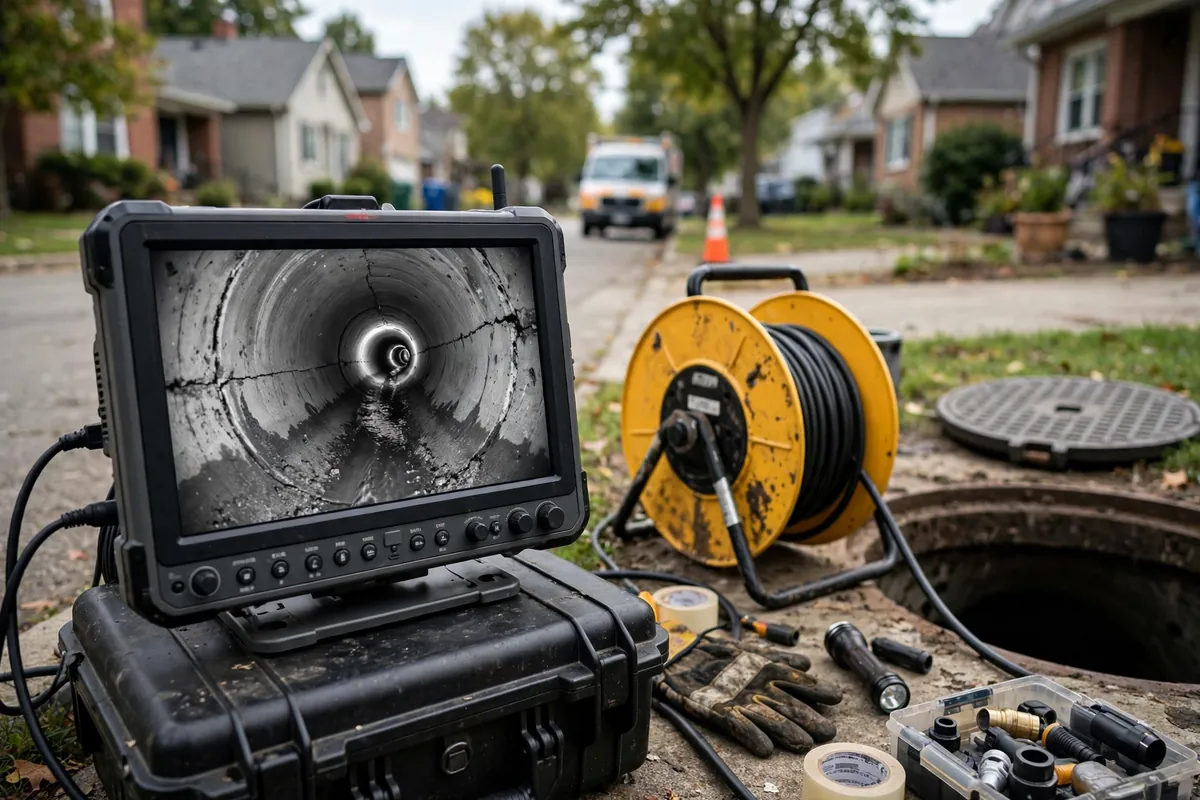
The fix starts with a sewer camera inspection to find the blockage and identify its cause. The technician feeds the camera through the line and watches the live feed: a root mass looks different from a grease buildup, which looks different from a collapsed section — and each one calls for a different fix. Diagnosis first, always.
For blockages in a sound pipe, the technician clears the line with professional equipment. A heavy-duty auger with a cutting head chews through root masses and solid obstructions; hydro jetting scours grease, scale, and sludge from the pipe walls with high-pressure water. Many jobs use both — cut the obstruction, then wash the line clean.
If the camera shows the pipe itself is damaged — cracked walls, breached joints, corrosion — clearing alone will not hold. That is when repair options enter the picture: epoxy lining for cracks and root entry points in an otherwise intact pipe, or a section repair for collapses and severe damage. The footage lets you see the damage yourself before deciding.
A final camera pass confirms the line is fully open and flowing end to end. You get an explanation of what was found, what was done, and what to watch for — including whether the cause suggests a repeat visit down the road.
When several fixtures are already backing up, treat it as urgent: our emergency main line service runs 24/7 with typical arrival in 30–45 minutes. For slow drains that have not yet become a backup, our main line clearing service covers the full inspection and clearing in one visit — and our main main line clog page explains the service in full.