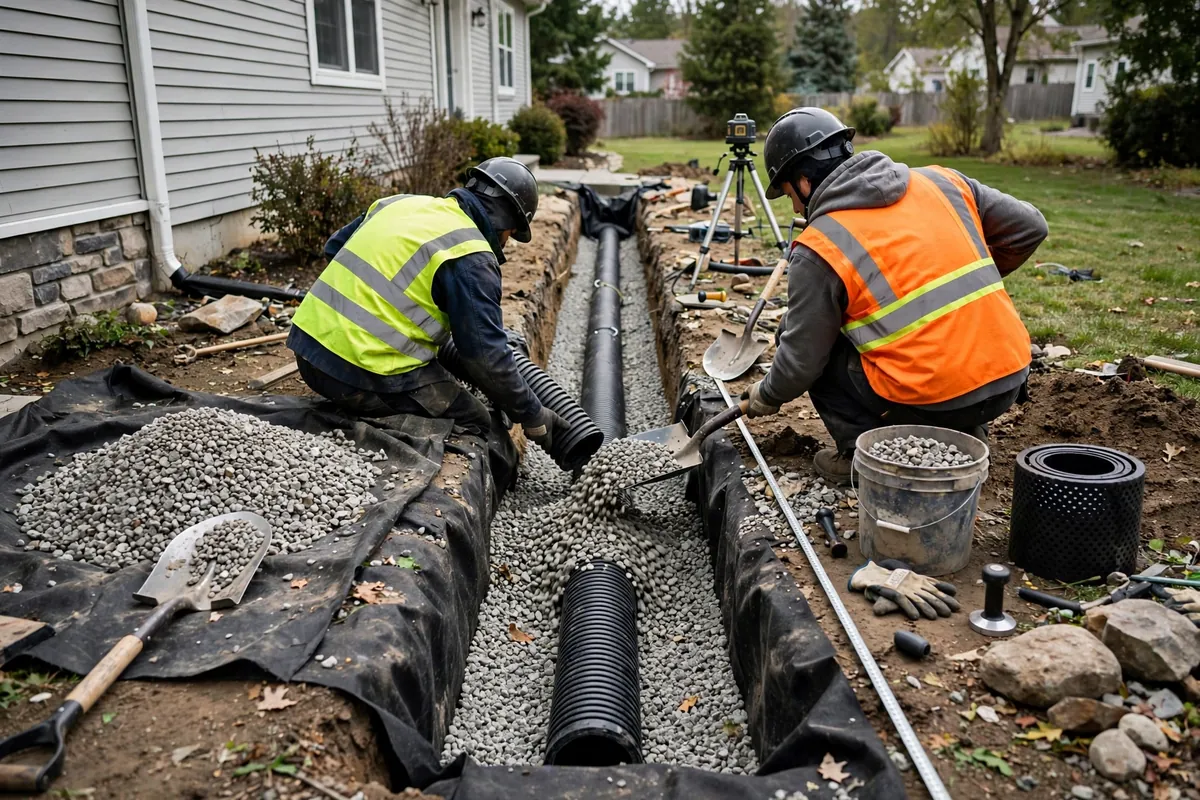
A French drain is a trench filled with gravel and lined with a perforated pipe that collects water from the surrounding soil and channels it to a safe discharge point — a storm drain, a dry well, or a low area away from structures. It handles subsurface water: the groundwater and seepage that surface drains never see. Surface systems like channel drains and catch basins handle the water you can see flowing across the yard. Most Leesburg homes with drainage problems need one, the other, or both, and both fail the same way: gradually, silently, through clogging.
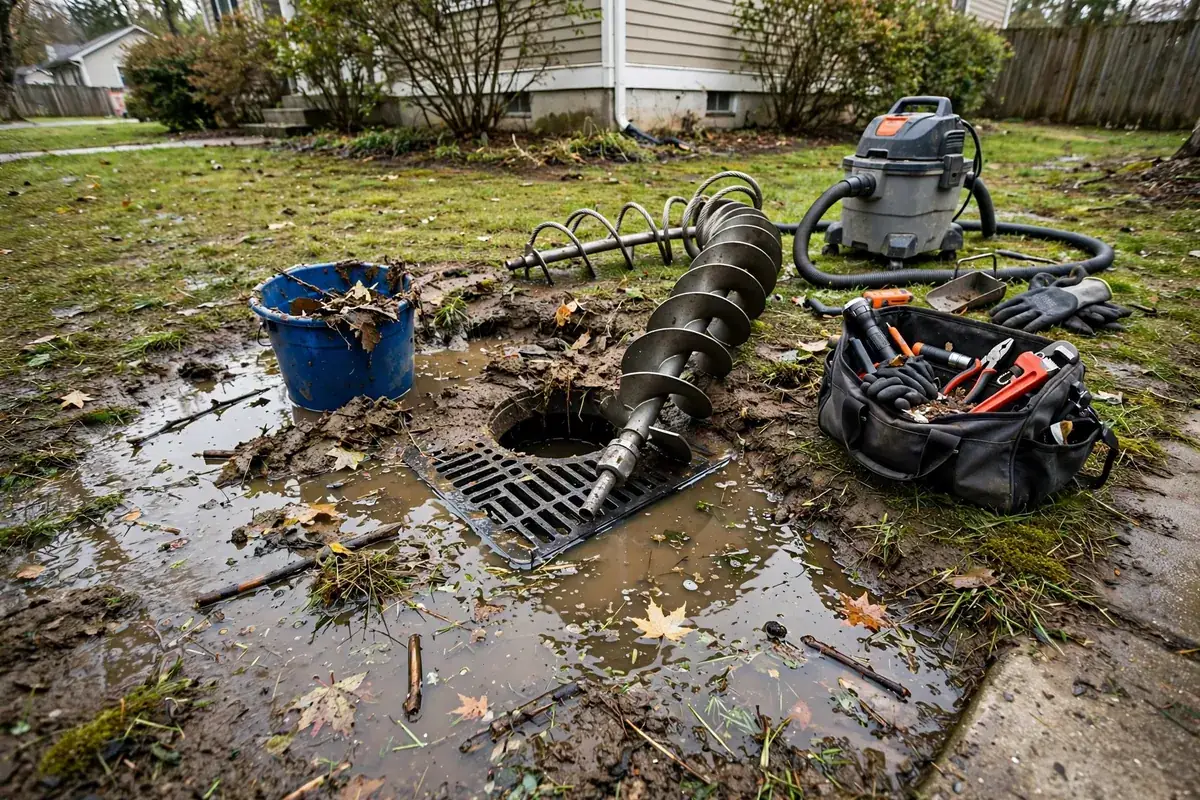
The clogging agents are ordinary yard life. Sediment washes into the gravel and fills the voids that make the drain work. Fine roots invade the perforated pipe through its slots. Mulch, leaves, and grass clippings mat over grates and inlets. None of this is visible from the surface, which is why the first sign of a failed drain is usually standing water after a heavy rain — exactly when you need the drain most. This guide covers how each drain type works, how to keep them clear, the warning signs of failure, and what professional cleaning involves.
In This Article
Why This Season Causes The Problem In Leesburg
Central Florida's 48 to 51 inches of annual rain falls mostly in summer, with frequent afternoon thunderstorms, and June is typically the wettest month. Atlantic hurricane season adds sustained tropical downpours from June 1 through November 30, with peak activity August through October. Yard drainage systems face their maximum load during exactly these months — and a drain that has been slowly clogging since last season tends to fail completely under the first truly heavy rain.
The local soil picture is mixed. Much of Lake County is sandy soil that drains quickly, which helps surface water percolate — but sandy soil also washes fine sediment into drain gravel and pipes with every storm, accelerating clogging. And the county's karst topography, limestone dissolved by groundwater into shifting and subsiding soils, means buried drain lines can settle, belly, or separate at joints over time, creating low spots where sediment collects and flow stalls. Our hurricane season plumbing checklist covers the full preseason routine these drains are part of.
Timing matters for maintenance, too. Cleaning yard drains in late spring — before the June rains — means the system is at full capacity for the wettest stretch of the year. Cleaning them in August, after the first flood, means the system failed exactly when it was needed. The seasonal angle of this guide is simple: drains are a preseason maintenance item, not a mid-crisis repair.
Prevention Checklist
Yard drains are low-maintenance, not no-maintenance. Work through this checklist every spring, and spot-check after major storms.
- Remove leaves, mulch, grass clippings, and sediment from every drain grate, channel drain, and catch basin inlet.
- Trace each drain to its discharge point and confirm the outlet is open, unburied, and flowing — a blocked outlet defeats a clean inlet.
- Flush each line with a garden hose from inlet to outlet and confirm strong flow at the discharge end.
- Check that landscape mulch and soil have not been piled over grates or outlets during seasonal re-mulching.
- Confirm downspouts are connected and discharge several feet from the foundation, not into beds that drain toward the house.
- Look for sunken or unusually lush strips of grass along buried drain paths, which suggest settled or separated pipe.
- Trim roots and vegetation away from inlets, outlets, and any known shallow drain runs.
- After the first major storm of the season, walk the yard and note anywhere water stands for more than a day — that is the system telling you where it needs help.
- Schedule professional cleaning for any line that fails the hose test, before the next heavy rain rather than after it.
The single most neglected item is the discharge point. Homeowners clean the visible grate at the top of the system and never check where the pipe ends — but if the outlet is buried under mulch or blocked by sediment, the whole drain backs up regardless of how clean the inlet is. Always trace the system to its end.
Warning Signs
Drain failure announces itself with water that has nowhere to go. Watch for:
- Standing water over or near drain grates that lingers more than a day after rain stops — the drain is not moving water.
- Water pooling against the foundation where it previously drained away, which can threaten the slab and invite intrusion.
- Soggy, sunken, or unusually lush strips of grass along the path of a buried French drain, suggesting the pipe has settled, separated, or is discharging underground instead of at its outlet.
- Gurgling or slow flow at the discharge point during rain, which points to a partial blockage downstream of the inlet.
- Mulch, sediment, or debris mounded over grates and inlets — the visible half of the clogging problem; the buried half is usually worse.
- New wet spots inside near the slab edge or in the garage after heavy rain, which can mean water is ponding against the structure because drainage failed.
One caution: a soggy strip in the yard can also indicate a buried water line leak rather than a drain problem — especially if the sogginess persists through dry weather. Drainage problems appear after rain and fade; leaks persist regardless of weather. When in doubt, that distinction is worth a professional opinion.
What To Do If It Happens
When standing water is already in the yard, work from the surface inward — most failures are at the accessible end of the system:
- Clear every visible grate and inlet by hand. Remove leaves, mulch, grass clippings, and sediment matted over the openings. This alone resolves a large share of storm flooding.
- Check the discharge point. Find where the pipe ends and confirm it is open and flowing — clear mulch, soil, and debris away from it.
- Flush the line with a garden hose if you can access an inlet: run water in and watch the outlet. Strong flow at the outlet means the pipe is clear; weak or no flow means a blockage between the two points.
- Do not use chemical drain cleaners in yard drains. They are ineffective against sediment and roots, and they end up in the soil and storm system.
- Do not dig up the drain line yourself. Buried utilities, irrigation lines, and the karst soil conditions in this area make exploratory digging risky without locates and knowledge of the system layout.
If the hose test shows weak flow, the blockage is inside the buried pipe — sediment-packed gravel, root intrusion through the perforations, or a settled section. That is the point where professional yard drain cleaning equipment, including jetting and camera inspection, earns its keep: it clears the line and shows you what caused the failure so it does not recur next season. For help telling a simple clog from a drainage capacity problem, see when standing water means clogs.
The simplest diagnostic you can safely do: run a hose into the drain inlet and watch the outlet. Water in should roughly equal water out. If the outlet trickles while the inlet takes a full hose, the pipe between them is obstructed — and you now know the problem is buried, not at the grate.
How The Service Helps
When yard drains fail during the rainy season, standing water against your home cannot wait for a convenient appointment. Our emergency yard drain service responds around the clock, typically arriving within 30 to 45 minutes, and our full range of drainage services handles scheduled cleanings and system evaluations.
Professional cleaning goes beyond what a hose can do: high-pressure jetting scours sediment and roots from inside the pipe, and camera inspection shows the pipe's actual condition — settled sections, separated joints, root intrusion points — so the fix is permanent rather than seasonal. With 19 years in Leesburg, we know how local sandy soil, karst settling, and summer storm loads interact, and we size our recommendations accordingly. If standing water has you worried, call (352) 703-8206 and we will trace the problem from grate to outlet.