Tracer gas leak detection solves the problem that defeats acoustic equipment: leaks too small to make detectable noise, buried under too much material, or running through plastic pipe that absorbs sound before it reaches a microphone. Instead of listening for the leak, the technician makes the leak reveal itself chemically. The pipe is drained, filled with a special gas mixture, and the gas — being far more mobile than water — escapes through the same opening the water uses, migrates upward through soil or concrete, and is detected at the surface with a handheld sensor tuned to that specific gas.
The gas is a mixture of hydrogen and nitrogen, typically around 5 percent hydrogen and 95 percent nitrogen. Hydrogen is the tracer: it is the smallest molecule in existence, it escapes through openings water cannot pass, it rises quickly, and it does not occur naturally in the ground in detectable amounts — so any hydrogen the sensor finds came from the test. The nitrogen is the carrier: it dilutes the hydrogen far below any flammability threshold, making the mixture non-flammable, non-toxic, and safe to use inside homes. This guide explains the method step by step, what it finds that other methods cannot, its limits, and what to expect during a visit.
In This Article
How Tracer Gas Detection Works
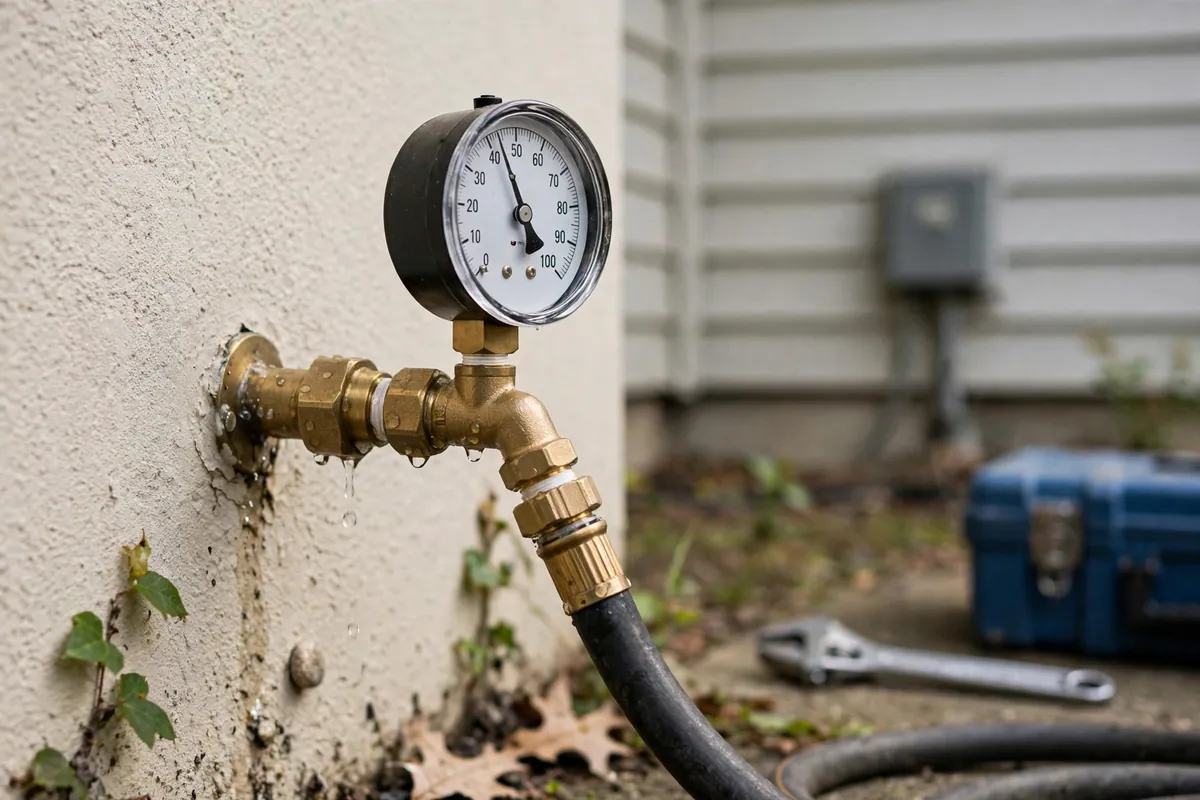
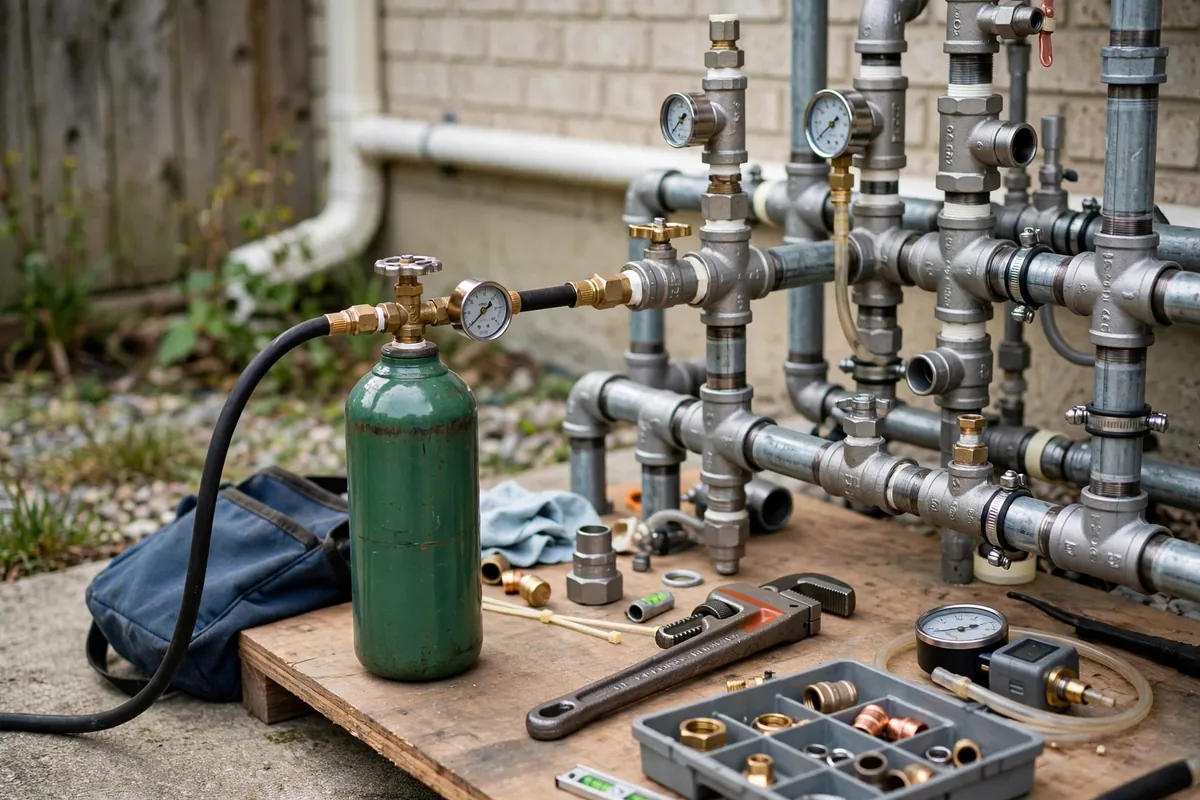
The procedure has four stages, each grounded in simple physics. First, the suspect pipe section is isolated with valves and drained — the gas must travel through an empty pipe, because water would block its path. Second, the hydrogen-nitrogen mixture is introduced at low pressure through a regulator, filling the section. The pressure is kept modest: the goal is to let gas escape naturally through the leak, not to force it.
Third comes migration. Hydrogen molecules are so small they pass through openings far tinier than any water leak — a weeping joint, a hairline crack, a pinhole — and once outside the pipe, hydrogen's extreme lightness carries it upward through soil pores, sand, gravel bedding, and even concrete. It rises more or less vertically from the leak point, which is what makes surface detection meaningful: where the gas emerges at the surface is, in most conditions, directly above the leak.
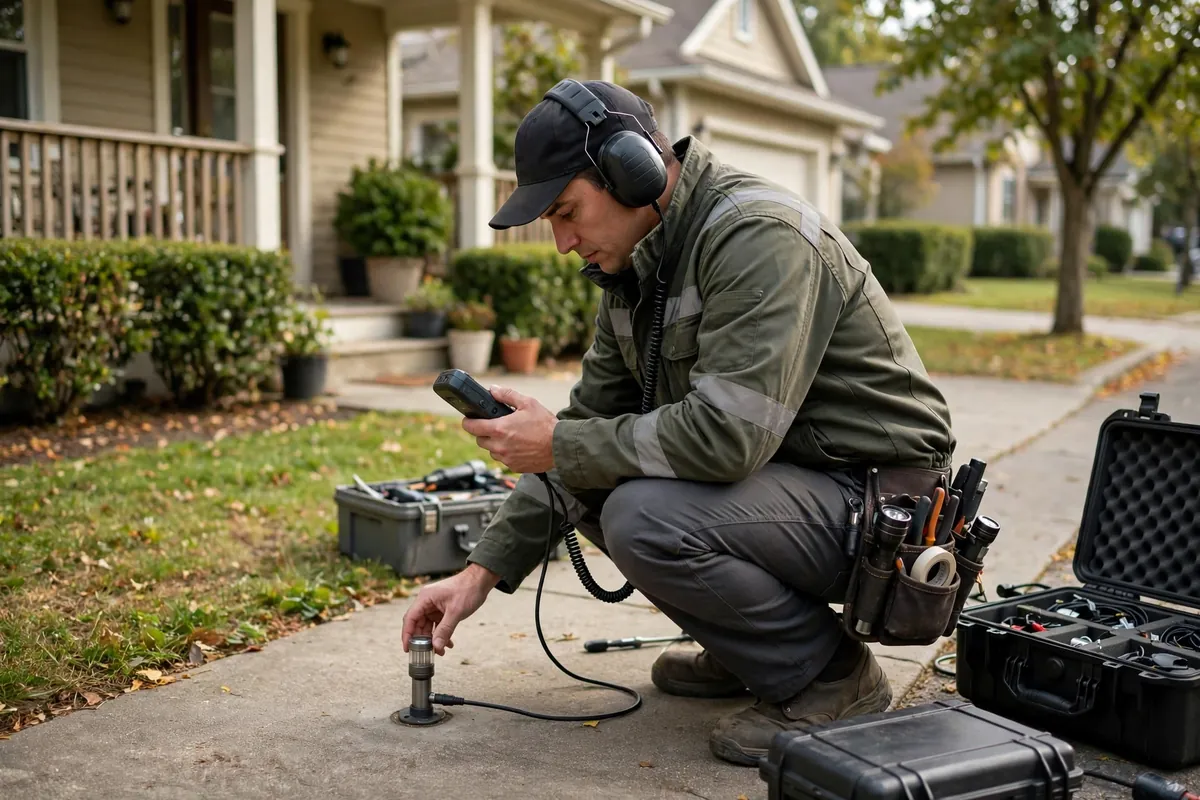
Fourth is detection. The technician sweeps the suspect area with a handheld hydrogen detector — essentially an electronic nose tuned to hydrogen at parts-per-million sensitivity — watching the readings rise as the probe approaches the emergence point. The search pattern resembles acoustic grid listening: systematic passes, marking the strongest readings, converging on the peak. Under good conditions the method pinpoints within inches, matching or exceeding acoustic precision — on leaks that acoustic equipment could not hear at all.
The safety profile is what makes this a routine residential method rather than an industrial one. At 5 percent hydrogen in nitrogen, the mixture is below the flammability limit — it cannot burn or explode. Both gases are non-toxic and odorless, the quantities used are small, and the gas dissipates harmlessly into the atmosphere. It leaves no residue in the pipe, affects no water quality, and requires no cleanup.
Hydrogen is the smallest molecule in the universe — roughly an order of magnitude smaller than a water molecule. That size lets it escape through defects too tight for water to pass in detectable amounts, which is precisely why tracer gas finds leaks that are invisible to every water-based test. Its absence from natural soil gas means every detection is a true positive from the test.
What Tracer Gas Finds That Other Methods Miss
Tracer gas earns its place as the method of last resort that usually works — the technique professionals reach for when the standard tools come up empty:
- Tiny leaks below the acoustic threshold. A slow weep that loses a few gallons a day may not generate enough turbulence for a microphone to hear, especially through sandy soil that absorbs sound. Gas escapes it easily and the detector finds it.
- Leaks under thick slabs and structures. Deep burial and heavy concrete attenuate sound dramatically; gas migrates through regardless of what sits above the pipe.
- Leaks in plastic pipe. PVC and PEX absorb acoustic energy within short distances, but gas travels through the empty pipe interior unaffected — making tracer gas the natural partner for plastic plumbing.
- Multiple simultaneous leaks. Where overlapping sound fields confuse correlators, gas simply emerges at every leak point; the technician marks each peak in turn.
- Slab leaks with ambiguous symptoms. When the meter spins but acoustic results are inconclusive — common with small hot-water slab leaks — tracer gas on the isolated hot loop typically resolves the question definitively. See our slab leak detection guide for how the methods combine.
This is why the method has a reputation as the "closer" in leak detection: it is slower and more involved to set up than listening, so it is rarely first — but its detection floor is lower than any other method's, meaning leaks that nothing else can find are often well within its range.
What Tracer Gas Cannot Do
Like every method, tracer gas has conditions where it struggles. A professional should mention these before starting:
- Standing water blocks the gas. If the pipe section cannot be drained — a low spot that holds water, a line below the water table — gas cannot travel through it. The section must be empty for the method to work.
- Saturated ground slows migration. Waterlogged soil impedes the gas's upward path, diffusing the surface signal and widening the pinpoint area. After heavy rain or in high-water-table conditions, results are less precise.
- Wind disperses the surface signal. Outdoors on a windy day, emerging gas blows sideways before the detector can register the peak, smearing the location. Technicians compensate with wind shields or reschedule exposed outdoor work.
- It is slower than acoustic. Draining, purging, filling, and waiting for migration takes meaningfully longer than a listening survey. That is why it is the second method, not the first — used when the faster method has earned its failure.
- It confirms location, not repairability. Like every detection method, it ends at a marked spot; the repair decision — spot fix, reroute, or repipe — is a separate conversation. Our guide to slab leak repair options covers those choices.
Note what is not on this list: safety concerns. The gas mixture used in residential leak detection is non-flammable, non-toxic, and used in small quantities. The limitations are all about physics and conditions, not hazard.
| Situation | First Choice | Why | Escalation If It Fails |
|---|---|---|---|
| Spinning meter, unknown location | Pressure test, then acoustic | Fastest path from symptom to pinpoint | Tracer gas on the isolated branch |
| Suspected slab leak, hot loop | Acoustic grid on the slab | Concrete transmits sound well | Tracer gas on the drained hot loop |
| Leak in PVC/PEX run | Acoustic with tight spacing | Worth attempting before the slower method | Tracer gas — unaffected by sound absorption |
| Multiple suspected leaks | Pressure-test sections individually | Separates the problems first | Tracer gas marks each emergence point |
| Pool line fails pressure test | Acoustic on the deck and soil | Quick check before escalation | Tracer gas or dye on the isolated circuit |
| Leak too small to hear | Confirm with pressure test | Establishes the leak is real | Tracer gas — lowest detection floor |
When Professionals Choose Tracer Gas
The decision path to tracer gas is almost always the same: the evidence says there is a pressurized leak — the pressure test failed on a specific branch, or the meter spins with everything off — but acoustic detection could not pinpoint it. That gap between "we know it's in this branch" and "we can't hear exactly where" is tracer gas territory. It is also chosen proactively in situations known to defeat microphones: long plastic pipe runs, leaks suspected under thick slabs or additions, and cases where previous repairs suggest there may be more than one leak.
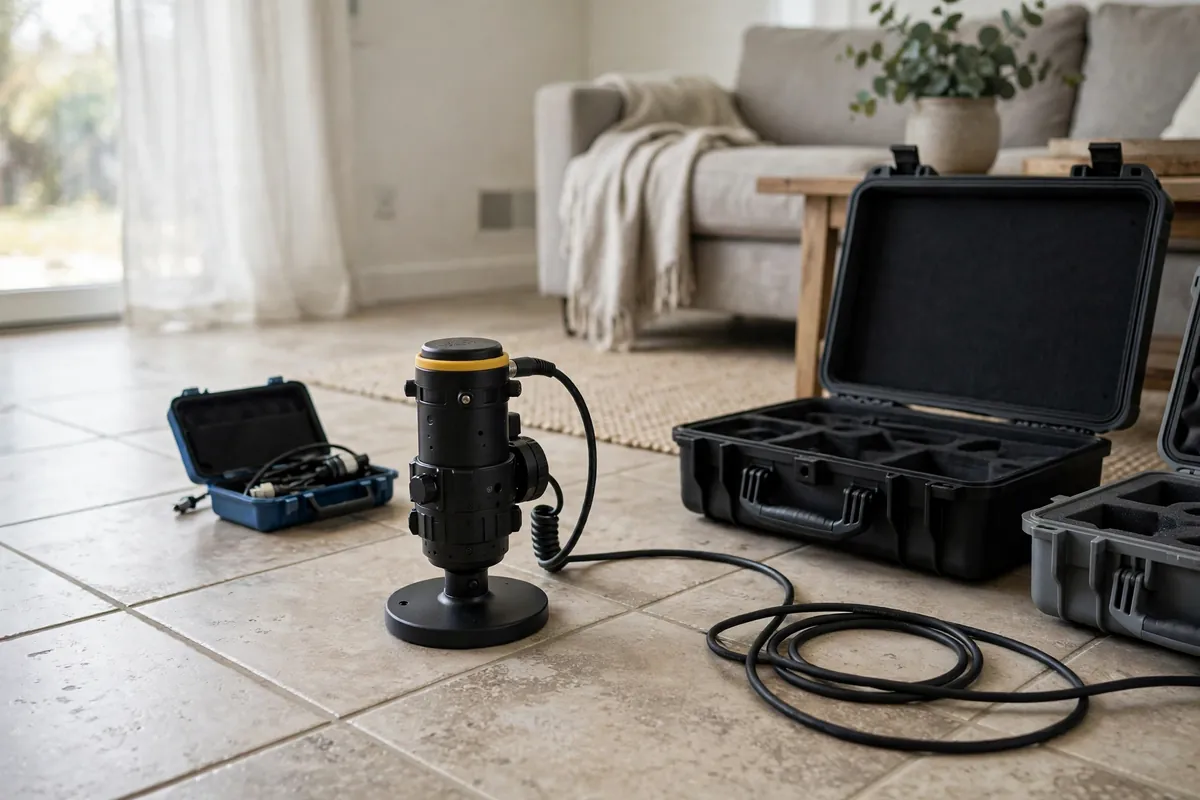
For pool plumbing, tracer gas is a strong option when line pressure testing identifies the leaking circuit but listening cannot locate the break in the buried run — particularly with PVC pool plumbing, where sound dies quickly. For slab leaks, it is often the decisive test on the hot-water loop: isolate the loop, drain it, charge it with gas, and sweep the floor. The emergence point marks the leak, and the repair can proceed with the same small-footprint approach as an acoustic pinpoint.
What professionals do not do is lead with tracer gas on a routine call. The setup time and the requirement to drain the section make it the wrong first choice when a microphone would likely succeed in twenty minutes. Method selection follows an efficiency ladder — confirm with pressure, pinpoint with acoustic, escalate to gas — and each rung is only climbed when the one below it has done all it can.
What A Visit Looks Like
A tracer gas visit is the most involved of the detection methods, and a good technician will explain the plan before starting. After confirming the leak's branch with pressure testing, the technician isolates the section, drains it, and connects the gas cylinder through a regulator. Filling takes only minutes; then comes the waiting period while gas migrates upward — typically 15 to 45 minutes depending on depth and soil conditions. This is a good time to ask questions; there is nothing to watch yet.
Then the sweep: the technician moves the hydrogen detector in a grid over the suspect area — across the slab, along the yard, around the pool deck — watching the parts-per-million readings climb and marking the peak. You will see chalk marks or tape converging on a spot, just as with acoustic work. The visit typically runs two to three hours, longer than acoustic but far shorter than exploratory digging. At the end you receive a marked location and an explanation of the findings, which is everything a repair needs to proceed surgically.
If you have a suspected leak that has resisted diagnosis — a spinning meter with no sound, a slab leak nobody can quite locate, a pool line that fails pressure testing but hides from microphones — our water leak detection service brings the full method ladder, including tracer gas. Nineteen years serving Leesburg, (352) 703-8206 answered around the clock, typical arrival within 30 to 45 minutes. For slab-specific work see our slab leak page, and for urgent situations our 24/7 emergency line is always staffed.
Remember the sequence professionals follow: pressure testing confirms and isolates, acoustic listening pinpoints quickly, tracer gas pinpoints what listening cannot hear. If a technician proposes jumping straight to the most involved method, ask why the simpler ones were ruled out — the answer should reference your specific situation, not a sales pitch.