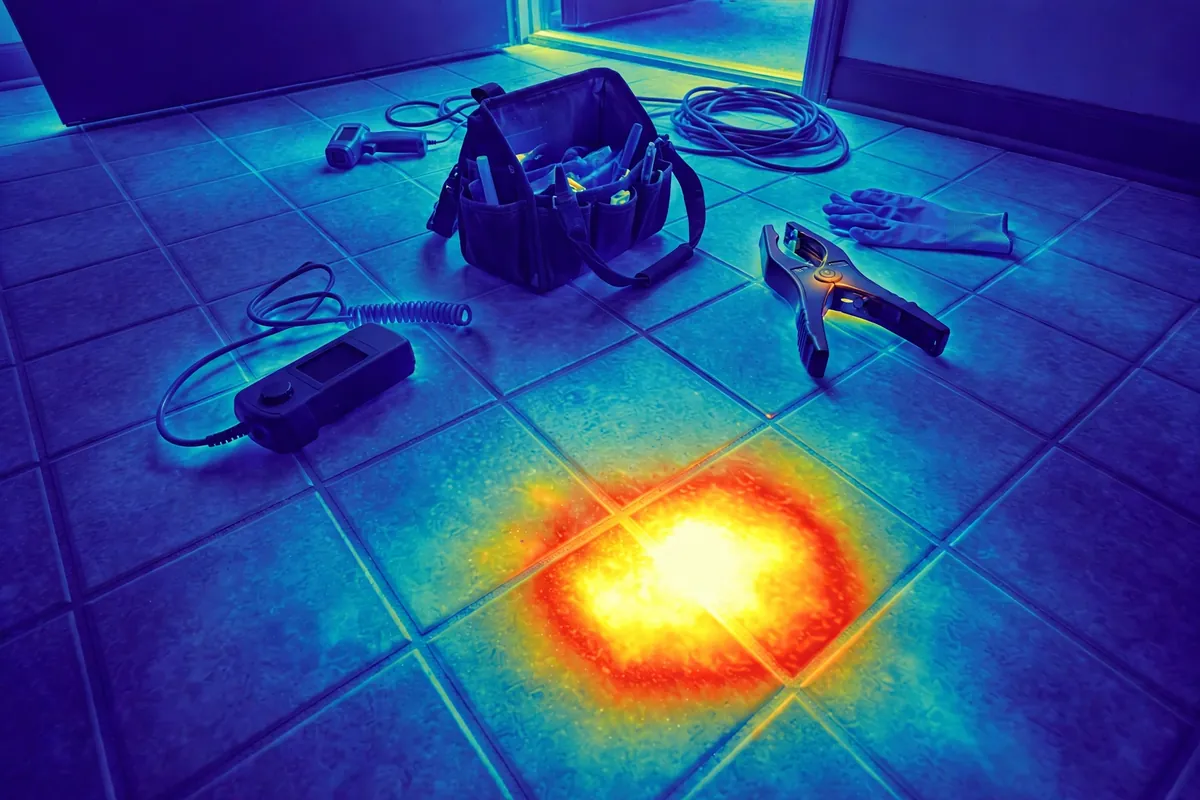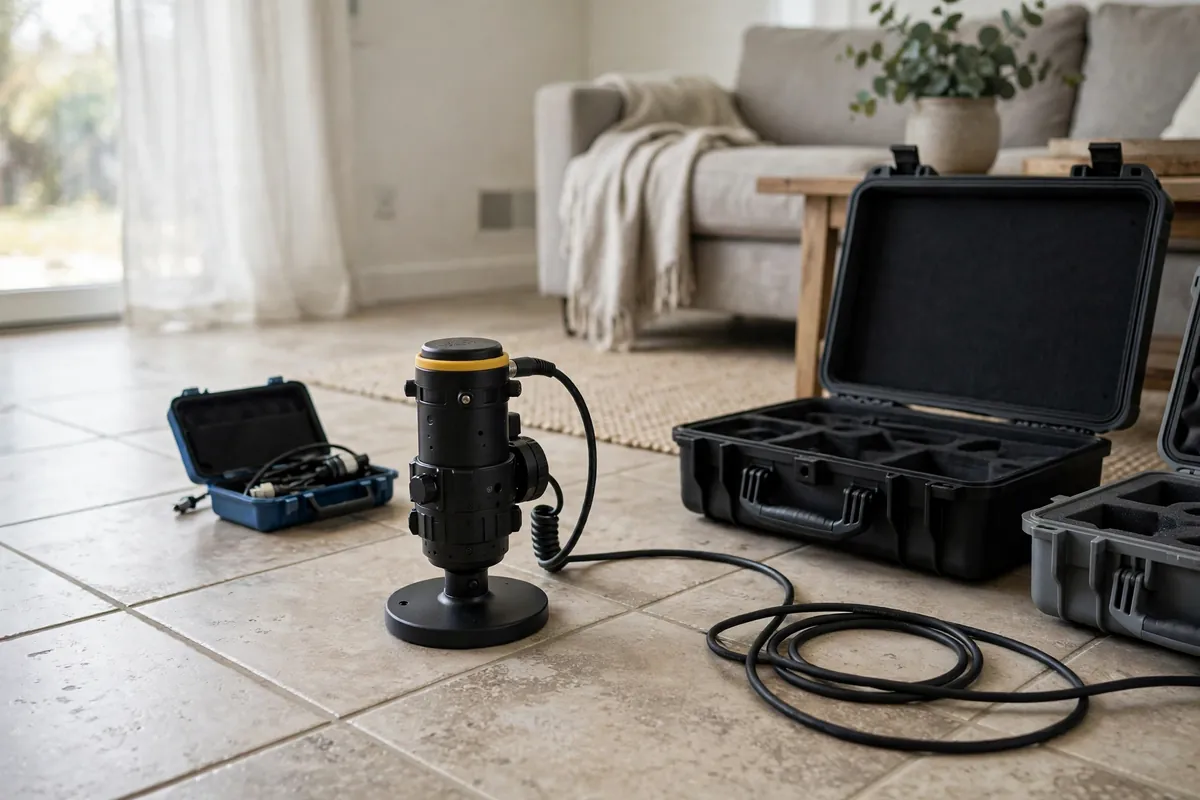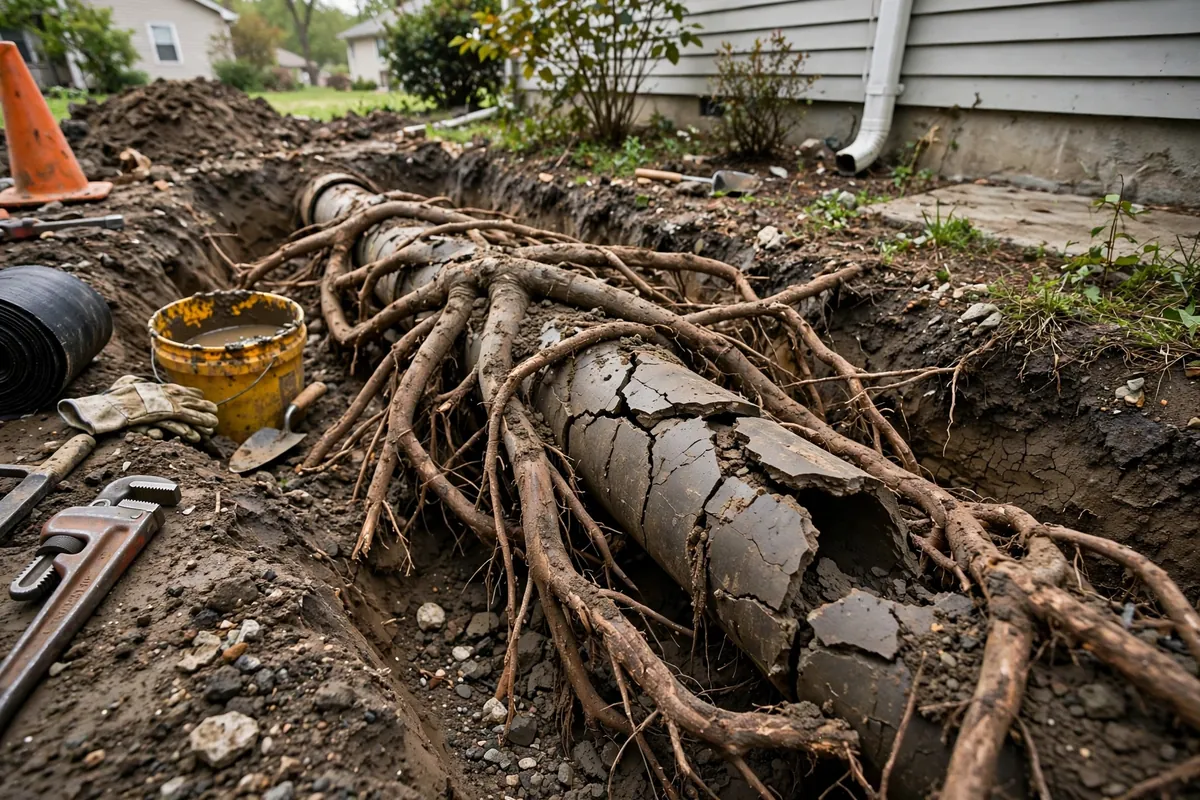
Slab leaks in Florida homes are caused by a short list of forces working on buried water lines: corrosion thinning copper pipe from the inside, abrasion wearing it from the outside where it rubs against concrete, water pressure stressing joints year after year, installation flaws from the original build, and soil movement flexing rigid pipe. Florida's construction style — slab-on-grade foundations with water lines run beneath them — puts more pipe underground per house than basement-style construction does, which is why the state sees its share of these failures.
This guide walks through each cause the way a leak detection professional thinks about them: what the mechanism is, what evidence it leaves behind, and what you can actually do about it. If you are already seeing symptoms, start with the signs of a slab leak instead.
In This Article
Why Florida Homes Run Pipe Under The Slab
Most Florida homes are built slab-on-grade: a concrete foundation poured directly on prepared soil, with no basement and no crawlspace. Water lines serving the house run through or beneath that slab to reach kitchens and bathrooms. It is efficient construction for a warm climate — but it means the most failure-prone feet of your plumbing are the least accessible.
In a basement home, a leaking supply line drips where someone eventually sees it. Under a Florida slab, the same leak soaks silently into soil and concrete until the evidence migrates upward. The construction method does not cause leaks, but it hides them longer and makes every repair a concrete project. Understanding the actual causes is how you get ahead of that disadvantage.
Corrosion: The Slow Attack From Inside
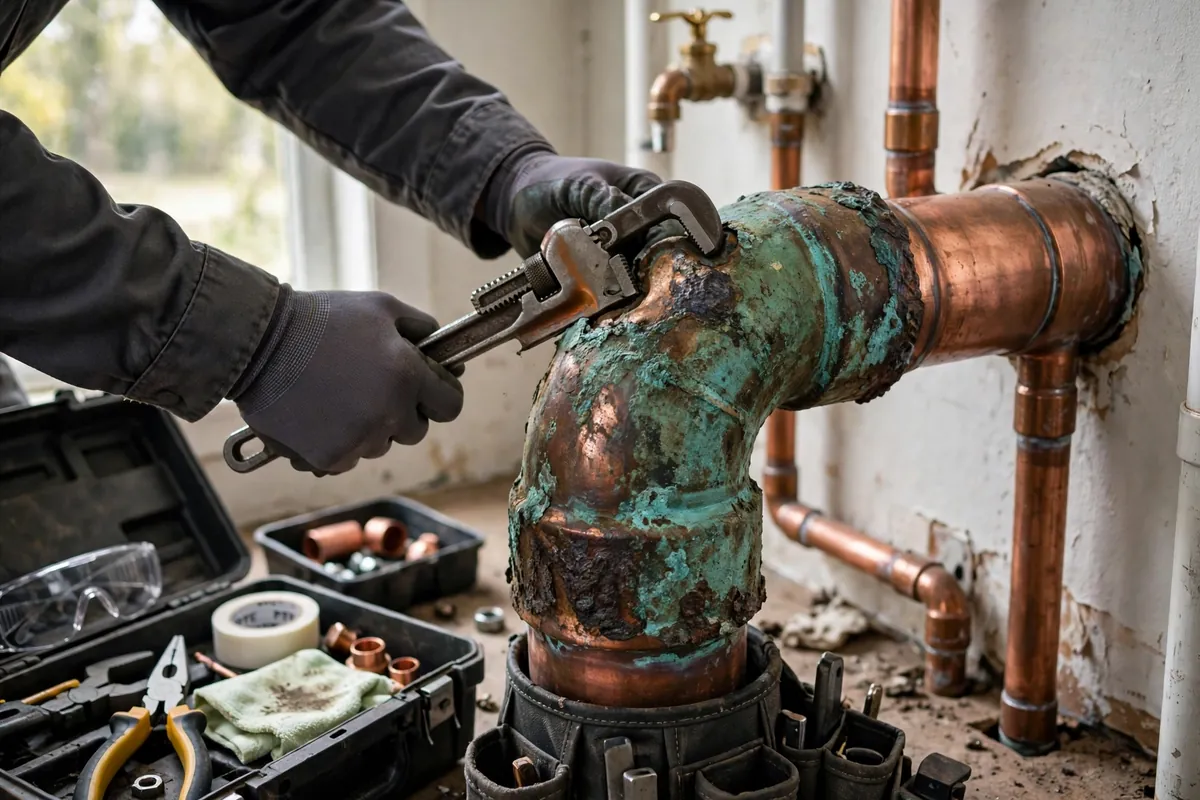
Corrosion causes more slab leaks than everything else combined. Many Florida homes built from the 1960s through the early 2000s were plumbed with copper lines buried directly under the slab, and copper — for all its virtues — pits and thins when water chemistry works against it.
The mechanism is electrochemical: minerals and dissolved compounds in the water react with the copper wall, carving microscopic pits that deepen over years. Central Florida's water comes from the Floridan Aquifer and runs hard, carrying the mineral load that accelerates this process. The pipe does not rust like steel; it develops pinholes — tiny perforations that start as seeps and grow into sprays under line pressure.
Corrosion leaves a signature: recurring pinhole leaks along the same run of pipe. The first pinhole is a repair; the third is a diagnosis. When a line shows this pattern, the pipe wall is failing systemically, and that history is exactly what pushes the decision toward a reroute rather than another spot repair.
Abrasion: When Pipe Rubs Against Concrete
Hot water lines expand every time the heater fires and contract as they cool. If a buried line touches rough concrete — at a bend, where it passes through the slab edge, or where backfill settled and left it resting on aggregate — each thermal cycle drags the pipe across an abrasive surface. Years of micro-movement wear through the wall at the contact point.
Abrasion failures look different from corrosion: typically a single worn spot rather than a run of pinholes, often at a bend or penetration. Good installation prevents it with sleeving or wrapping where pipe meets concrete, which is why abrasion leaks sometimes trace back to a shortcut taken during the original build. There is no homeowner maintenance that prevents abrasion in existing buried pipe — but knowing the mechanism explains why the leak sits where it sits.
Water Pressure That Never Lets Up
Municipal water arrives at whatever pressure the street main delivers, and in many areas that pressure runs higher than a home's plumbing was designed to handle comfortably. Every joint, fitting, and valve in the house — including the buried ones you cannot see — absorbs that stress around the clock.
High pressure rarely bursts a healthy pipe outright. Instead it accelerates every other failure: it pushes harder through corrosion pits, flexes joints more with each thermal cycle, and turns small weaknesses into leaks sooner. It is a force multiplier rather than a root cause, which makes it the most cost-effective cause to address. A pressure regulator installed where the line enters the house caps the stress for the entire system, buried pipe included.
You can check house pressure yourself with a ten-dollar gauge threaded onto a hose bibb. If it reads high, a plumber can install a regulator — one of the simplest protective upgrades for buried plumbing.
Installation Flaws From The Original Build
Some slab leaks are born the day the pipe goes in. Kinked copper that was straightened rather than replaced, joints with incomplete solder, lines laid without protective sleeving through slab penetrations, or pipe buried in rocky backfill that presses against the wall — each creates a weak point with a timer on it.
These failures have a tell: they show up early relative to the pipe's expected life, sometimes within the first decade, and they usually strike once at the flawed spot rather than recurring along the run. A single early failure on otherwise sound pipe is the textbook case for a spot repair — the system is fine; one joint was not.
Soil Movement Under The Slab
Florida's sandy soils shift. Seasonal rain saturates the ground, dry spells shrink it, and the fine sand under a slab migrates over time. Even slight settlement flexes rigid buried pipe, and rigid pipe under flex develops stress cracks — particularly at joints, which are the stiffest points in the run.
Leaks themselves worsen this: escaping water erodes the soil supporting the slab, the slab settles microscopically, and the movement stresses more pipe. It is a slow feedback loop, and it is one more reason prompt detection matters — stopping the leak early interrupts the erosion before it becomes a foundation concern.
One combination deserves special mention: new cracks in tile, drywall, or the slab edge appearing alongside any plumbing symptom — warm spots, sounds, or a climbing bill. Either sign alone has innocent explanations, but together they suggest water is moving soil under the foundation. That pairing is worth a prompt professional look, and our emergency slab leak service handles situations that cannot wait for a scheduled visit.
Lake County's karst geology adds a background note of sinkhole awareness for the region, but ordinary settlement, not sinkholes, drives the vast majority of soil-related pipe stress.
What You Can Actually Do About Each Cause
You cannot re-plumb history, but you can tilt the odds going forward:
- Against pressure: have your house pressure checked and install a regulator if it runs high. This is the single highest-value preventive step.
- Against corrosion: know your pipe's age and material. If previous leaks were pinholes, budget and plan for a reroute on your schedule rather than waiting for the next emergency.
- Against hidden damage: run the water meter test a few times a year. It takes five minutes and catches slow leaks months before they surface.
- Against escalation: treat the early signs as a prompt, not a nuisance. Every week a known leak runs is a week of erosion under the slab.
Causes explain the past; monitoring protects the future. And when monitoring turns up something suspicious, professional slab leak detection — acoustic, thermal, and pressure testing without tearing up floors — gives you a definitive answer.