Most of the time, a slowly dropping pool level in Leesburg is evaporation, not a leak. Hot sun, warm air, and wind pull water from the surface all day, and a pool simply loses more in July than in January.
The catch is that a real leak looks a lot like evaporation at first. The reliable way to separate the two is not guessing — it is measuring. A simple bucket test compares your pool's water loss against a control bucket, and that comparison tells you the truth in about a day. This guide walks through the signs, the checks, and when to bring in a professional.
In Florida's heat, a pool loses a noticeable amount of water to evaporation, especially on hot, windy days. A true leak keeps losing water even at night or in cooler weather, and the loss continues at a steady pace regardless of the weather. If the pool loses more water than a control bucket in a bucket test, or the equipment area is wet, treat it as a leak and have it checked.
In This Article
What To Do Right Now
A dropping waterline is not an emergency by itself, but it deserves a calm, same-day check. These steps are safe for any pool owner and take about ten minutes:
- Mark the water level. Put a strip of tape on the tile at the waterline and write the date on it. Without a mark, you are guessing.
- Turn off the autofill if you have one. An autofill quietly replaces lost water and hides the true rate of loss. Switch it off for 24 hours while you watch the level.
- Walk the equipment pad. Look under and around the pump, filter, and heater for drips, damp concrete, or white mineral crust where water has been drying. Do not open any electrical panels.
- Check the backwash or waste line. If water trickles from the waste line while the filter is in normal filter mode, the multiport valve may be sending pool water to waste.
- Note the weather. Hot, sunny, windy days pull the most water from a pool. A modest loss on a scorching afternoon is usually evaporation.
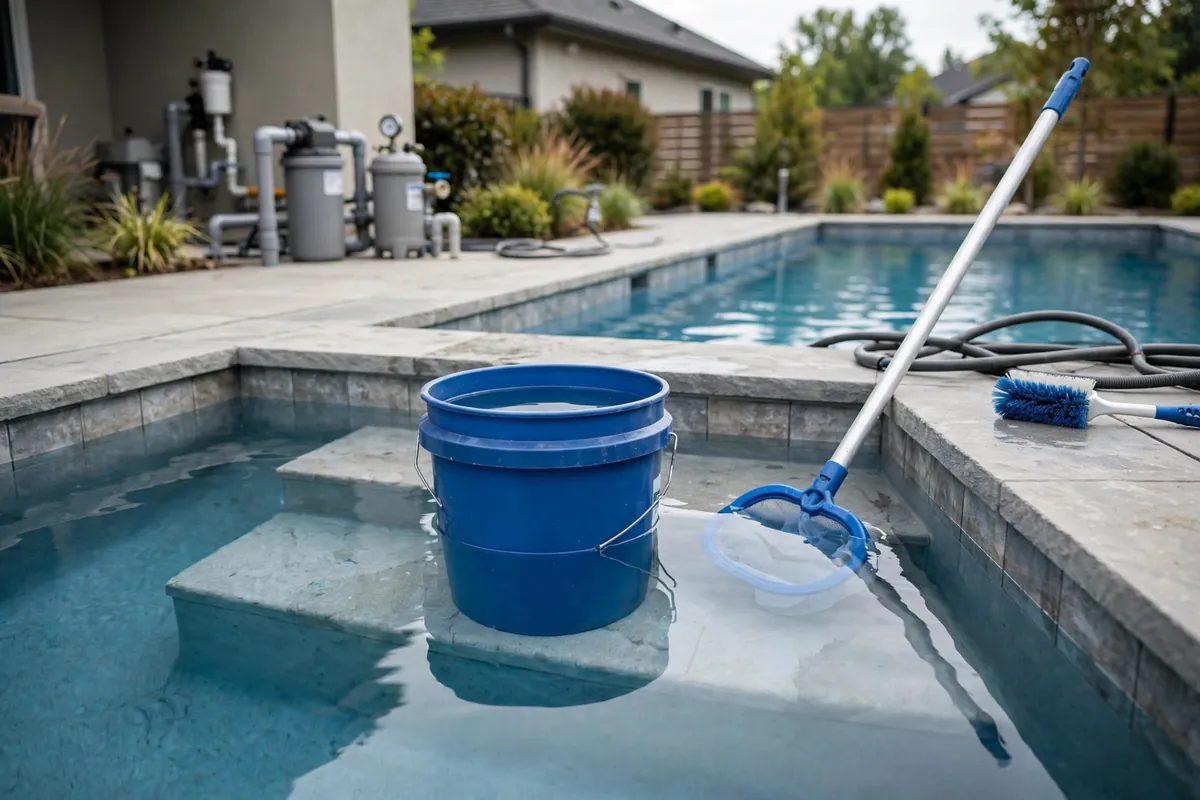
- Run a bucket test. This simple comparison, explained in our guide on how to do a bucket test for pool leaks, is the most reliable way to separate evaporation from a leak.
If the level keeps falling with the pump off overnight, or the equipment pad is wet, move from watching to acting — a real leak does not fix itself.
Call now if the pool is losing water fast enough that the pump starts sucking air, or the ground around the pool or equipment pad is soggy — fast leaks can erode soil under the deck and burn out the pump.
Signs To Look For
Evaporation leaves no trace. A leak usually leaves clues if you know where to look:
- Water loss that ignores the weather. Evaporation slows on cool, humid, or rainy days. A leak keeps draining at the same pace no matter the weather.
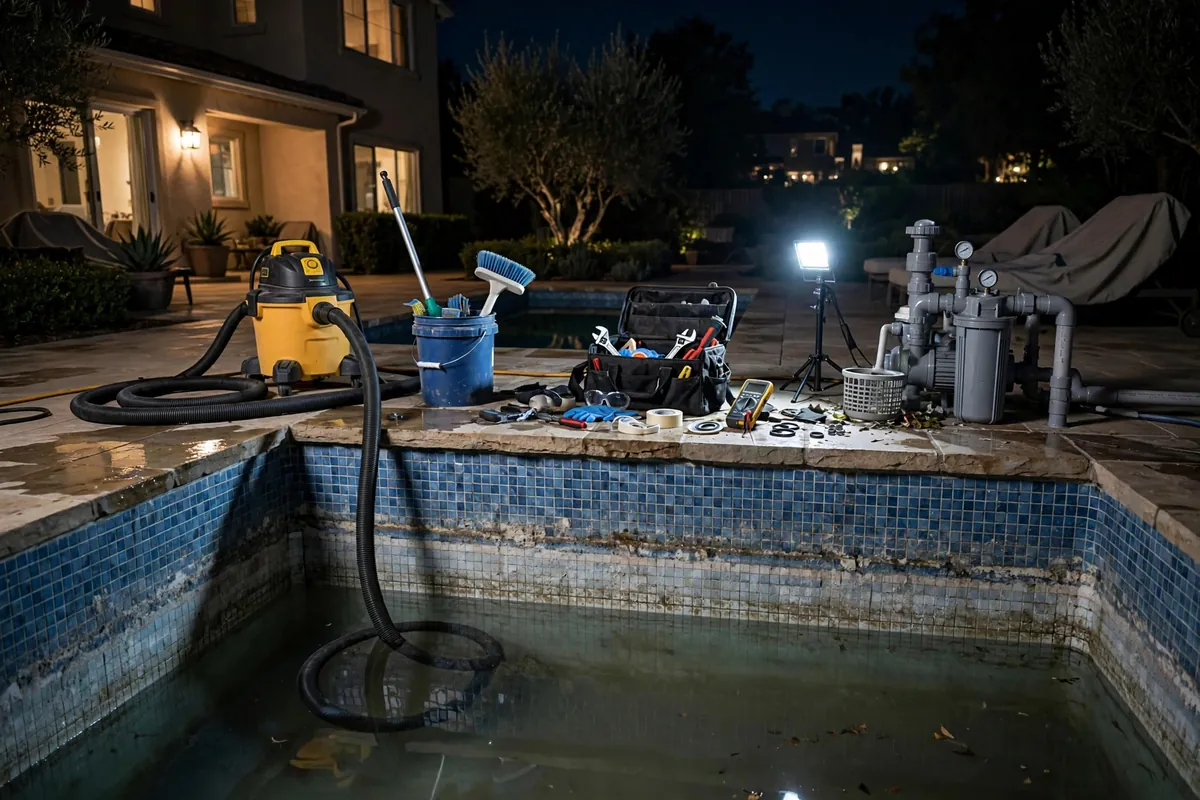
- Loss that continues overnight. Evaporation nearly stops after sunset. A pool that is clearly lower in the morning than it was at bedtime is pointing at a leak — see what to check first when your pool loses water overnight.
- Wet spots around the equipment. Damp concrete, puddles that return after drying, or mineral deposits under the pump or filter point to equipment leaks.
- Soggy ground near the pool shell. Soft or sinking soil beside the pool can mean water is escaping underground near the structure.
- Air in the pump basket. A leak on the suction side lets air into the system, so you see bubbles churning in the pump lid or weak return flow.
- The level drops below the skimmer. Evaporation rarely gets ahead of a working autofill; a level falling below the skimmer mouth suggests loss faster than evaporation.
- Needing the hose more often. If you are topping off the pool noticeably more often than in past summers, something changed.
One sign alone may mean little. Two or three together are worth taking seriously.
Common Causes
Water leaves a pool for ordinary reasons and for leak reasons. The ordinary ones come first:
- Heat and sun. In Central Florida, long hot days evaporate more water than most owners expect, especially from pools with large surface areas.
- Wind. A breezy week can visibly lower the waterline even when temperatures are moderate.
- Water features. Waterfalls, spillovers, and deck jets throw water into the air and increase evaporation — and they can splash water out of the pool entirely.
- Heavy use. Splashing, cannonballs, and lots of swimmers carry water out on bodies and towels.
When the loss outpaces all of that, the usual leak suspects are:
- Equipment leaks. Pump seals, filter o-rings, and heater connections wear out and drip steadily.
- A faulty backwash valve. A worn multiport valve gasket lets water slip to the waste line around the clock.
- Structural cracks. Cracks in the shell or around fittings let water seep into the surrounding soil.
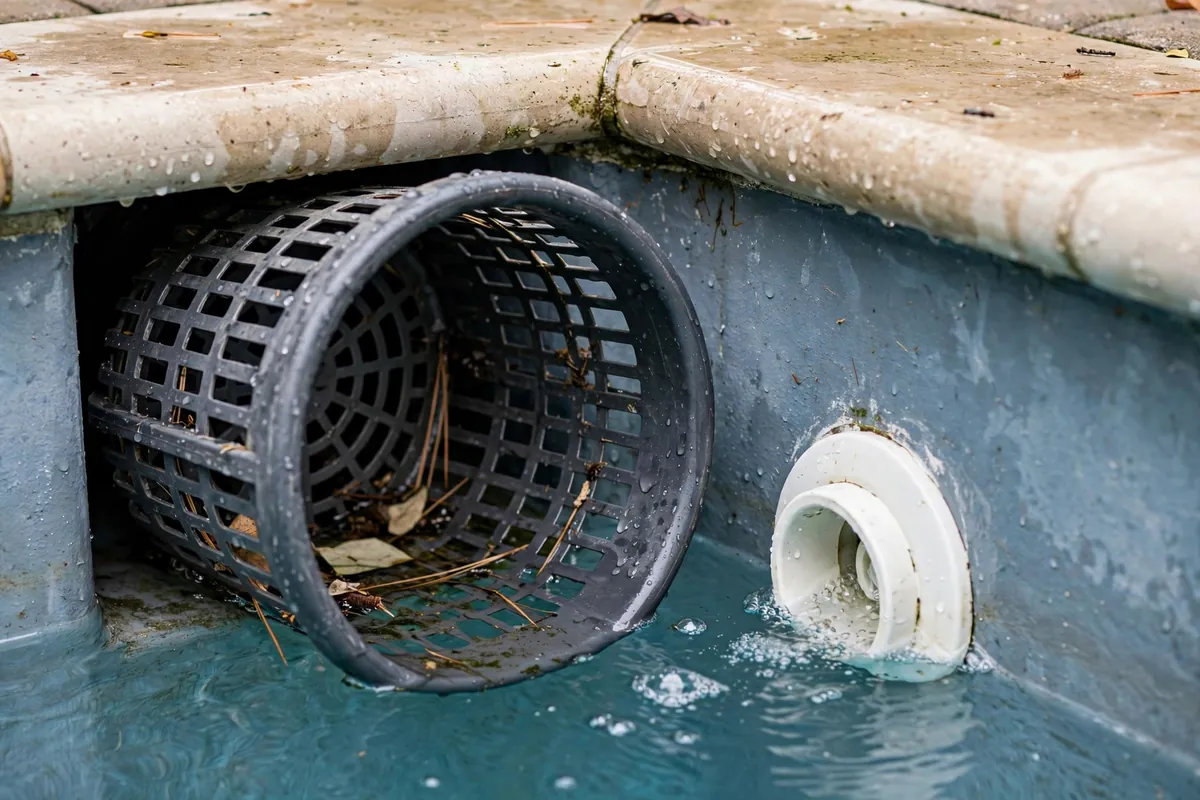
- Skimmer and fitting separations. The bond between the skimmer throat and the pool wall can crack and leak — these are among the most common pool leak spots.
- Underground plumbing breaks. Shifting soil can crack buried lines, and the water disappears without ever surfacing.
- A stuck autofill. Sometimes the "leak" is the autofill itself, either overfilling or failing to keep up.
What Happens If You Wait
A small pool leak rarely stays small, and the costs of waiting are real even when nothing looks dramatic:
- Higher water bills. A pool that constantly needs topping off shows up on the water bill month after month. If your bill has climbed, read how to check for a leak when your water bill is suddenly high.
- Chemical imbalance. Constantly adding fresh water dilutes sanitizer and throws off pH, which makes the pool harder to keep clear and comfortable.
- Pump damage. If the level drops low enough for the pump to suck air, the pump can overheat and wear out far earlier than it should.
- Soil erosion around the shell. Water escaping underground washes soil away from around the pool, which can settle the deck and, in severe cases, undermine the structure.
- Algae and staining. Poor circulation from low water levels lets algae take hold and can stain the finish.
None of this means panic. It means a leak found this month is a smaller job than the same leak found next season.
Safe DIY Checks Vs When To Call A Professional
Pool owners can safely narrow things down quite a bit on their own. The line is drawn at anything underwater that needs repair, anything involving electricity, and anything buried.
| You Can Safely Do This Yourself | Leave This To A Professional |
|---|---|
| Run a bucket test to compare pool loss against evaporation | Pressure-test the buried plumbing lines |
| Visually inspect the skimmer, pump, filter, and heater for drips | Dye-test suspected cracks and fittings underwater |
| Check the backwash or waste line for trickling water | Use acoustic listening gear to pinpoint a buried line break |
| Look for soggy ground, settling, or mineral crust around the pool and equipment pad | Repair structural cracks or separated skimmer throats |
| Turn off the autofill for a day to see the true loss rate | Open, service, or repair any electrical pool equipment |
A good rule of thumb: if your check only involves looking, marking, and comparing, it is safe. If it involves tools, sealants, or opening equipment, call a professional. Pool electrical equipment in particular should never be opened by a homeowner — water and electricity are a dangerous combination.
How The Service Fixes It
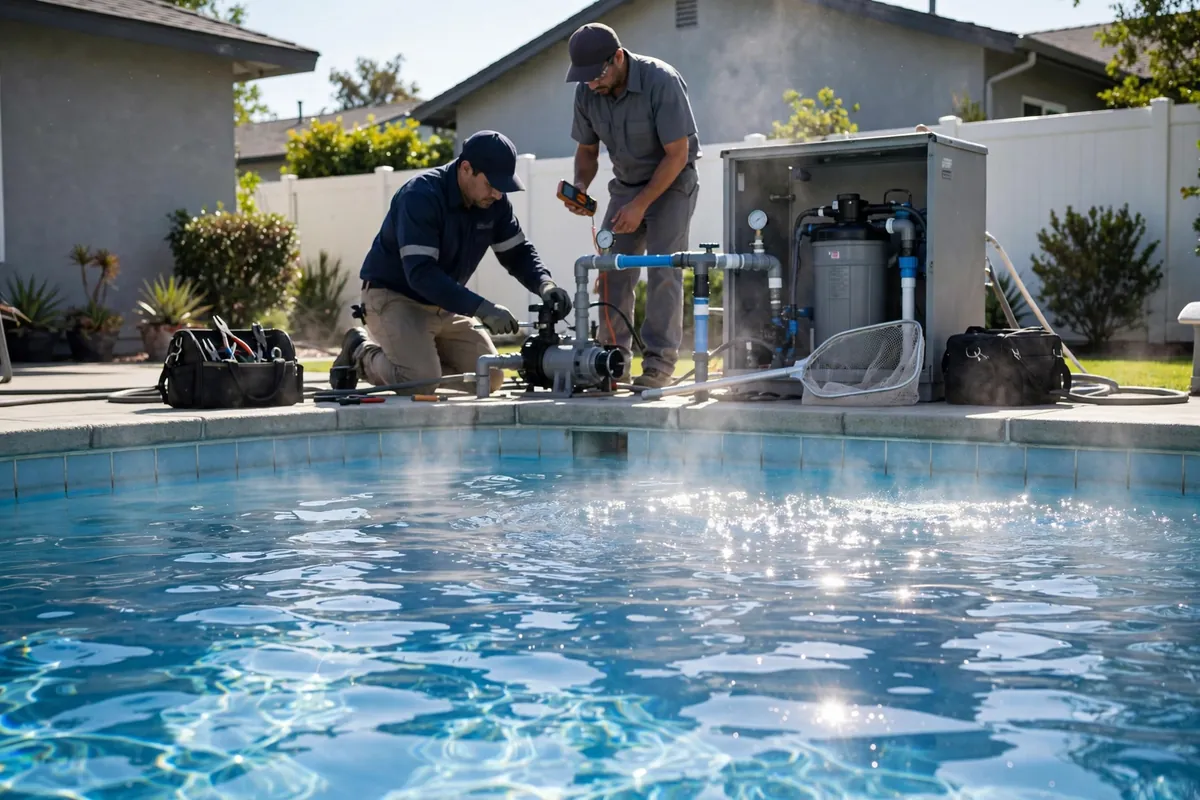
When the bucket test says "leak," the next step is professional pool leak detection in Leesburg. A technician confirms the loss, then works through the likely spots in order — equipment pad, skimmer, fittings, lights — using dye testing to watch for water movement and pressure testing to check each buried line without digging. You can see the full process in our guide to how pool leak detection works step by step.
Because we are a 24/7 service with 30–45 minute arrival, you do not have to wait days while the level keeps falling — and if the situation is urgent, our emergency pool leak service covers nights and weekends. Call us at (352) 703-8206 and we will find where the water is going.