Trenchless pipe repair fixes buried pipes with minimal digging, and its best-known method — cured-in-place pipe (CIPP) epoxy lining — creates a new seamless pipe inside the old one. A resin-saturated liner is inserted into the damaged pipe, inflated against its walls, and cured into a hard, jointless tube. The result renews the line without an open trench across your yard.
But trenchless is not magic, and honest contractors will tell you its limits upfront: it cannot fix collapsed pipe, severe offsets, or back-pitched sections — and critically, it is designed for gravity drain and sewer lines, not pressurized water lines. This guide explains what epoxy lining fixes well, what it cannot fix, the other trenchless method worth knowing, and how to compare it fairly against open-trench repair.
In This Article
What Trenchless Actually Means
'Trenchless' means the repair accesses the pipe through its existing openings — cleanouts, small entry excavations — rather than digging up its entire length. The yard, driveway, or slab above the pipe stays largely undisturbed. It does not mean 'no digging at all': entry and exit pits are usually still needed, but they are measured in feet, not in trenches across the property.
Two trenchless methods dominate residential work: cured-in-place pipe lining (CIPP), which builds a new pipe inside the old, and pipe bursting, which fractures the old pipe outward while pulling a new pipe into its place. Lining is the right detailed subject for this guide because it is the method behind our sewer line epoxy lining service — and because it is the method most often oversold, making honest limits essential.
How Cured-In-Place Epoxy Lining Works
The CIPP process follows a disciplined sequence:
- Camera inspection. The pipe's interior is filmed end to end. This is the go/no-go decision — the footage reveals whether the pipe is a lining candidate or too far gone.
- Cleaning. Hydro jetting and mechanical cutters remove roots, scale, grease, and debris. The liner bonds to the host pipe, so the host must be clean and sound.
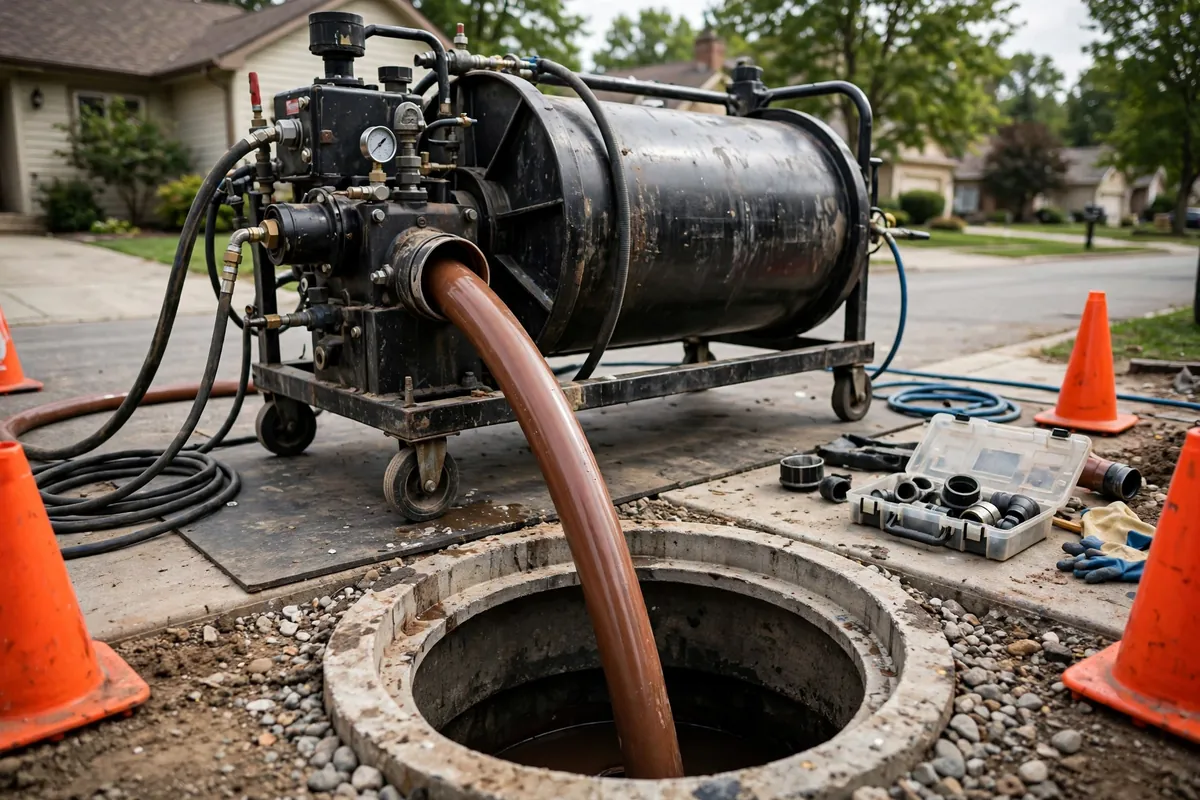
- Liner preparation. A felt or fiberglass tube is saturated with two-part epoxy resin, calibrated to the pipe's diameter and length.
- Insertion and inflation. The liner is inverted or pulled into the pipe and inflated — with air or water — pressing it tightly against the host pipe's walls.
- Curing. Heat (hot water or steam) or UV light hardens the resin into a rigid, seamless structural tube bonded inside the old pipe.
- Branch reinstatement. Where branch lines connect, a robotic cutter reopens each connection from inside the liner.
- Final camera verification. The finished liner is filmed to confirm full cure, proper seating, and open branches before the line returns to service.
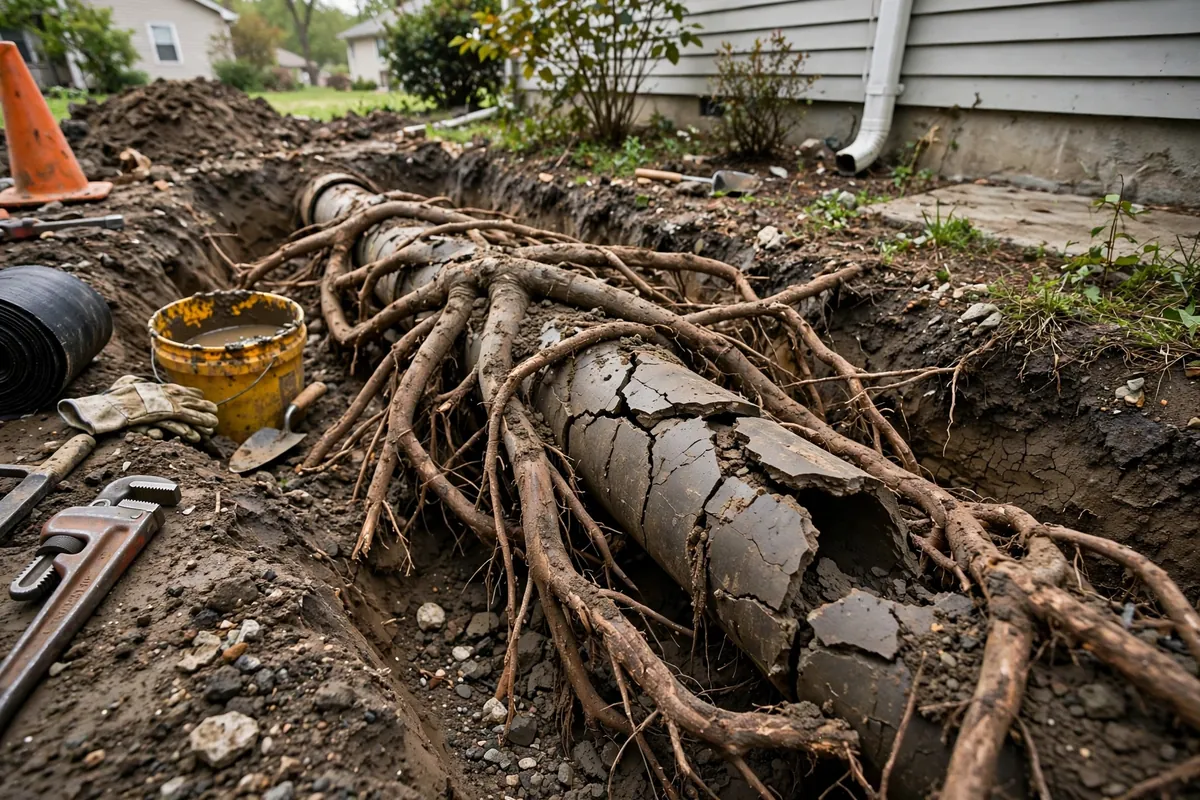
The finished product is a jointless, corrosion-proof pipe within the old pipe — no joints for roots to enter, no cracks for soil to infiltrate. Our article on tree roots and pipes explains why that jointless quality matters so much.
What Epoxy Lining Fixes Well
Lining excels in a specific set of conditions:
- Cracked or fractured pipe that still holds its shape. Longitudinal cracks, circumferential breaks, and deteriorated joints are lining's home turf — the host pipe provides the form, the liner provides the new wall.
- Root intrusion at joints. Once roots are cut out and the pipe cleaned, the seamless liner eliminates every entry point along the lined section permanently.
- Corroded cast iron or clay tile. Aging materials with rough, failing interiors get a smooth new surface. Flow often improves despite the slight diameter reduction.
- Pipes under expensive surfaces. Lines beneath driveways, patios, mature landscaping, or concrete slabs — anywhere excavation costs dwarf the pipe repair itself.
- Long runs with multiple defects. A line with five bad joints is five excavations the open-trench way, or one lining job.
What Epoxy Lining Cannot Fix
The honest limits — a contractor who glosses over these is selling, not advising:
- Pressurized water lines. The big one. CIPP is engineered for gravity-flow drains and sewers. A leaking pressurized supply line needs replacement, not a liner — full stop.
- Collapsed pipe. The liner needs a host pipe to form against. Where the pipe has fully collapsed, there is nothing to line; that section must be excavated.
- Severe offsets or separations. If pipe sections have shifted so far apart that the liner cannot bridge the gap, excavation is required at the offset.
- Back-pitched or bellied sections. A liner follows the host pipe's shape — it cannot correct a sag that ponds water or a section sloping the wrong way. Grade problems need regrading, which means digging.
- Undersized pipe. Lining slightly reduces diameter. A pipe already too small for its load does not get better lined; it needs upsizing.
Notice the pattern: lining renews the pipe's wall, not its shape or its grade. Structural shape problems need structural solutions.
Every limitation above is diagnosed by camera. Any contractor proposing lining without a pre-lining camera inspection — with video you can keep — is asking you to gamble. Walk away.
Pipe Bursting: The Other Trenchless Path
Where lining builds inside the old pipe, pipe bursting replaces it: a bursting head is pulled through the old line, fracturing it outward, while a new pipe — typically HDPE — follows immediately into the cleared path. Entry and exit pits are dug, but the run between them is never opened.
Bursting suits situations lining cannot handle: collapsed sections, pipes that need upsizing, or materials too deteriorated to host a liner. Its own limits include nearby utilities that could be damaged by the bursting force, and it is generally a sewer-line technique rather than a pressurized water-line one. The two methods are complements, not competitors — the camera inspection determines which, if either, fits.
Because bursting replaces rather than relines, it is also the answer when the old pipe’s diameter is part of the problem — the new line can be pulled in at the same size or larger, something lining cannot do. The trade-off is force: the bursting head displaces soil outward, so nearby utilities must be mapped and given clearance first. Your contractor should show you the utility locate before proposing bursting.
Trenchless Versus Open Trench: A Fair Comparison
Neither method wins universally. The fair comparison:
| Factor | Trenchless Lining | Open Trench Repair |
|---|---|---|
| Digging required | Small entry pits only | Full trench along the pipe |
| Surface disruption | Minimal — landscaping, driveways preserved | Significant — restoration needed after |
| Fixes collapsed pipe | No — needs a host pipe | Yes — full access to replace anything |
| Fixes grade/sag problems | No — follows existing shape | Yes — pipe regraded properly |
| Pressurized water lines | No — gravity drains/sewers only | Yes — any pipe type |
| Project duration | Often shorter on site | Longer with excavation and restoration |
| Best when | Sound-shaped pipe under valuable surfaces | Collapsed, offset, or misgraded pipe in open ground |
The deciding factors are usually the pipe's condition (camera footage), what sits above it (driveway versus open lawn), and total project cost with restoration included. Get both options priced when both are feasible — the answer varies job to job.
When both options are technically possible, the tiebreaker is usually what sits above the pipe. A line under a new paver driveway or a mature oak is a strong lining candidate; the same line under an open lawn that needs regrading anyway often goes open-trench. Our sewer line epoxy lining service starts with the camera inspection that makes this call honestly — and if the pipe is not a candidate, we will tell you that too.
Questions To Ask Before Choosing Trenchless
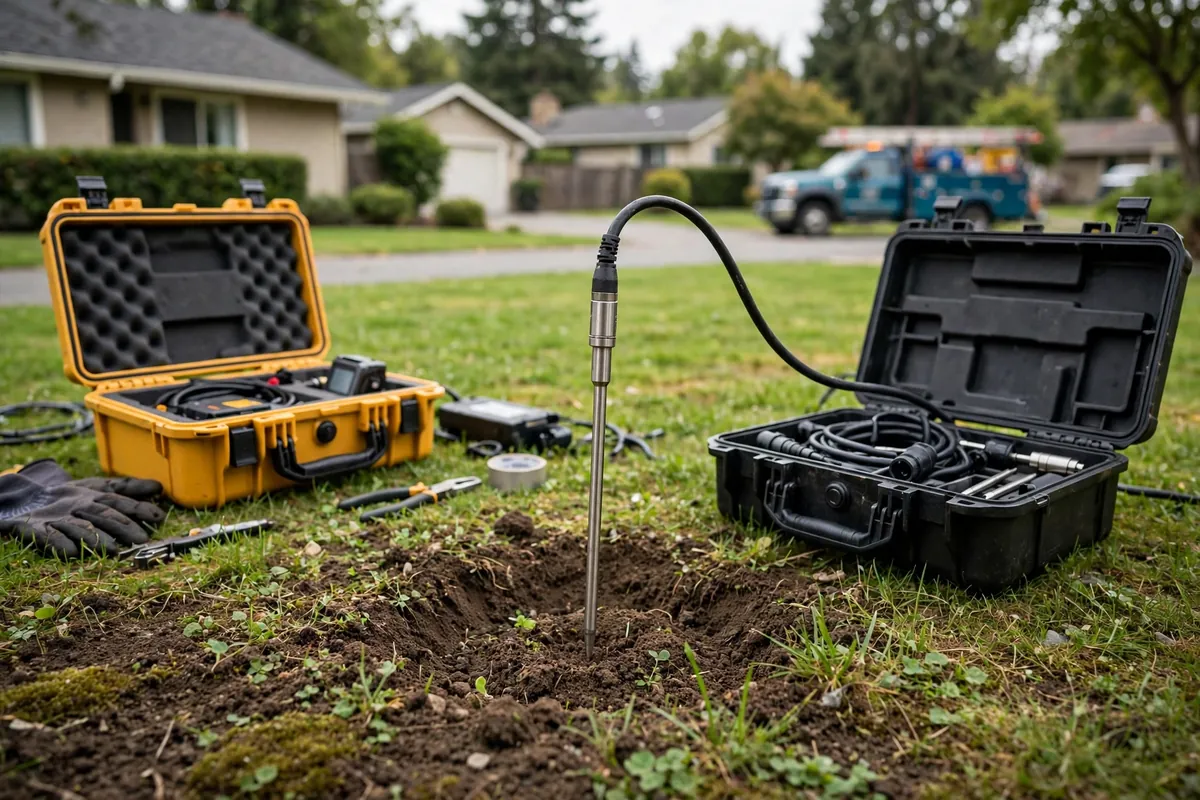
Use the checklist below when evaluating a proposal — and remember the service behind this guide: our sewer line epoxy lining work starts with camera inspection and honest candidacy assessment, because lining the wrong pipe helps no one. For the detection side of any underground problem, how underground leaks are found explains the locate-before-you-dig discipline that should precede every repair decision.
- Get a camera inspection first — lining decisions require seeing the pipe's interior condition
- Ask for the video file, not just a verbal summary, so you can get a second opinion
- Confirm the pipe's diameter, length, and number of bends — all affect feasibility
- Ask exactly what the liner cannot fix, and how the contractor handles surprises found mid-job
- Get the access-point plan in writing: where they enter, what gets opened, what gets restored
- Clarify what happens to branch connections — how they are reopened after lining
- Ask how the liner is cured and how cure is verified before the line returns to service