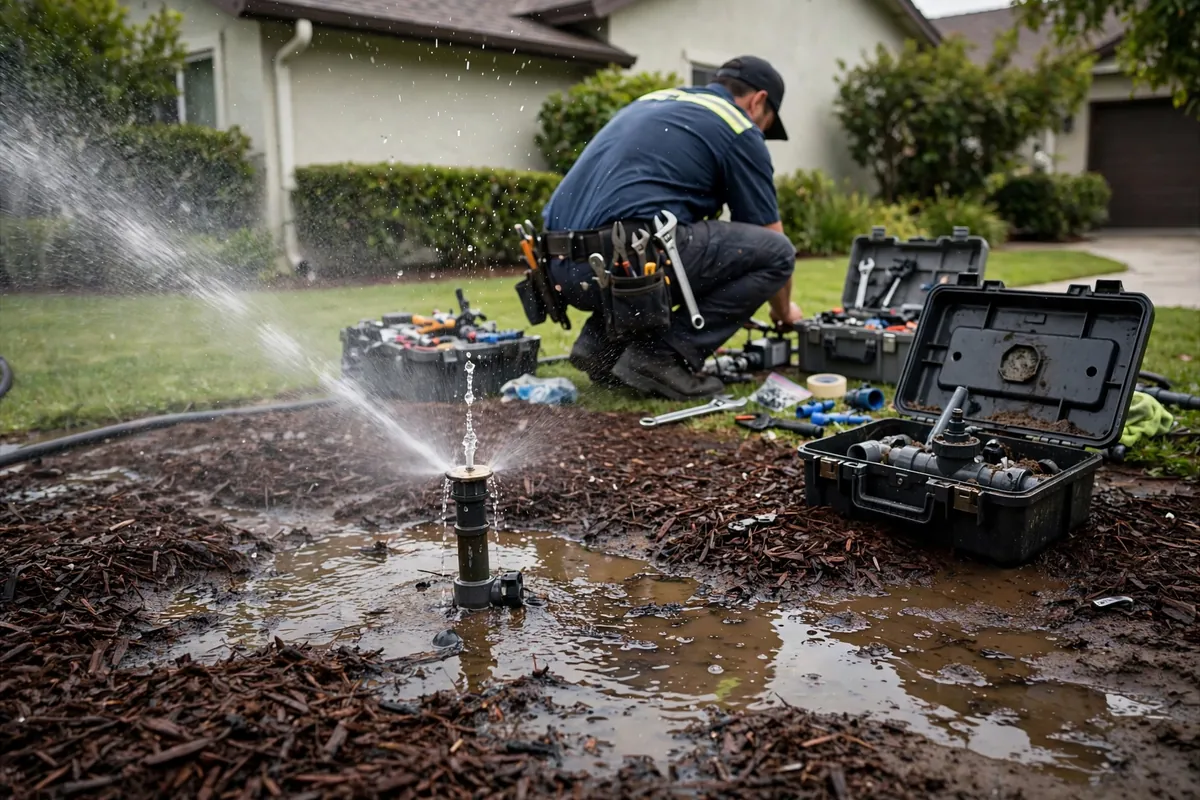
When sprinkler heads spray a fine mist while the lawn floods, one zone is telling you two things at once: something is wrong with pressure or components at the heads, and water is escaping where it should not. Misting means water is atomizing instead of landing — usually from excessive pressure or a damaged nozzle. Flooding means water is leaving the system underground or through a stuck valve. Together, they point to a specific zone with a diagnosable problem. This article walks through reading the symptoms, the safe checks you can run, and how irrigation leak detection pinpoints the cause.
Misting heads mean pressure is too high at the nozzle or the nozzle is damaged — the water atomizes instead of landing on the lawn. Flooding in the same zone usually means a cracked lateral is dumping water underground, or a valve is stuck open. Run the zone and watch: heads that go weak or misty downstream of a flooding spot mark the break's location between them.
In This Article
What To Do Right Now
A flooding zone wastes water with every minute it runs, so quick action matters — but it should be informed action:
- Identify the zone. Run each zone briefly from the controller until you find the one that mists and floods. Note its number — everything else keys off this.
- Watch the full cycle. Walk the zone while it runs. Note which heads mist, which spray normally, and exactly where water is pooling or bubbling from the soil.
- Shut the zone down. Turn the zone off at the controller. If it keeps running, shut off the irrigation system's main valve — a zone that will not stop indicates a stuck valve.
- Check the obvious. Look for heads damaged by mowers, nozzles clogged with debris, and heads knocked out of alignment. These are visible from the surface.
- Try a head adjustment. If a head has an adjustment screw, try reducing its throw slightly. If the spray normalizes, the problem was minor. If not, stop adjusting.
- Do not keep running the zone. Every cycle on a broken lateral erodes more soil around the break and widens the repair. Leave the zone off until it is diagnosed.
If a zone will not shut off, water is surfacing and spreading, or the ground near walkways is going soft, call (352) 703-8206 now — we answer 24/7 and arrive in 30–45 minutes.
Signs To Look For
The misting-plus-flooding combination has a vocabulary. Here is how to read it:
- Misting versus spraying. Healthy heads throw distinct droplets in a clean pattern. Misting heads produce a fine fog that drifts — the water is atomizing instead of landing. Note whether all heads mist (system pressure) or only some (local problem downstream of a break).
- The weak-to-strong gradient. Walk the zone from the valve outward. Heads near the valve spraying normally, then a transition point where heads go weak or misty — the break sits between the last strong head and the first weak one.
- Bubbling or pooling. Water welling from the soil during a zone run marks a cracked lateral almost exactly. In sandy soil the surface evidence may appear slightly downhill from the break, but it will be close.
- Flooding at the valve box. Water pooling in or around the valve box points at a valve that is not sealing — a stuck diaphragm or debris in the seat — rather than a lateral break.
- The zone that will not quit. A zone that continues seeping after its cycle ends, or that seems to run on its own schedule, has a valve problem. The flooding builds gradually rather than appearing during the run.
- One zone, two symptoms. Misting at the heads plus flooding at the soil is the signature of a lateral break: the break dumps water underground (flooding) while robbing downstream heads of pressure (misting). Our article on brown patches from irrigation leaks covers the dry-side version of this same failure.
Sketch the zone on paper: valve box location, each head, where the misting starts, where water surfaces. A technician can diagnose from your sketch in minutes — and it keeps you from paying for rediscovery of what you already observed.
Common Causes
When a zone mists and floods together, the cause is usually one of these:
- Excessive system pressure. When incoming water pressure exceeds what the heads are designed for, nozzles atomize the spray into mist. If every zone mists, the pressure regulator (or the lack of one) is the prime suspect — not the individual heads.
- Damaged nozzles. A cracked, worn, or partially clogged nozzle distorts the spray into mist on that head alone. Mower strikes and trimmer hits are the usual culprits, and the damage is visible on close inspection.
- Cracked lateral lines. The pipe feeding the zone's heads cracks from soil shifting, root pressure, or age. Water escapes at the break — flooding that spot — while downstream heads lose pressure and mist weakly. This is the most common cause of the combined symptom.
- Stuck zone valves. A valve that does not fully close keeps its zone pressurized between cycles. Heads weep, low spots flood gradually, and the system behaves as though the zone runs constantly.
- Mixed head types on one zone. Rotors and spray heads on the same zone want different pressures. The sprays mist while the rotors underperform — a design issue that mimics a leak until you look at the head inventory.
- Root intrusion at joints. Roots squeeze lateral joints over time, restricting flow. Downstream heads mist from starvation while pressure builds upstream — sometimes forcing water out at the weakened joint itself.
Notice how many of these are zone-specific rather than system-wide. That is why the diagnostic unit is the zone, and why our zone-by-zone detection guide treats each circuit as its own investigation.
What Happens If You Wait
A misting, flooding zone is one of the more expensive irrigation problems to ignore, because both symptoms cost you simultaneously.
The flooding side erodes soil around the break with every cycle. That erosion does not just widen the hole — it undermines whatever sits above it. Edging, walkway sections, and patio bases near the break can settle or shift as the soil beneath them washes away. A break that started as a cracked pipe section becomes a longer damaged run plus hardscape repair.
The misting side wastes water invisibly. Atomized droplets drift and evaporate instead of soaking the root zone, so the lawn gets a fraction of the water the meter records. The bill climbs while the grass still struggles — if yours has jumped, our guide to checking for a leak after a high water bill shows how to confirm the connection — the worst of both outcomes. And a stuck valve left running compounds everything: continuous flow, continuous erosion, continuous waste, around the clock.
The zone will not stabilize on its own. Cracks do not seal, valves do not unstick, and pressure does not normalize. The repair stays the same job whether it happens this week or next month — but the collateral damage grows with every cycle in between.
Safe DIY Checks Vs When To Call A Professional
Zone diagnosis is very homeowner-friendly up to the point where the problem goes underground. Here is the boundary:
| Situation | What You Can Safely Do | When To Call A Professional |
|---|---|---|
| Some heads mist, others spray fine | Inspect for damaged nozzles; try the adjustment screw; replace visibly cracked heads | If misting persists after the heads check out — the cause is upstream |
| Every head on every zone mists | Note the pattern; do not replace heads yet | To test system pressure and fit a regulator if needed |
| Water bubbling from the soil | Mark the spot; shut the zone off; do not dig | To pinpoint the break acoustically and repair it surgically |
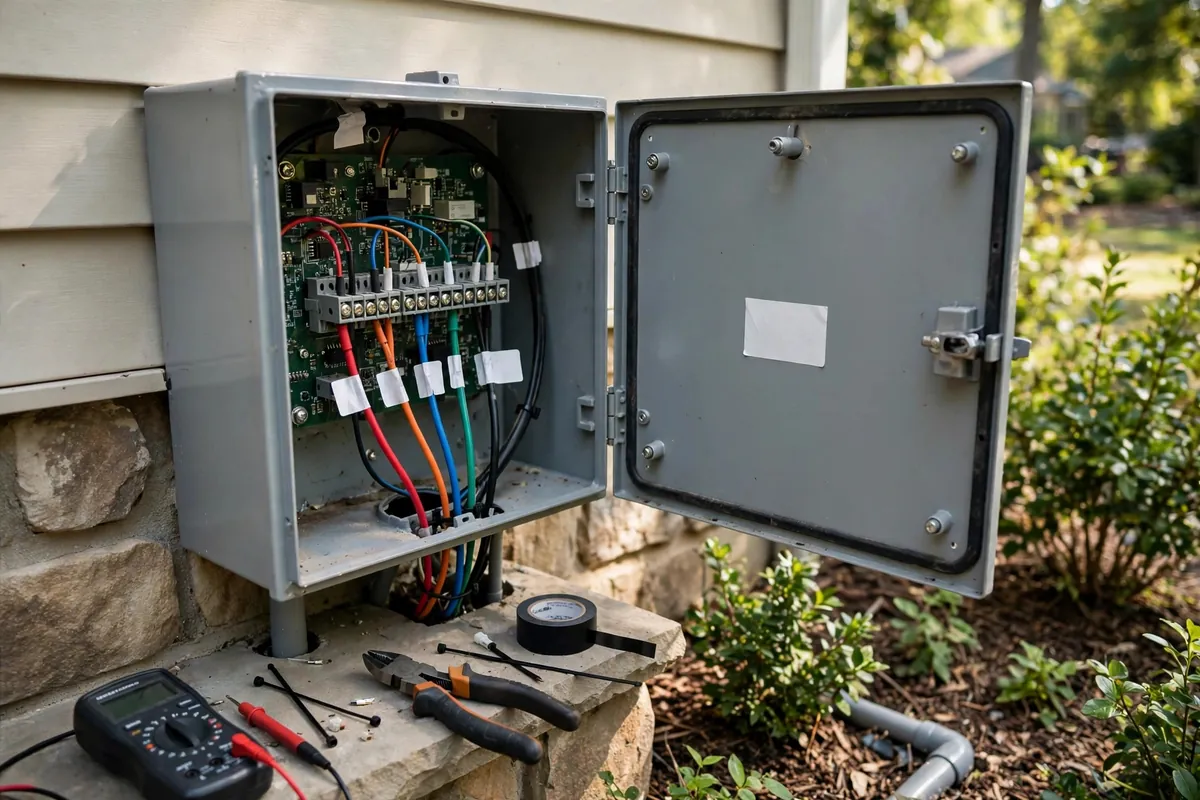
| Zone will not shut off | Shut the irrigation main valve to stop the flow | To diagnose and repair the stuck valve at the manifold |
| Flooding near hardscaping | Keep traffic off the soft ground; photograph it | Soon — erosion under walkways and edging worsens every cycle |
The theme: everything visible and adjustable is yours; everything buried or inside the valve manifold belongs to someone with locating equipment. Homeowners who dig for lateral breaks without locating them first almost always dig in the wrong place — in sandy soil, the surface evidence can sit well away from the actual crack.
If your checks point to heads, replacing a damaged nozzle or head body is reasonable DIY. If they point underground or at the valves, that is where professional detection takes over — acoustic listening finds the break's hiss through the soil, and valve testing at the manifold identifies the stuck component without guesswork.
How The Service Fixes It
When you call us about a misting, flooding zone, we already have a strong hypothesis — and the visit is about confirming it precisely.
We run the suspect zone and walk it the way you did, but with instruments: pressure readings at the zone compared against healthy zones, meter flow readings that quantify how much water the zone is losing beyond its heads' normal output, and acoustic listening along the lateral's path to hear the break itself. Valve boxes get opened and each valve gets tested for full closure — a weeping valve is found in minutes with the right test, not by replacing valves at random.
The repair matches the finding. A cracked lateral gets a surgical excavation at the marked spot — small hole, section replaced, soil restored. A stuck valve gets rebuilt or replaced at the manifold. Damaged heads get new bodies or nozzles, and if system pressure is the culprit, a regulator brings it into the heads' designed range. The zone then runs through a full verification: every head throwing properly, no misting, no surfacing water, meter still with the system off.
If the zone will not shut off or water is surfacing and spreading, treat it as urgent — our emergency irrigation leak page is the right call, or reach us at (352) 703-8206 now. We answer 24/7 and arrive in 30–45 minutes. For non-urgent diagnosis, our standard irrigation leak detection service handles it.