Central Florida is humid subtropical, which means summers bring frequent afternoon thunderstorms — and hurricane season runs June 1 through November 30, peaking August through October, with June typically the wettest month. All of that water has to go somewhere, and your irrigation system and yard drains are the somewhere. Heavy tropical rain exposes every weakness: valves that weep, laterals with small cracks, and drains carrying a dry season's worth of debris. Preparing before the rains arrive turns the season from a stress test into routine weather. This guide covers why the season is hard on irrigation, a practical prevention checklist, the warning signs to watch, and what to do when something fails mid-storm.
Before the rainy season, walk every zone to check heads and valves, verify the rain sensor actually pauses watering, clear all drain grates and inlets, and cut the watering schedule back. Central Florida's humid subtropical climate brings frequent summer thunderstorms plus hurricane season from June through November, so systems face months of heavy water. Finding weak components before the storms is far cheaper than repairing flood damage during them.
In This Article
Why Florida's Rainy Season Stresses Irrigation
Central Florida's climate is humid subtropical, and that classification shapes everything about the rainy season. Summers bring frequent afternoon thunderstorms — intense, localized downpours that can drop a large volume of water on your yard in under an hour. Hurricane season runs June 1 through November 30, peaking August through October, adding the possibility of prolonged tropical rain on top of the daily storm pattern. June is typically the wettest month, when the season establishes itself.
This matters for irrigation because the system was designed for the dry months — to deliver water the sky was not providing. When the sky starts providing abundantly, every marginal component gets tested. A zone valve with a slightly worn diaphragm that merely wept in April keeps its zone soggy through weeks of storms. A lateral with a hairline crack that lost a little water per cycle now sits in saturated soil, and the escaping water has nowhere to drain — so it surfaces. Heads knocked slightly out of alignment matter more when the lawn is already wet, because the overwatered areas stay wet instead of drying between cycles.
Heavy tropical rain also stresses yard drains and sewer systems, not just irrigation. Drains that handled dry-season debris loads suddenly face the full wash-off of months of accumulated leaves, mulch, and sediment in a single storm. The season does not create most of these problems — it reveals them, all at once, at the worst time to discover them. Preparation is simply the act of revealing them first, on your own terms.
A valve that fails in July was wearing out since spring. A drain that backs up in the first big storm was filling with debris all winter. Pre-season checks do not prevent the season — they find what the season would have found for you.
Prevention Checklist
Work through this list before the heavy rains settle in. Most items take minutes; all of them are cheaper than a mid-season emergency:
- Walk every zone and watch each head through a full cycle — note weak spray, misting, or heads that do not pop up
- Check that the rain sensor is installed, wired, and actually pausing the schedule (test it, do not assume)
- Trim grass and mulch back from every head so spray is not blocked when growth surges
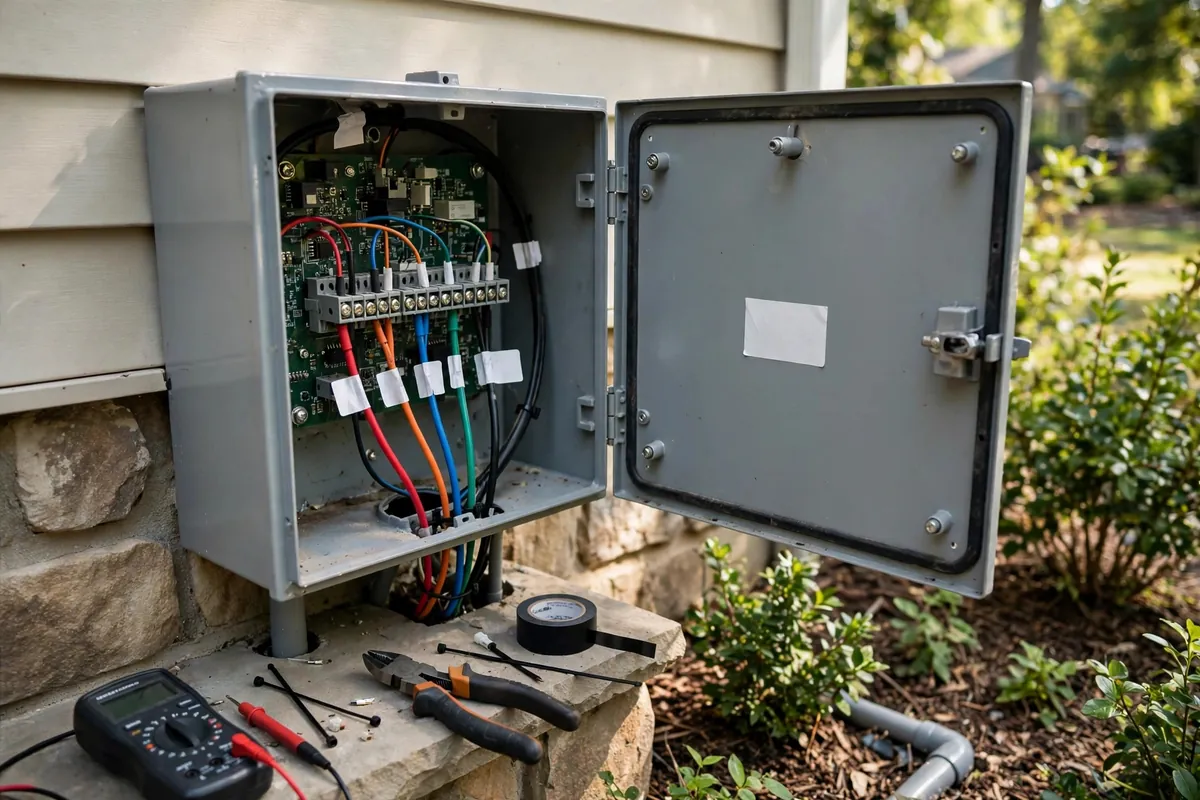
- Open each valve box and check for standing water, which signals a valve that is not sealing
- Clear leaves and debris from catch basin grates, channel drains, and area drain inlets
- Confirm downspout drains flow freely — watch the discharge point during the next rain
- Cut the irrigation schedule back before the rains arrive; the sky is about to do the watering
- Mark the location of your irrigation main shutoff valve so you can stop the system fast if a zone sticks open
A note on the schedule item: the single highest-value rainy-season adjustment is simply watering less. An irrigation system running its full dry-season program through weeks of daily storms is not helping the lawn — it is waterlogging it. Let the rain sensor do its job, and if your schedule has no seasonal adjustment, make one. Your lawn, your water bill, and your drainage system will all notice the difference.
If a zone will not shut off, water is standing against your foundation, or a drain is backing up into the house, call (352) 703-8206 now — we answer 24/7 and arrive in 30–45 minutes.
Warning Signs
Once the rains are underway, these signs mean something in the system is failing under the seasonal load:
- A zone that stays wet between rains. If one area never dries while the rest of the yard does, that zone is adding water — a weeping valve or a lateral break, not the weather.
- Water surfacing during light rain. Drains should handle ordinary rain easily. Standing water in light rain means a clog is already restricting flow; the next heavy storm will overwhelm it completely.
- New soggy spots near the foundation. Water pooling against the house where it did not pool before suggests a downspout drain is blocked or grading has shifted — both need attention before the water finds its way inside.
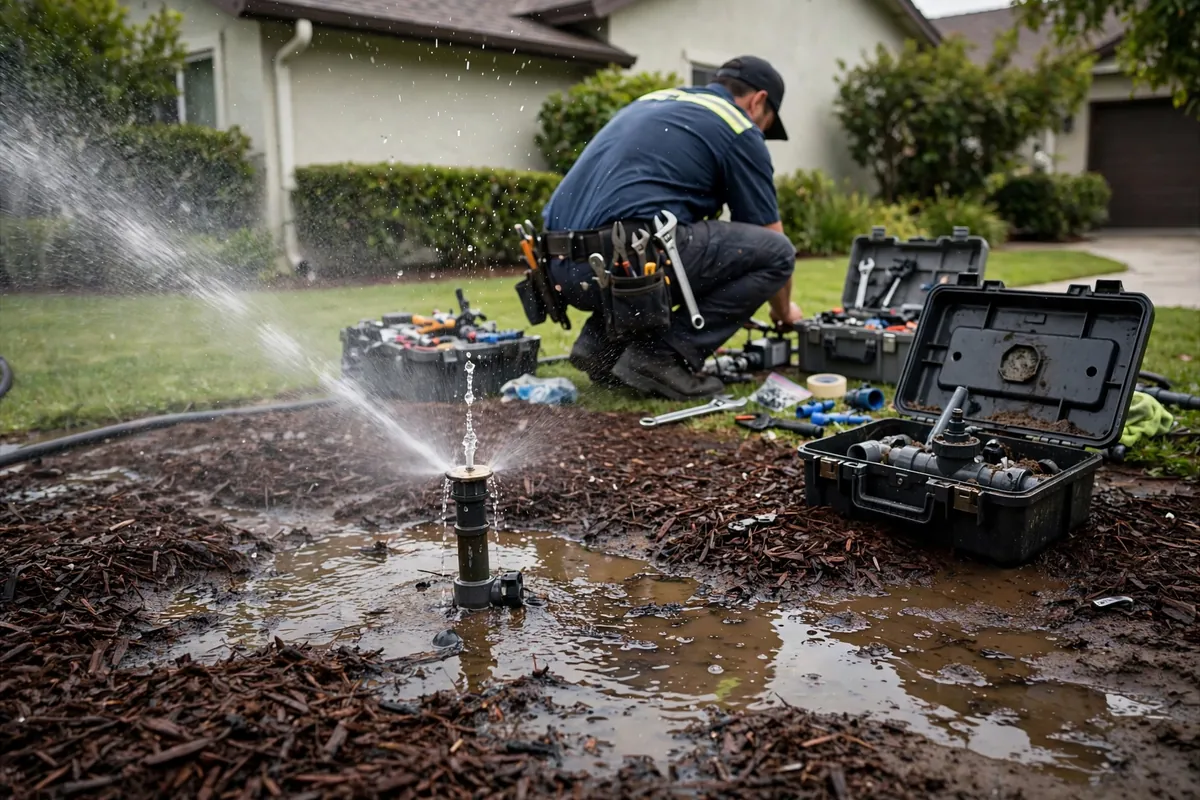
- Heads misting or geysering. Storm debris clogs nozzles, and saturated soil shifts heads out of alignment. A zone that ran fine in spring can develop head problems after the first few big storms wash debris around.
- The meter moving with everything off. Check the water meter with the irrigation off during a dry spell between storms. Movement means water is escaping somewhere in the system — our guide to reading your meter for leaks shows how.
- Erosion around drains and downspouts. Soil washing away at discharge points means water is moving faster than the system was designed for — often because an upstream clog is forcing water to find its own path.
Any one of these deserves investigation before the next storm rather than after it. Our article on irrigation leak symptoms helps distinguish system problems from weather effects.
What To Do If It Happens
Storms do not wait for business hours, and neither do the failures they trigger. If something goes wrong mid-season:
For a zone that will not shut off: turn off the irrigation system's main valve immediately — it is usually near the manifold or where the irrigation line branches from the house supply. This stops the flooding even if the valve itself is stuck. Then call; a stuck valve is a straightforward repair once the water is stopped.
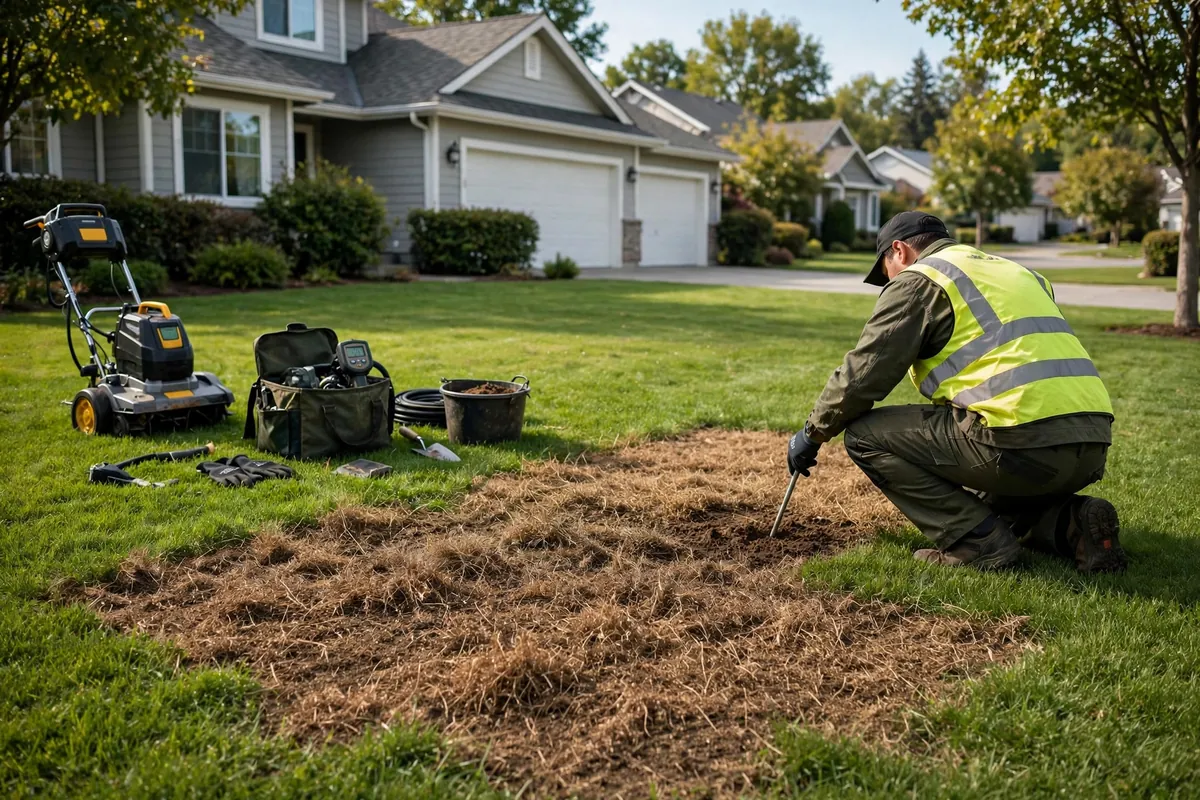
For water surfacing or bubbling in the yard: mark the spot and keep the irrigation off. Do not dig — in saturated soil, digging without locating the break first collapses the hole and can damage nearby lines. The break will still be there when the ground firms up, and acoustic detection works in wet soil.
For standing water against the foundation: this is the one that cannot wait. Check that downspout drains are not visibly blocked at the surface, and move anything valuable away from the affected wall inside. If water is entering the house, call immediately.
For drains backing up: clear the visible grates first — storm debris at the inlet is the most common cause and the fastest fix. If the grates are clear and water still stands, the clog is in the line and needs professional cleaning; our yard drain cleaning service handles exactly this.
After any mid-season repair, re-verify the rain sensor and the schedule. Storms have a way of changing settings — power flickers reset controllers, and manual overrides made during the emergency get forgotten. The system should go back to its rainy-season program, not the emergency settings.
How The Service Helps
Pre-season preparation and mid-season emergencies are both squarely in our line of work — and the visit looks different depending on which one you need.
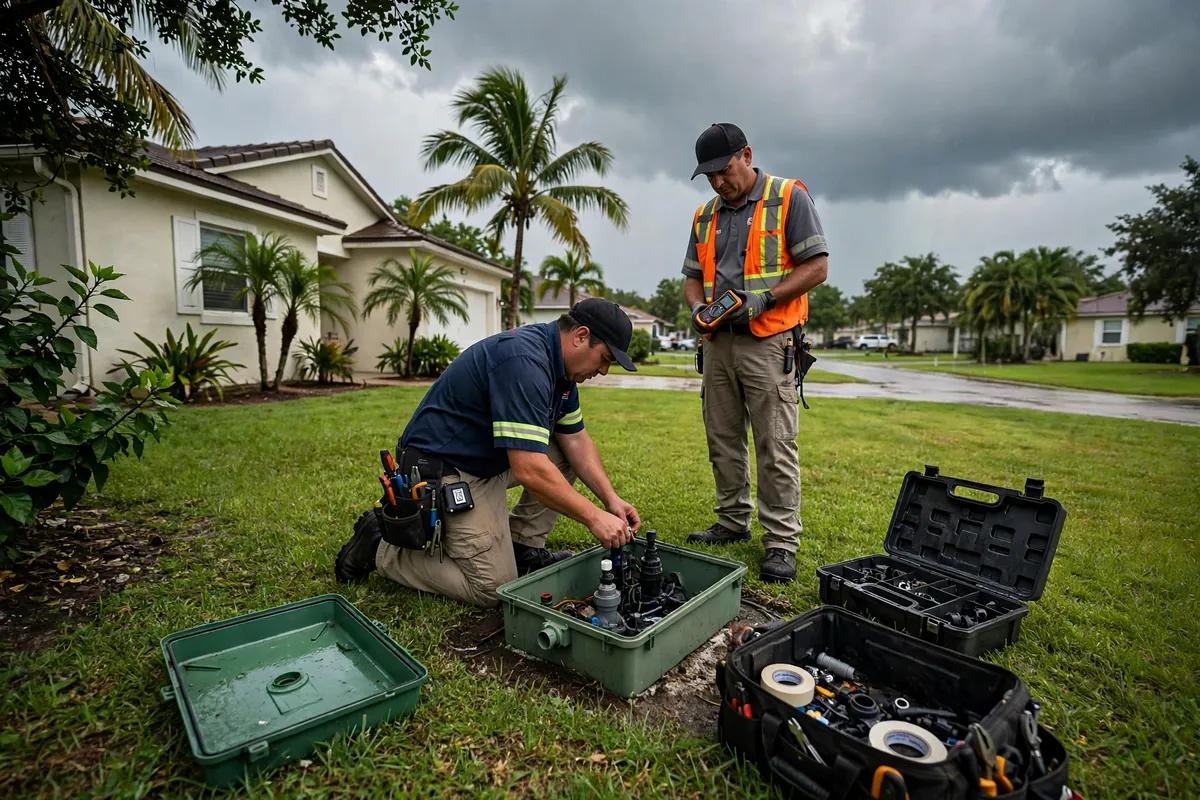
A pre-season check runs your system the way the storms will: every zone operated and observed, valves tested for full closure, heads checked for damage and alignment, the rain sensor verified with a real test, and drain inlets inspected for the debris load waiting to wash in. Anything marginal gets flagged and fixed while the weather is still cooperative and scheduling is easy.
A mid-season emergency gets triage first: stop the water, assess the damage, then diagnose. A stuck valve gets freed or replaced, a broken lateral gets located acoustically and repaired surgically, a backed-up drain gets cleared with jetting and verified with a camera. The goal is always the same — restore the system to a state where the next storm is routine weather, not another emergency.
Either way, the process is the same systematic approach described in our zone-by-zone detection guide: no exploratory digging, no guessing, just located problems and targeted repairs.
To schedule a pre-season check, or if something is failing right now, call (352) 703-8206 — we answer 24/7 and arrive in 30–45 minutes. Our irrigation leak detection service covers diagnosis and repair, and our emergency irrigation page is there when the situation cannot wait for morning.