Restaurants put more stress on plumbing than almost any other business: constant hot water use, grease going down drains, floor drains taking mop water all day, and equipment running around the clock. That combination makes leaks and drain problems more likely — and harder to spot in a busy kitchen.
Professional leak detection for food service focuses on finding problems accurately with minimal disruption, often scheduled around service hours. This guide covers the trouble spots, the detection process, and the habits that keep a kitchen's plumbing out of the headlines. Note: this covers plumbing and leak issues only — for health code questions, always check with your local health department.
In This Article
Why Restaurants Are High-Risk For Plumbing Problems
Volume is the first factor. A restaurant uses far more water per square foot than an office or retail space — dishwashing, food prep, ice machines, mop water, restrooms running all day. More water through the pipes means more wear on joints and valves, more opportunities for leaks, and faster accumulation of anything the water carries with it.
Grease is the second factor, and the defining one. Kitchens produce grease continuously, and despite everyone's best intentions, some of it reaches the drains with every shift — in wash water, mop buckets, and scraped-but-not-clean cookware. Grease behaves differently from other waste: it is liquid when hot, solid when cool, and it coats pipe interiors in accumulating layers.
Temperature swings add stress. Commercial dishwashers and cooking equipment discharge very hot water in surges, which expands pipes and joints; the lines then cool between rushes. Years of thermal cycling fatigue joints and connections — the exact points where leaks start.
Finally, many restaurants occupy older buildings with older plumbing, and the kitchen was often retrofitted into a space designed for something else. Undersized lines, long runs to the sewer, and grease interceptors added as afterthoughts are common. The plumbing works — until the day it does not, usually during the dinner rush.
Grease: The Kitchen's Biggest Drain Enemy
Grease causes more restaurant drain problems than everything else combined, and understanding why helps the prevention habits make sense. Hot grease flows easily, so it travels well past the sink or floor drain before it cools enough to solidify. It typically hardens feet downstream — inside walls, under the slab, or in the building's main line — exactly where nobody can see or reach it.
Each shift adds another layer. The hardened coating narrows the pipe opening gradually, so drainage gets a little slower over months — easy to miss until the narrowed line cannot pass a busy service's flow and the floor drain overflows mid-rush. The blockage then catches food solids that a clean pipe would have passed, and the combination compounds.
The defense is layered. Scrape and wipe: plates, pots, and pans get scraped into the trash and wiped with a disposable towel before washing, so the bulk of grease never reaches water. Strainers in every sink and floor drain catch the solids that carry grease with them. And the grease trap or interceptor — the device installed to catch grease before the sewer — only works if it is cleaned on its schedule; a full trap passes grease straight through as if it were not there.
Mop water deserves special attention because it bypasses everyone's mental filter. It looks like dirty water, but a kitchen mop bucket carries a shift's worth of floor grease straight to the floor drain. Nothing about the mop routine changes — the grease still needs managing at the source, before the mop hits the floor.
A grease trap that is not cleaned on schedule stops trapping grease — it just passes it downstream. If you cannot remember the last cleaning, that is your answer. Put the trap on a written schedule today.
Common Leak And Drain Trouble Spots
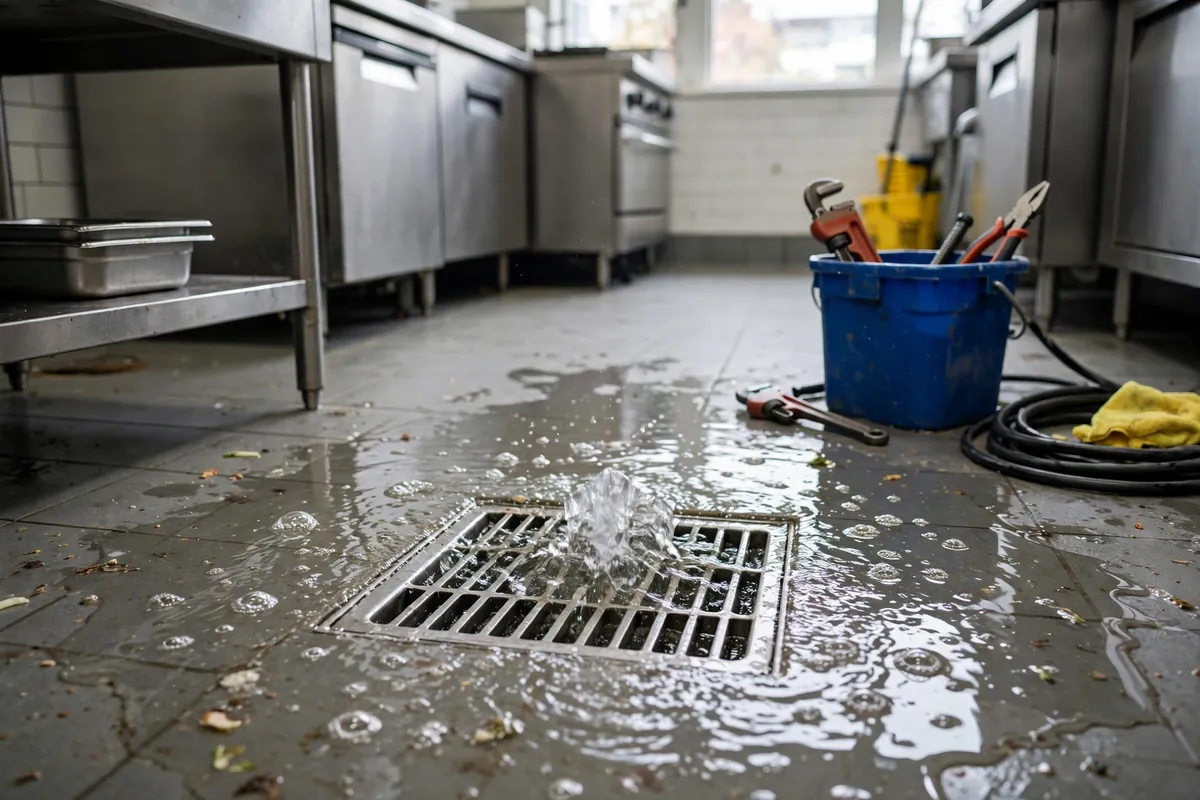
Floor drains and mop sinks are the front line. They handle the dirtiest water in the building, they clog the most often, and when they overflow, they do it across the kitchen floor. Missing or damaged strainer baskets are the usual accomplice — without the basket, debris goes straight into the trap.
The dish pit area concentrates everything: very hot discharge water, food solids, and chemical detergents hitting the same short run of pipe all day. The thermal cycling stresses joints, and the solids load is the highest in the building. Leaks at dish pit connections and slow drainage in the pit line are early warnings worth heeding.
Grease trap and interceptor lines clog from the inside even when the unit is maintained, because no trap catches everything. The line downstream of the interceptor is a prime candidate for periodic jetting — it is the section everyone forgets until it backs up.
Restrooms get heavy public use and the fixtures show it: supply line leaks inside walls, running toilets that waste water silently, and faucet connections that loosen over time. A restroom leak above a dining area or kitchen is a double problem — water damage plus an operational headache.
Behind the scenes, water heaters and their connections work harder in restaurants than anywhere else, ice machine supply lines run constantly, and walk-in coolers produce condensate that gets mistaken for plumbing leaks (and plumbing leaks that get mistaken for condensate). Sorting out which is which takes a technician with a moisture meter and ten minutes — guessing wastes far longer.
Detection Without Shutting Down Service
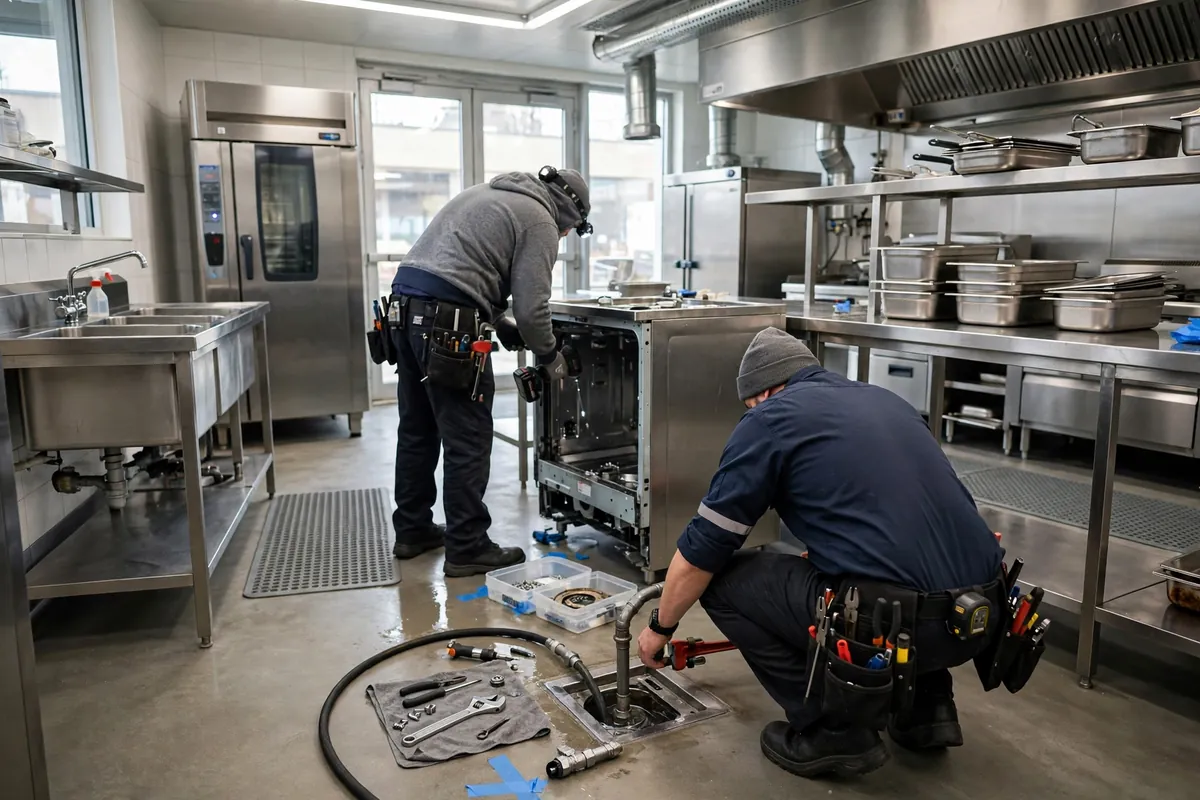
Restaurant leak detection is scheduled around the ticket rail. The intake call covers your service hours, and the visit lands in the gaps — between lunch and dinner, after close, or before the morning prep crew arrives. Detection itself is quiet work: a technician with acoustic gear, a thermal camera, and moisture meters, moving through the kitchen and dining areas without disrupting anything.
The process follows the standard commercial pattern — walkthrough of the symptoms, instrument survey, pinpoint location, written findings — but with kitchen-specific knowledge guiding it. A thermal anomaly under the dish pit means something different from the same anomaly in an office; a technician who knows restaurant plumbing reads the building correctly the first time. Our commercial detection process explains the full methodology.
If the detection finds a problem needing repair, the repair gets the same scheduling treatment. Many kitchen pipe repairs fit into the after-close window; larger work gets phased so the kitchen never loses a full service. The goal is always the same: find it accurately, fix it quickly, and keep the dining room open.
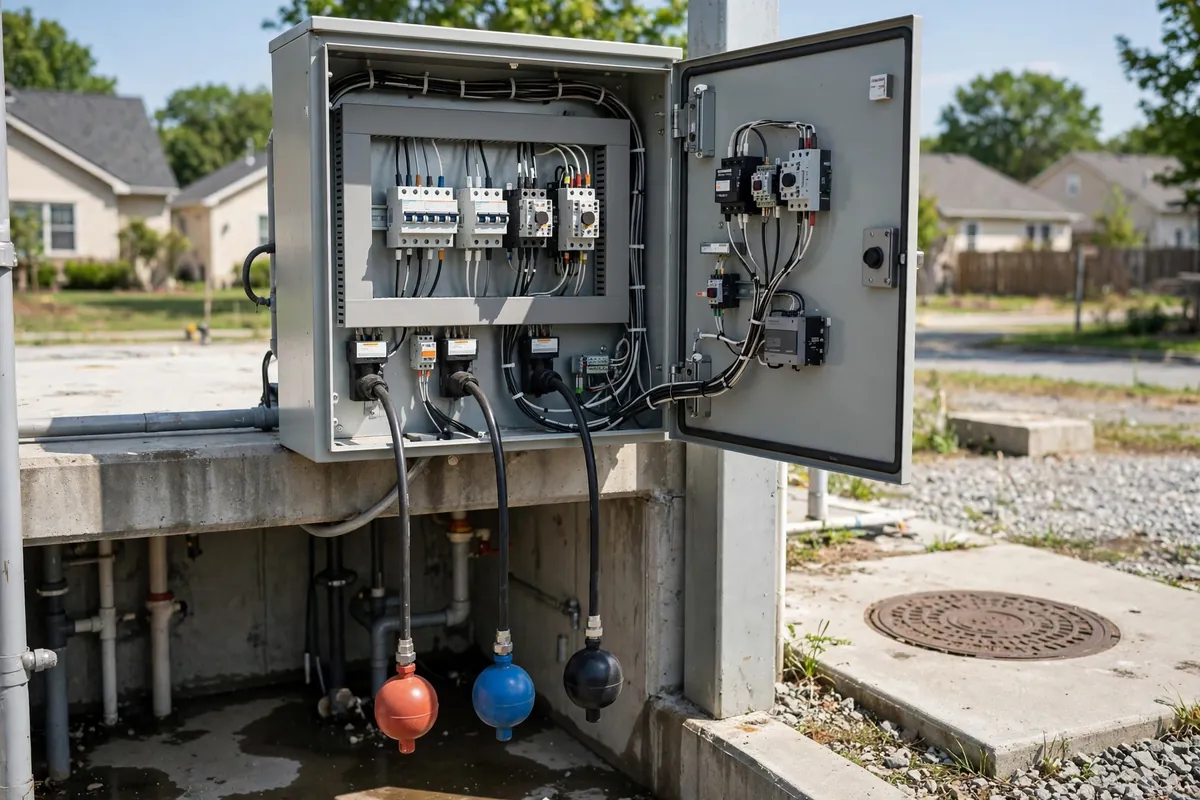
For restaurants also fighting recurring drain backups, pair detection with a drain plan — our guide to floor drain overflows covers the prevention side, and lift station basics applies if the building pumps its wastewater uphill.
Staying Ahead: Habits And Records
The restaurants with the fewest plumbing emergencies share one trait: they treat drains as equipment with a maintenance schedule, not as holes that work until they do not. That means a written list of every drain and grease-handling device, a cleaning interval for each, and a log of what was done and when. It takes an hour to set up and saves emergency calls at 8 PM on a Friday.
Staff training is the daily layer. Every person who touches a sink, a mop, or the dish station should know the short list of what never goes down a drain — grease, food scraps, wipes, coffee grounds — and why. Post it at the dish station in the languages your crew speaks. Most drain abuse is ignorance, not malice, and a posted list fixes ignorance permanently.
Keep records of everything plumbing-related: detection reports, cleaning visits, repairs, and even the dates of grease trap service. Those records reveal patterns — the line that needs jetting twice as often as the others has an underlying problem — and they demonstrate due diligence if questions ever arise about the building's condition. Good records are simply good management.
Finally, know your escalation path. Slow drainage gets logged and reported; an active overflow, a sewage odor that will not clear, or water appearing where it should not be gets an immediate call. We have served Leesburg for 19 years, including its restaurants — our commercial leak detection and floor drain and lift pump services run 24/7, typically arriving within 30–45 minutes. A kitchen cannot wait, and neither do we.
If a drain is slowing down on a Tuesday, do not hope it holds until the weekend — call before the Friday rush. Every restaurant emergency we see started as a weekday warning sign that got ignored.